After the First World War the peoples in Europe faced a new situation. In Central Europe the old regime had collapsed. Russia found herself in the midst of a social revolution of which no one could see the end. The Russian revolution had impressed the workers of every country very deeply.
They felt that Europe was in the midst of a revolutionary crisis and that if nothing decisive came out of it now their hopes would be dispelled for many years. For this reason they based the highest hopes on the Russian evolution and saw in it the inauguration of a new era in European history. In 1919, the Bolshevist Party, which had attained power in Russia, issued an appeal to all the revolutionary workers’ organisations of the world and invited them to a congress in the following year in Moscow to set up a new International.
Communist parties at this time existed only in a few countries; on the other hand there were in Spain, Portugal, France, Italy, Holland, Sweden, Germany, England and the countries of North and South America syndicalist organisations, some of which exercised a very strong influence. It was, therefore, the deep concern of Lenin and his followers to win these particular organisations for their purpose. So it came about that at the congress for the founding of the Third International [1] in the summer of 1920 almost all the anarcho-syndicalists of Europe were represented.
But the impression which the revolutionary unionist delegates received in Russia was not calculated to make them regard collaboration with the communists as either possible or desirable. The dictatorship of the proletariat [2] was already revealing itself in its true light.
The prisons were filled with socialists of every school, among them many anarchists and syndicalists. But above all it was plain that the new dominant caste was in no way fitted for the task of a genuine socialist construction of life. The foundation of the Third International with its dictatorial apparatus and its efforts to make the whole labour movement in Europe into an instrument for the foreign policy of the Bolshevist state, quickly made plain to the revolutionary unionists that there was no place for them in the Third International.
For this reason the congress in Moscow decided to set up alongside the Third International, a separate international alliance of revolutionary trade unions [3], in which the syndicalist organisations of all shades could also find a place. The syndicalist delegates agreed to this proposal, but when the communists demanded that this new organisation should be subordinate to the Third International, this demand was unanimously rejected by the anarcho-syndicalists.
In December, 1920 an international anarcho-syndicalist conference convened in Berlin to decide upon an attitude toward the approaching congress of the Red Trade Union International, which was prepared in Moscow for the following year. The conference agreed upon seven points on whose acceptance the entrance of the syndicalists in that body was made dependent. The importance of those seven points was the complete independence of the movement from all political parties, and insistence on the viewpoint that the socialist reconstruction of society could only be carried out by the economic organisations of the producing classes themselves. At the congress in Moscow in the following year the syndicalist organisations were in the minority.
The Central Alliance of Russian Trade Unions dominated the entire situation and put through all the resolutions. In October 1921 an international conference of syndicalists was held in Dusseldorf, Germany, and it decided to call an international convention in Berlin during the following year. This convention met from December 25, 1922 until January 2, 1923. The following organisations were represented.
- Argentina by the Federacion Obrera Regional Argentina, with 200,000 members;
- Chile by the Industrial Workers of the World with 20,000 members;
- Denmark by the Union for Syndicalist Propaganda with 600 members;
- Germany by the Freie Arbeiter Union with 120,000 members;
- Holland by the National Arbeids Sekretariat with 22,500 members;
- Italy by the Unione Sindicale Italiana with 500,000 members;
- Mexico by the Confederacion General de Trabajadores;
- Norway by the Norsk Syndikalistik Federasjon with 20,000 members;
- Portugal by the Confederacao Geral do Trabalho with 150,000 members;
- Sweden by the Sveriges Arbetares Centralorganisation with 32,000 members;
- The Spanish CNT at that time was engaged in a terrific struggle against the dictatorship of Primo de Rivera and had sent no delegates, but they re-affirmed their adherence at the secret congress in Saragossa in October, 1923;
- In France, where after the war a split in the CGT had led to the founding of the CGTU, the latter had already joined Moscow. But there was a minority in the organisation which had combined to form the Comite de Defence Unioniste Revolutionaire, representing about 100,000 workers, which took part in the proceedings of the Berlin congress. From Paris the Federation du Batiment with 32,000 members and the Federation des Jeunesses de la Seine were likewise represented;
- Two delegates represented the syndicalist minority of the Russian workers.
The congress resolved unanimously on the founding of an international alliance of all syndicalist organisations under the name International Workingmen’s Association [5]. It adopted a declaration of principles which presented an outspoken profession of anarcho-syndicalism. The second item in this declaration runs as follows,
“Revolutionary syndicalism is the confirmed opponent of every form of economic and social monopoly, and aims at the establishment of free communities and administrative organs of the field and factory workers on the basis of a free system of labour councils, entirely liberated from subordination to any government and parties.
“Against the politics of the state and political parties it proposes the economic organisation of labour; against the government of men it sets the management of things.
“Consequently, it has for its object, not the conquest of power, but the abolition of every state function in social life.
“It believes that, along with the monopoly of property, should also disappear the monopoly of domination, and that any form of the state, including the dictatorship of the proletariat, will always be the creator of new monopolies and new privileges, and never an instrument of liberation.”
With this the breach with Bolshevism and its adherents in the various countries was completed. The IWMA from then on travelled its own road, held its own international congresses, issued its bulletins and adjusted the relations among the anarcho-syndicalists of the different countries.
The most powerful and influential organisation in the IWMA was the Spanish CNT, the soul of all the hard labour struggles in Spain and later the backbone of the resistance against fascism and the social reorganisation of the country. Before the triumph of Franco, the CNT embraced a membership of about two millions of industrial workers, peasants and intellectual workers.
It controlled 36 daily papers, among them Solidaridad Obrera in Barcelona, with a circulation of 240,000, the largest of any paper in Spain, and Castilla Libre, which was the most widely-read paper in Madrid. The CNT has published millions of books and pamphlets and contributed more to the education of the masses than any other movement in Spain.
In Portugal the Confederação Geral do Trabalho, (CGT) founded in 1911, was the strongest labour organisation in the country, and based on the same principles as the CNT in Spain. After the victory of dictatorship, the CGT was forced out of public activity and could only lead an underground existence.
In Italy, under the influence of the ideas of French syndicalism, the anarcho-syndicalist wing of the Confederazione del Lavoro left that organisation on account of its subservience to the Socialist Party and formed the Unione Sindacale Italiana (USI).
This group was the soul of a long list of severe labour struggles and played a prominent part in the occurrences of the so-called Red Week in June, 1914 [6], and later in the occupation of the factories in Milan and other cities in northern Italy. With the reign of fascism the whole Italian labour movement disappeared along with the USI.
In France the anarcho-syndicalists left the CGTU in 1922, after that organisation yielded entirely to the influence of the Bolshevists, and formed the Confederation Generale du Travail Syndicaliste Revolutionaire, which joined the IWMA.
In Germany there existed for a long time before the first world war the so-called localists whose stronghold was the Freie Vereinigung deutscher Gewerkschaften (FVDG), founded in 1897. This organisation was originally inspired by social democratic ideas, but it combated the centralising tendencies of the German trade union movement.
The revival of French syndicalism had a great influence on the FVDG and led to its adoption of pure anarcho-syndicalist principles. At its congress in Dusseldorf, 1920, the organisation changed its name to Freie Arbeiter-Union Deutschlands (FAUD).
This movement rendered a great service through the tireless labours of its active publishing house in Berlin which printed a large number of valuable works.
After Hitler’s accession to power the movement of the FAUD vanished from the scene. A great many of its supporters languished in the concentration camps or had to take refuge abroad.
In Sweden there still exists a very active syndicalist movement, the Sveriges Arbetares Central (SAC), the only syndicalist organisation in Europe which escaped the reaction of fascism and German invasion during the war.
The Swedish anarcho-syndicalists participated in all the great labour struggles in their country and carried on for many years the work of socialist and libertarian education.
In Holland the anarcho-syndicalist movement concentrated in the Nationale Arbeids Secretariat; but when this organisation came steadily under increasing communist influence, nearly half of its members split off and formed the Nederlandisok Syndikalistisch Vakverbond which joined the IWMA.
In addition to these organisations there were anarcho-syndicalist propaganda groups in Norway, Poland and Bulgaria, which were affiliated with the IWMA. The Japanese Jiyu Rengo Dantal Zenkoku Kaigi also joined the ranks of the IWMA.
In Argentina the Federacion Obrera Regional Argentina (FORA), founded in 1891, was for many years the centre of most of the big labour struggles in that country. Its history is one of the most tempestuous chapters in the annals of the labour movement.
The movement ran a daily organ, La Protesta, for over 25 years and quite a number of weekly papers all over the country. After the coup d’état of General Uriburu, the FORA was suppressed, but it carried on underground activity, as it also did under Peron.
In May 1929 the FORA summoned a congress of all the South American countries to meet in Buenos Aires. At this congress, besides the FORA of Argentina there were represented:
- Paraguay by the Centro Obrero del Paraguay;
- Bolivia by the Federacion Local de la Paz, La Antorcha and Luz y Libertad;
- Mexico by the Confederacion General de Trabajo;
- Guatemala by the Comite pro Accion Sindical;
- Uruguay by the Federacion Regional Uruguaya.
- Brazil was represented by trade unions from seven of the constituent states.
- Costa Rica was represented by the organisation Hacia la Libertad.
At this congress the Continental American Workingmen’s Association was brought into existence, constituting the American division of the IWMA. The seat of this organisation was at first at Buenos Aires, but later, because of the dictatorship, it had to be transferred to Uruguay.
These were the forces which anarcho-syndicalism had at its disposal in the various countries before the reign of fascism and the outbreak of the Second World War.
![[1] The Third International (1919–1943) Comintern (1919)](/sites/default/files/inline-images/comintern-1919.jpg)
[1] The Third International (1919–1943), also known as the Comintern, attempted to bring all the socialist forces of Europe under the banner of the Soviet Union.
[2] The dictatorship of the proletariat is a Marxist term denoting the total control of society by the working classes and forcible dismantling of the apparatus and assets of other classes. In practice, this has often been conflated with the Leninist idea that what’s good for the Party is what’s good for the proletariat, thus justifying the dictatorship of the Party.
![[3] The Profintern (1921-1937) Zetkin Luxemburg (1910)](/sites/default/files/inline-images/-3-the-profintern-1921-1937-zetkin-luxemburg-1910.jpg)
[3] The Profintern (1921-1937), also known as the Red Trade Union International, was the USSR-backed sibling of the more party-oriented Comintern.
![[4] International Workers’ Association (www.iwa-ait.org)](/sites/default/files/inline-images/iwa-ait.png)
[4] The International Workingmen’s Association still exists today, in the form of the International Workers’ Association (www.iwa-ait.org).
![[5] Errico Malatesta](/sites/default/files/inline-images/-5-errico-malatesta.jpg)
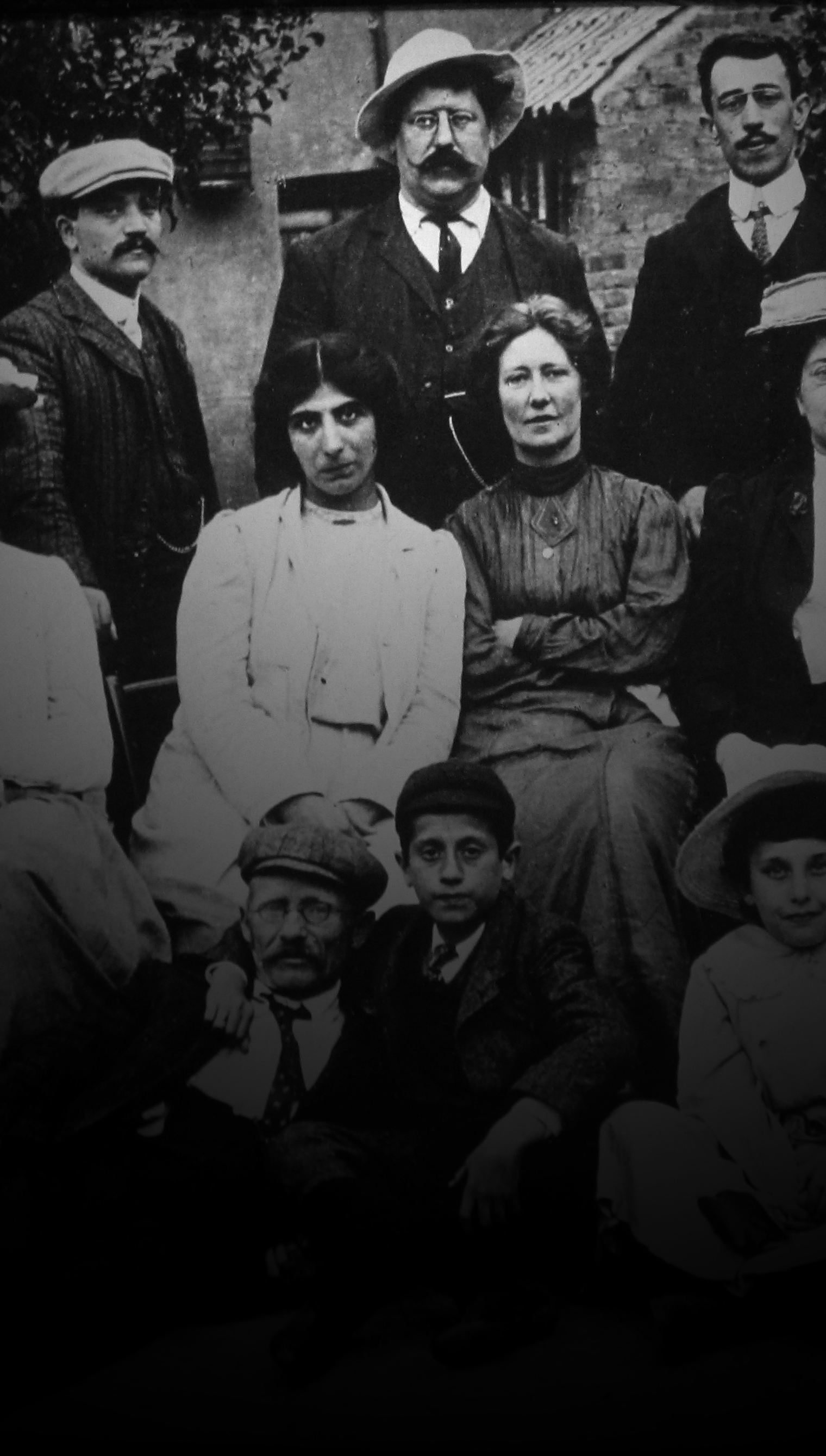
[5] The Red Week in June came amid a rising number of strikes and riots across Italy and was sparked by the state murder of three anti-militarist protesters in the east coast city of Ancona. Anarchists including Errico Malatesta (pictured) attempted to organise a general revolt against the government but were headed off when the general confederation of labour called off their strike actions.