Home
Solidarity Federation
IWA
User account menu
  • Contact
  • Log in
  • Home
    • Intro
    • Workplace organiser training
    • Industrial strategy
    • Community strategy
    • Constitution
  • SolFed
    • Brighton
    • Bristol
    • Edinburgh
    • Liverpool
    • Manchester
    • North London
    • Wales
    • Yorkshire
  • Industries & sectors
    • Claimants and unpaid
    • Education
    • Health and social care
    • Hospitality
  • Events & reports
  • Publications
    • Guides
      • Stuff your boss (doesn't want you to know)
      • Stuff your sexist boss (doesn't want you to know) (2018)
      • Stuff your landlord (doesn't want you to know) (2016)
      • Is your cleaning job killing you? A guide to cleaners health and safety (2017)
      • Office worker’s health and safety - your rights and how to use them (2015)
      • A migrant's guide to Manchester (2016) [en es]
      • A migrant's guide to London (2014) [en es pl]
      • Strike - a guide to walking out (2014)
    • Pamphlets and books
      • Anarcho-syndicalism in Britain – a little history (2015)
        • 1. 19th century to 1914 - The First International, growth of industrial unionism and the Great Unrest
        • 2. 1914–1945 - State suppression and the Bolshevik turn – how Lenin’s seeming success drew militants to the Comintern
        • 3. 1945–1994 - The Anarchist Federation of Britain, Syndicalist Workers’ Federation and Direct Action Movement
        • 4. Today’s movement - A short look at the strategy and thinking of the modern Solidarity Federation
      • Office worker’s health and safety - your rights and how to use them (2015)
      • Anarchism and Anarcho-syndicalism (Rudolf Rocker, 2014)
        • Introduction
        • 1. Ideology of Anarchism
        • 2. History of anarchist philosphy, from Lao-Tse to Kropotkin
        • 3. The origins of anarcho-syndicalism
        • 4. Socialism and anarcho-syndicalism in France
        • 5. The role of the trade unions: anarcho-syndicalist view
        • 6. The struggle in Germany and Spain
        • 7. The political struggle: anarcho-syndicalist view
        • 8. Anarcho-syndicalism since the First World War
      • Fighting for ourselves - anarcho-syndicalism and the class struggle (2012)
        • Introduction
        • 1. The mainstream workers' movement
        • 2. Radical currents in the workers' movement
        • 3. Anarcho-syndicalism in the 20th century
        • 4. Capitalism and the class struggle since World War II
        • 5. Anarcho-syndicalism in the 21st century
        • Endnotes
      • Workmates - direct action workplace organising on the London underground (2011)
      • The Economics of freedom (2003)
      • A history of anarcho-syndicalism (2001)
      • Out of the frying pan, a critical look at works councils (1998)
      • Health and safety at work - an anarcho-syndicalist approach (1997)
      • Anarcho-syndicalism in Puerto Real (1994)
    • Leaflets and flyers
      • Solidarity Federation Education Union (SFEU)
      • Solidarity Federation Hospitality Workers Union (SFHWU)
      • Why do we organise?
      • This is our flag - it tells you what we stand for
      • What is anarcho-syndicalism anyway?
      • Anarchism and Syndicalism (short version)
      • Anarchism and Syndicalism
      • Towards a better union
      • Protest is not enough
      • Building beyond elections
      • We should run our workplaces
      • We should run our communities
      • We should run our movements
    • Newsletters
      • Brighton Solidarity
        • Brighton Solidarity #3
      • Education Worker
        • Education Worker #10 Victimisation (2013)
        • Education Worker #9 (2012)
        • Education Worker #8 Academy Special (2012)
      • Wildcat!
        • Wildcat! #13 (Jan 2013)
        • Wildcat! (Winter 2012)
        • Wildcat! #6 (Summer 2011)
        • Wildcat! #5 (Spring 2011)
        • Wildcat! #4 (Dec 2010)
        • Wildcat! #3 (Oct-Nov 2010)
        • Wildcat! #2 (Jul-Aug 2010)
        • Wildcat! Football for the fans NOT for fat cats! (Jul 2010)
        • Wildcat! #1 (May-June 2010)
      • May Day Bulletin (Newcastle SolFed, 2014)
    • Direct Action
      • Direct Action #2 (2024)
      • Direct Action #1 (2023)
      • Direct action #48 (Autumn 2009)
      • Direct action #47 (Summer 2009)
      • Direct Action #46 (Spring 2009)
      • Direct Action #45 (Winter 2008)
    • Catalyst
      • Catalyst #29 (Feb 2012)
      • Catalyst #28 (Oct 2011)
      • Catalyst #27 (Jun 2011)
      • Catalyst #26 (Mar 2011)
      • Catalyst #25 (Dec 2010)
      • Catalyst #24 (Summer 2010)
    • SelfEd
      • A history of anarcho-syndicalism
        • Block 1
          • Unit 1: The Origins of Capitalism
          • Unit 2: Britain: The Radical Period 1750-1840
          • Unit 3: The First International
          • Unit 4: France 1870-1918 Early revolutionary unions
          • Unit 5: Revolutionary Syndicalism in Britain, 1870-1910
          • Unit 6: Revolutionary Syndicalism in Britain and Ireland, 1910-17
        • Block 2
          • Unit 7: Mexico 1870-1920: Colonialism and Revolution
          • Unit 8: USA 1886-1930 - The Wobblies
          • Unit 9: Anarcho-syndicalism in Argentina 1870-1939
          • Unit 10: Sweden 1889-1939
          • Unit 11: Russia I: 1850-1917
          • Unit 12 Russia II: 1917-30
        • Block 3
          • Unit 13: Going Global - International Organisation, 1872-1922
          • Unit 14: Anarcho-syndicalism in Britain, 1914-30
          • Unit 15 Spain, 1868-1936: Build-up to Revolution
          • Unit 16 Spain: Culture, education, women and sexuality
          • Unit 17: Spain 1936-39: Revolution and Civil War
          • Unit 18: Spain - The Collectives
        • Block 4
          • Unit 19: Britain, 1930-1950 - The Era of Reform
          • Unit 20: Britain, 1950-1990 - Decline of Social Democracy
          • Unit 21: anarcho-syndicalism 1939-99
          • Unit 22: Roots of modern anarcho-syndicalism: freedom, oppression & rebellion
          • Unit 23: Roots of modern anarcho-syndicalism: morality, culture & tactics
          • Unit 24: The spirit of anarcho-syndicalism
    • Letters
  • IWA

Breadcrumb

  1. Home
  2. industries, occupations and sectors

health and social care

By Baggie, 29 March, 2021

Bristol is a divided city. Which side are you on?

Bristol is great, right? This city was named the “best place to live” in the UK by the Sunday Times in 2017, the best place for under 26s by The Independent in 2019, and Bristol districts like Easton and Old Market regularly win national accolades as the best/trendiest/coolest place in the UK to set up home.

The city exudes a progressive, green and tolerant vibe; 62% of Bristolians voted remain in the Brexit referendum, and all four of Bristol's parliamentary constituencies are held by the labour party, as is the city’s elected mayoral office. Bristol boasts Fairtrade City status and was named Green Capital of Europe in 2015. Newcomers to Bristol tend to see the city as a liberal paradise.


Tags

  • health and social care
By solfed-iwa, 17 May, 2020
e

Reduced life = reduced work (the work/life balance)

Applause is lauded at NHS workers; ideas for re-compensation; a daily service supplement; an increased hourly rate; even a medal for working during the pandemic. Many of us in the NHS work shifts - day and night - throughout the year. It is not just a virus that killing us, our shift work is too. The World Health Organisation declared in 2007 that shift work is probably carcinogenic (Straif et al 2007 #1). Studies such as Gu et al (2015 #2) have shown us that shift work, especially nights increases our risks of cardio vascular disease, mental health issues, lower immunity, cancer and ultimately our mortality.

Rather than working our life away for minimal financial compensation would we not rather have our life given back? Striking a better work / life balance: a reduced working week without being financially penalised.

Tags

  • health and safety
  • health and social care
  • immunity
  • shifts
  • NHS
  • Edinburgh
By Tony, 25 April, 2020

Free market failings in the coronavirus crisis

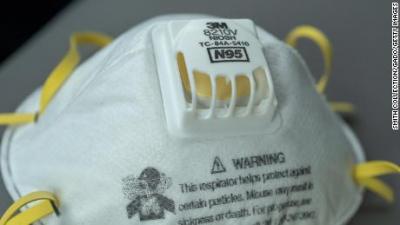
Whatever happened to free market solutions? Since the dark days of Thatcherism, we have been told that the state is inefficient and things should be left to the free market. Yet here we are in the middle of the coronavirus crisis and free market solutions are nowhere to be seen. Instead, it has been the state that has been forced to step in and prevent the economy and society from collapsing amid the chaos of an out of control pandemic.
Tags

  • Covid-19
  • Manchester
  • health and social care
By Tony, 10 April, 2020

Care worker organising in a pandemic

Care workers right now are facing a huge challenge. We were overworked, at risk and underpaid before Covid-19 came along. A lot of us are facing massive upheaval in our work and personal lives. Lockdown is stopping us from seeing our friends, family and colleagues, and the demands nowaced on the NHS, care homes and other workplaces have increased and changed rapidly. So now more than ever we are asking, what can we do?

What are we facing?

Some of the issues we are facing are new, and some are old problems exacerbated by the current crisis. The first one we are going to look at is the most common and well known right now.

PPE

Tags

  • Covid-19
  • Manchester
  • health and social care
  • social care
  • health and safety
By Tony, 10 April, 2020

Careworkers: Cannon fodder to the coronavirus?

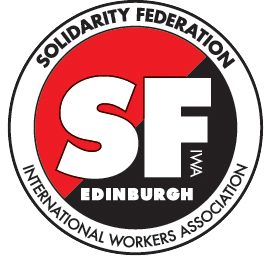
It is well known by anyone who has ever worked in, or been around the social care system, how much employers in that sector try to exploit their staff and just how badly they treat them. Care workers have long felt they are viewed in low regard by both local authorities and the government, until recently being described by both local and national politicians as being ‘low skilled’. This has started to make headlines in the national press and get into the public consciousness and never has it been more apparent than during the current coronavirus crisis, where employers have shown a complete disregard for the safety of not only their workers, but also for the people who use their services.


Tags

  • Covid-19
  • health and social care
  • PPE
  • Manchester
By r1, 10 April, 2020

Care Worker Organising in a Pandemic

Care Worker Organising in a Pandemic

Care workers right now are facing a huge challenge. We were overworked, at risk and underpaid before Covid-19 came along. A lot of us are facing massive upheaval in our work and personal lives. Lockdown is stopping us from seeing our friends, family and colleagues, and the demands now placed on the NHS, care homes and other workplaces have increased and changed rapidly. So now more than ever we are asking, what can we do?

What are we facing?

Some of the issues we are facing are new, and some are old problems exacerbated by the current crisis. The first one we are going to look at is the most common and well known right now.

PPE

Tags

  • health and social care
  • workplace organising
By r1, 10 April, 2020
b

Care Worker Organising in a Pandemic

Care Worker Organising in a Pandemic

Care workers right now are facing a huge challenge. We were overworked, at risk and underpaid before Covid-19 came along. A lot of us are facing massive upheaval in our work and personal lives. Lockdown is stopping us from seeing our friends, family and colleagues, and the demands now placed on the NHS, care homes and other workplaces have increased and changed rapidly. So now more than ever we are asking, what can we do?

What are we facing?

Some of the issues we are facing are new, and some are old problems exacerbated by the current crisis. The first one we are going to look at is the most common and well known right now.

PPE

Tags

  • health and social care
  • workplace organising
  • Brighton
By edin, 9 April, 2020

Donning and Doffing - on the front lines

sfMask on, seal over the nose to stop glasses misting up so much. Apron on (always easier with gloves on), feels flimsy especially in the wind, doesn’t feel like it will protect much. Visor on or is the patient low risk? How many more times am I going to put this all on?The beginning of shift routine is to check if we have enough Personal Protective Equipment (PPE). This involves checking stores, asking managers, raiding dormant ambulances. As relief staff (not on a fixed shift pattern) you go to different stations. Each station has differing policies; some have personal issue PPE, some are ambulance specific. As relief you end up pilfering PPE to protect yourself as you might end up without.

Tags

  • health and safety
  • personal protective equipment (PPE)
  • NHS
  • Edinburgh
  • health and social care
By drumlit, 22 March, 2020

Corona Virus, Sick Pay & Benefits

Statutory Sick Pay

If you’re unable to work due to illness or are self-isolating due to Corona virus, and your employer doesn’t offer contractual sick pay, you can claim Statutory Sick Pay (SSP) if you usually earn at least £118 per week before tax. For the next 3 months at least, you can claim SSP from the first day of not working. Your employer pays SSP and you should tell them immediately, and at least within 7 days, that you need to claim it. You normally have to provide a GP fit note after 7 consecutive days of illness but at present you only need to provide a note from NHS 111 online 

If you qualify for SSP, you also qualify for some Universal Credit monthly payments towards rent costs and for Council Tax Reduction. Use the benefit calculator at the Turn2Us website to calculate how much you qualify for and how to apply for it

Tags

  • benefits
  • Covid-19
  • sickness
  • Brighton
  • health and social care
  • claimants and unpaid
By Tony, 25 February, 2019
hull

Carework: Sleeping on the clock is no dream

In 2018 Mencap, the learning disability charity with an unappealing name, took the government to court. Mencap wanted to challenge an earlier ruling on whether or not sleep shifts count as work, for the purposes of calculating the national minimum wage. They won their case and now, thanks to them, sleep shifts are no longer legally recognised as work. So if you sleep as part of your job, your boss doesn’t have to pay you for it.

I am lucky; I haven’t worked a sleep shift for years — they do not involve a lot of actual sleep. In my old job in a dementia unit I would work a late shift from 3pm-10pm, at 6am I would start getting residents washed and dressed, and between 10pm and 6am I was nominally “asleep” and therefore not getting paid. Even if I was getting paid, this would still be a breach of Working Time Regulations (something that most care workers opt out of when we sign our contracts).

Tags

  • health and social care
  • Hull
  • Yorkshire

Pagination

  • Page 1
  • Page 2
  • Page 3
  • Page 4
  • Page 5
  • Next page
  • Last page
health and social care

Guides

Your rights at work

Why do we organise? Capitalism is shit, oppression is shit - but what can we at SolFed do about it?

Why do we organise?

This is our flag - it tells you what we stand for

this-is-our-flag

Direct Action #2 (2024)

Direct Action #2 (2024)

Anarcho-syndicalism in Britain – a little history (2015)

Anarcho-syndicalism in Britain – a little history (2015)

Office worker’s health and safety - your rights and how to use them (2015)

Office worker’s health and safety - your rights and how to use them (2015)

Anarchism and Anarcho-syndicalism (Rudolf Rocker, 2014)

Anarchism and Anarcho-syndicalism (Rudolf Rocker, 2014)

Fighting for ourselves - anarcho-syndicalism and the class struggle (2012)

Fighting for ourselves - anarcho-syndicalism and the class struggle (2012)

Theory & Practice 1 - Workmates - direct action workplace organising on the London underground (2011)

Theory & Practice 1 - Workmates - direct action workplace organising on the London underground (2011)

The Economics of freedom (2003)

The Economics of freedom (2003)

A history of anarcho-syndicalism (SelfEd Collective, 24 unit series, 2001)

A history of anarcho-syndicalism (SelfEd Collective, 24 unit series, 2001)

Out of the frying pan, a critical look at works councils (1998)

Out of the frying pan, a critical look at works councils (1998)

Health and safety at work - an anarcho-syndicalist approach (1997)

Health and safety at work - an anarcho-syndicalist approach (1997)

Theory & Practice 2 - Anarcho-syndicalism in Puerto Real (1994)

Theory & Practice 2 - Anarcho-syndicalism in Puerto Real (1994)
RSS feed