Home
Solidarity Federation
IWA
User account menu
  • Contact
  • Log in
  • Home
    • Intro
    • Workplace organiser training
    • Industrial strategy
    • Community strategy
    • Constitution
  • SolFed
    • Brighton
    • Bristol
    • Edinburgh
    • Liverpool
    • Manchester
    • North London
    • Wales
    • Yorkshire
  • Industries & sectors
    • Claimants and unpaid
    • Education
    • Health and social care
    • Hospitality
  • Events & reports
  • Publications
    • Guides
      • Stuff your boss (doesn't want you to know)
      • Stuff your sexist boss (doesn't want you to know) (2018)
      • Stuff your landlord (doesn't want you to know) (2016)
      • Is your cleaning job killing you? A guide to cleaners health and safety (2017)
      • Office worker’s health and safety - your rights and how to use them (2015)
      • A migrant's guide to Manchester (2016) [en es]
      • A migrant's guide to London (2014) [en es pl]
      • Strike - a guide to walking out (2014)
    • Pamphlets and books
      • Anarcho-syndicalism in Britain – a little history (2015)
        • 1. 19th century to 1914 - The First International, growth of industrial unionism and the Great Unrest
        • 2. 1914–1945 - State suppression and the Bolshevik turn – how Lenin’s seeming success drew militants to the Comintern
        • 3. 1945–1994 - The Anarchist Federation of Britain, Syndicalist Workers’ Federation and Direct Action Movement
        • 4. Today’s movement - A short look at the strategy and thinking of the modern Solidarity Federation
      • Office worker’s health and safety - your rights and how to use them (2015)
      • Anarchism and Anarcho-syndicalism (Rudolf Rocker, 2014)
        • Introduction
        • 1. Ideology of Anarchism
        • 2. History of anarchist philosphy, from Lao-Tse to Kropotkin
        • 3. The origins of anarcho-syndicalism
        • 4. Socialism and anarcho-syndicalism in France
        • 5. The role of the trade unions: anarcho-syndicalist view
        • 6. The struggle in Germany and Spain
        • 7. The political struggle: anarcho-syndicalist view
        • 8. Anarcho-syndicalism since the First World War
      • Fighting for ourselves - anarcho-syndicalism and the class struggle (2012)
        • Introduction
        • 1. The mainstream workers' movement
        • 2. Radical currents in the workers' movement
        • 3. Anarcho-syndicalism in the 20th century
        • 4. Capitalism and the class struggle since World War II
        • 5. Anarcho-syndicalism in the 21st century
        • Endnotes
      • Workmates - direct action workplace organising on the London underground (2011)
      • The Economics of freedom (2003)
      • A history of anarcho-syndicalism (2001)
      • Out of the frying pan, a critical look at works councils (1998)
      • Health and safety at work - an anarcho-syndicalist approach (1997)
      • Anarcho-syndicalism in Puerto Real (1994)
    • Leaflets and flyers
      • Solidarity Federation Education Union (SFEU)
      • Solidarity Federation Hospitality Workers Union (SFHWU)
      • Why do we organise?
      • This is our flag - it tells you what we stand for
      • What is anarcho-syndicalism anyway?
      • Anarchism and Syndicalism (short version)
      • Anarchism and Syndicalism
      • Towards a better union
      • Protest is not enough
      • Building beyond elections
      • We should run our workplaces
      • We should run our communities
      • We should run our movements
    • Newsletters
      • Brighton Solidarity
        • Brighton Solidarity #3
      • Education Worker
        • Education Worker #10 Victimisation (2013)
        • Education Worker #9 (2012)
        • Education Worker #8 Academy Special (2012)
      • Wildcat!
        • Wildcat! #13 (Jan 2013)
        • Wildcat! (Winter 2012)
        • Wildcat! #6 (Summer 2011)
        • Wildcat! #5 (Spring 2011)
        • Wildcat! #4 (Dec 2010)
        • Wildcat! #3 (Oct-Nov 2010)
        • Wildcat! #2 (Jul-Aug 2010)
        • Wildcat! Football for the fans NOT for fat cats! (Jul 2010)
        • Wildcat! #1 (May-June 2010)
      • May Day Bulletin (Newcastle SolFed, 2014)
    • Direct Action
      • Direct Action #2 (2024)
      • Direct Action #1 (2023)
      • Direct action #47 (Summer 2009)
    • Catalyst
      • Catalyst #29 (Feb 2012)
      • Catalyst #28 (Oct 2011)
      • Catalyst #27 (Jun 2011)
      • Catalyst #26 (Mar 2011)
      • Catalyst #25 (Dec 2010)
      • Catalyst #24 (Summer 2010)
    • SelfEd
      • A history of anarcho-syndicalism
        • Block 1
          • Unit 1: The Origins of Capitalism
          • Unit 2: Britain: The Radical Period 1750-1840
          • Unit 3: The First International
          • Unit 4: France 1870-1918 Early revolutionary unions
          • Unit 5: Revolutionary Syndicalism in Britain, 1870-1910
          • Unit 6: Revolutionary Syndicalism in Britain and Ireland, 1910-17
        • Block 2
          • Unit 7: Mexico 1870-1920: Colonialism and Revolution
          • Unit 8: USA 1886-1930 - The Wobblies
          • Unit 9: Anarcho-syndicalism in Argentina 1870-1939
          • Unit 10: Sweden 1889-1939
          • Unit 11: Russia I: 1850-1917
          • Unit 12 Russia II: 1917-30
        • Block 3
          • Unit 13: Going Global - International Organisation, 1872-1922
          • Unit 14: Anarcho-syndicalism in Britain, 1914-30
          • Unit 15 Spain, 1868-1936: Build-up to Revolution
          • Unit 16 Spain: Culture, education, women and sexuality
          • Unit 17: Spain 1936-39: Revolution and Civil War
          • Unit 18: Spain - The Collectives
        • Block 4
          • Unit 19: Britain, 1930-1950 - The Era of Reform
          • Unit 20: Britain, 1950-1990 - Decline of Social Democracy
          • Unit 21: anarcho-syndicalism 1939-99
          • Unit 22: Roots of modern anarcho-syndicalism: freedom, oppression & rebellion
          • Unit 23: Roots of modern anarcho-syndicalism: morality, culture & tactics
          • Unit 24: The spirit of anarcho-syndicalism
    • Letters
  • IWA

Industry insight: A spark's view

By comradegonzo, 18 November, 2012
i

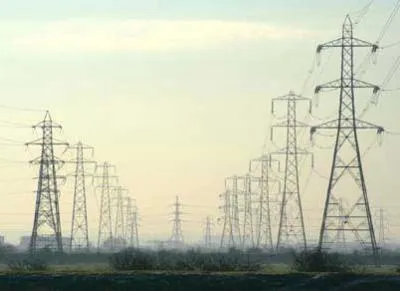
A SolFed member who has worked as an electrician since the late 1970s shares his experience of the electric supply industry, privatisation and trade unions.

I started an apprenticeship at 16 from school in the local electric company. It was then a nationalised industry and everyone was in one of the recognised (by the company) trade unions (a closed shop). There were many different departments and staff could move between them as workload dictated. As an apprentice I spent time in each department to give me experience of each and to hopefully decide in which one I would ultimately stay.

There were problems with management as in all workplaces (still very much us and them), there was also a great divide between office staff and the industrial staff (we never mixed). I think that was due to the fact that they (the office staff) would work as normal when we were in dispute and their wages and pensions were far more generous.

The unions had many nationally negotiated agreements with management. Our particular union was extremely right-wing, the full-time official always consulted privately with management before listening to our grievances. We eventually formed a break away union that was under the umbrella of one of the other main recognised unions but this created divisions between us and the colleagues who remained. As bad as this was from a solidarity point of view I could not have paid subscriptions to that bunch of phoneys any longer (a Pyrrhic victory I know).

We were privatised in 1990 and received our 30 pieces of silver in shares, but to be fair I knew of no one who admitted to be in favour of privatisation. However, there was no campaign to try to prevent it that I was aware of. Just prior to privatisation a number of the better shop stewards were sacked, all very convenient for the calamity that was about to befall us.

The first assault was to split up some of the business into separate parts each with their own management and budgets, this had the desired effect of isolating the various sections of the work force which enabled the implementation of different wage structures and conditions. The company was then able to use its mantra: "though the main business has made millions we cannot give you a wage increase as the regulator will not allow us to cross-subsidise to other parts of the business".

The second was their weapon of mass destruction which is still often wheeled out when a purge is required. I speak of nothing less than the TUPE (transfer of undertakings) which has all sorts of assurances and guarantees that when you’re transferred to the new company all your pay and terms of conditions are protected. This, as you may guess, turns out to be another load of bull, after a certain amount of time you will usually end up out of work or with a far inferior paid job and this obviously with the connivance of your trade union who you have been paying subs to for years. You may also be given the option of redundancy or applying for any vacancies within the main company, but rejection after rejection takes its toll and very few find this to be the route to their salvation.

The company has also been very busy allowing a host of other smaller companies to be trained and authorised to work on the electric network, this allows them to have little fear of industrial action as they have a ready-made replacement workforce waiting in the wings. Some of these companies employ some of the staff who were TUPE to other companies and feel aggrieved at their former colleagues, so any solidarity from them is unlikely.

Our company has been taken over a number of times each resulting in fewer workers but strangely management seems to increase. You cannot draw any other conclusion than it is the company’s ultimate goal to prevent us from being able to carry out our jobs and then make a business case for passing it all over to subcontractors with us via the dreaded TUPE.

The corporate image is a joke. We regularly receive colourful proclamations and requests for our input, but in reality are advised to be quiet and just carry out what you are told. I recently attended a team briefing where we were read out a company proclamation which stated it was our duty to highlight any matter that we were not happy about carrying out. That same week I attended a briefing on company policy concerning a technical matter, after listening to the lecture it was pointed out to the manager that the policy was flawed and did in fact pose a danger if implemented. The response from the speaker (who obviously did not have the knowledge to understand the point) was that if you did not like it you could resign. The company knows that further down the line, if an incident does occur, then they can pull out their announcements that we were all sent and show everyone that obviously they had done all in their power to prevent an incident.

One final point I feel that should be made is about the myth that private companies cannot be inefficient. Believe me when I say that the company that I work for jumps from one debacle to another, carrying out costly reorganisations without any benefit, lots of managers and very few productive staff. It’s a good job that it is a private monopoly and even the most incompetent people cannot fail to make a profit.

It is blatantly obvious that the trade unions we have paid into all our working lives have failed us dismally, at best it could be described as incompetence, but a more accurate term would be complicity. The only way forward, I believe, is for us to reject the old structures that have continually stifled our aspirations and form one revolutionary union controlled completely at every level by the membership.

  • electricians
  • Sparks rank and file group
  • trade unions
  • privatisation
  • TUPE
  • private sector

Guides

Your rights at work

Why do we organise? Capitalism is shit, oppression is shit - but what can we at SolFed do about it?

Why do we organise?

This is our flag - it tells you what we stand for

this-is-our-flag

Direct Action #2 (2024)

Direct Action #2 (2024)

Anarcho-syndicalism in Britain – a little history (2015)

Anarcho-syndicalism in Britain – a little history (2015)

Office worker’s health and safety - your rights and how to use them (2015)

Office worker’s health and safety - your rights and how to use them (2015)

Anarchism and Anarcho-syndicalism (Rudolf Rocker, 2014)

Anarchism and Anarcho-syndicalism (Rudolf Rocker, 2014)

Fighting for ourselves - anarcho-syndicalism and the class struggle (2012)

Fighting for ourselves - anarcho-syndicalism and the class struggle (2012)

Theory & Practice 1 - Workmates - direct action workplace organising on the London underground (2011)

Theory & Practice 1 - Workmates - direct action workplace organising on the London underground (2011)

The Economics of freedom (2003)

The Economics of freedom (2003)

A history of anarcho-syndicalism (SelfEd Collective, 24 unit series, 2001)

A history of anarcho-syndicalism (SelfEd Collective, 24 unit series, 2001)

Out of the frying pan, a critical look at works councils (1998)

Out of the frying pan, a critical look at works councils (1998)

Health and safety at work - an anarcho-syndicalist approach (1997)

Health and safety at work - an anarcho-syndicalist approach (1997)

Theory & Practice 2 - Anarcho-syndicalism in Puerto Real (1994)

Theory & Practice 2 - Anarcho-syndicalism in Puerto Real (1994)
RSS feed