
Home
Solidarity Federation
IWA
User account menu
  • Contact
  • Log in
  • Home
    • Intro
    • Workplace organiser training
    • Industrial strategy
    • Community strategy
    • Constitution
  • SolFed
    • Brighton
    • Bristol
    • Edinburgh
    • Liverpool
    • Manchester
    • North London
    • Wales
    • Yorkshire
  • Industries & sectors
    • Claimants and unpaid
    • Education
    • Health and social care
    • Hospitality
  • Events & reports
  • Publications
    • Guides
      • Stuff your boss (doesn't want you to know)
      • Stuff your sexist boss (doesn't want you to know) (2018)
      • Stuff your landlord (doesn't want you to know) (2016)
      • Is your cleaning job killing you? A guide to cleaners health and safety (2017)
      • Office worker’s health and safety - your rights and how to use them (2015)
      • A migrant's guide to Manchester (2016) [en es]
      • A migrant's guide to London (2014) [en es pl]
      • Strike - a guide to walking out (2014)
    • Pamphlets and books
      • Anarcho-syndicalism in Britain – a little history (2015)
        • 1. 19th century to 1914 - The First International, growth of industrial unionism and the Great Unrest
        • 2. 1914–1945 - State suppression and the Bolshevik turn – how Lenin’s seeming success drew militants to the Comintern
        • 3. 1945–1994 - The Anarchist Federation of Britain, Syndicalist Workers’ Federation and Direct Action Movement
        • 4. Today’s movement - A short look at the strategy and thinking of the modern Solidarity Federation
      • Office worker’s health and safety - your rights and how to use them (2015)
      • Anarchism and Anarcho-syndicalism (Rudolf Rocker, 2014)
        • Introduction
        • 1. Ideology of Anarchism
        • 2. History of anarchist philosphy, from Lao-Tse to Kropotkin
        • 3. The origins of anarcho-syndicalism
        • 4. Socialism and anarcho-syndicalism in France
        • 5. The role of the trade unions: anarcho-syndicalist view
        • 6. The struggle in Germany and Spain
        • 7. The political struggle: anarcho-syndicalist view
        • 8. Anarcho-syndicalism since the First World War
      • Fighting for ourselves - anarcho-syndicalism and the class struggle (2012)
        • Introduction
        • 1. The mainstream workers' movement
        • 2. Radical currents in the workers' movement
        • 3. Anarcho-syndicalism in the 20th century
        • 4. Capitalism and the class struggle since World War II
        • 5. Anarcho-syndicalism in the 21st century
        • Endnotes
      • Workmates - direct action workplace organising on the London underground (2011)
      • The Economics of freedom (2003)
      • A history of anarcho-syndicalism (2001)
      • Out of the frying pan, a critical look at works councils (1998)
      • Health and safety at work - an anarcho-syndicalist approach (1997)
      • Anarcho-syndicalism in Puerto Real (1994)
    • Leaflets and flyers
      • Solidarity Federation Education Union (SFEU)
      • Solidarity Federation Hospitality Workers Union (SFHWU)
      • Why do we organise?
      • This is our flag - it tells you what we stand for
      • What is anarcho-syndicalism anyway?
      • Anarchism and Syndicalism (short version)
      • Anarchism and Syndicalism
      • Towards a better union
      • Protest is not enough
      • Building beyond elections
      • We should run our workplaces
      • We should run our communities
      • We should run our movements
    • Newsletters
      • Brighton Solidarity
        • Brighton Solidarity #3
      • Education Worker
        • Education Worker #10 Victimisation (2013)
        • Education Worker #9 (2012)
        • Education Worker #8 Academy Special (2012)
      • Wildcat!
        • Wildcat! #13 (Jan 2013)
        • Wildcat! (Winter 2012)
        • Wildcat! #6 (Summer 2011)
        • Wildcat! #5 (Spring 2011)
        • Wildcat! #4 (Dec 2010)
        • Wildcat! #3 (Oct-Nov 2010)
        • Wildcat! #2 (Jul-Aug 2010)
        • Wildcat! Football for the fans NOT for fat cats! (Jul 2010)
        • Wildcat! #1 (May-June 2010)
      • May Day Bulletin (Newcastle SolFed, 2014)
    • Direct Action
      • Direct Action #2 (2024)
      • Direct Action #1 (2023)
      • Direct action #47 (Summer 2009)
    • Catalyst
      • Catalyst #29 (Feb 2012)
      • Catalyst #28 (Oct 2011)
      • Catalyst #27 (Jun 2011)
      • Catalyst #26 (Mar 2011)
      • Catalyst #25 (Dec 2010)
      • Catalyst #24 (Summer 2010)
    • SelfEd
      • A history of anarcho-syndicalism
        • Block 1
          • Unit 1: The Origins of Capitalism
          • Unit 2: Britain: The Radical Period 1750-1840
          • Unit 3: The First International
          • Unit 4: France 1870-1918 Early revolutionary unions
          • Unit 5: Revolutionary Syndicalism in Britain, 1870-1910
          • Unit 6: Revolutionary Syndicalism in Britain and Ireland, 1910-17
        • Block 2
          • Unit 7: Mexico 1870-1920: Colonialism and Revolution
          • Unit 8: USA 1886-1930 - The Wobblies
          • Unit 9: Anarcho-syndicalism in Argentina 1870-1939
          • Unit 10: Sweden 1889-1939
          • Unit 11: Russia I: 1850-1917
          • Unit 12 Russia II: 1917-30
        • Block 3
          • Unit 13: Going Global - International Organisation, 1872-1922
          • Unit 14: Anarcho-syndicalism in Britain, 1914-30
          • Unit 15 Spain, 1868-1936: Build-up to Revolution
          • Unit 16 Spain: Culture, education, women and sexuality
          • Unit 17: Spain 1936-39: Revolution and Civil War
          • Unit 18: Spain - The Collectives
        • Block 4
          • Unit 19: Britain, 1930-1950 - The Era of Reform
          • Unit 20: Britain, 1950-1990 - Decline of Social Democracy
          • Unit 21: anarcho-syndicalism 1939-99
          • Unit 22: Roots of modern anarcho-syndicalism: freedom, oppression & rebellion
          • Unit 23: Roots of modern anarcho-syndicalism: morality, culture & tactics
          • Unit 24: The spirit of anarcho-syndicalism
    • Letters
  • IWA

Breadcrumb

  1. Home

workplace organising

By Auto, 7 February, 2013
t

Winning Together - Collective Identity and Workplace Action

A member of the SolFed Tech & Digital workers network recounts the building of a collective identity in their workplace, pushing a collective grievance and building on workplace victories.

I was sat at home during the christmas holidays when I recieved an email from my line manager from work. The email said that me and all of the my fellow workers in the department were to get a significant payrise, backdated to November. 'Congratulations!' said the email.

I was overjoyed. Not just because of the extra money, but because I knew full well it hadn't been given to us by the company out of the goodness of our executives' hearts, but due to a long term campaign of collective action and pressure from all of the workers in my department.
Tags

  • communication, information technology and postal
  • workplace organising
  • Tech & Digital Workers Network
By comradegonzo, 21 August, 2011

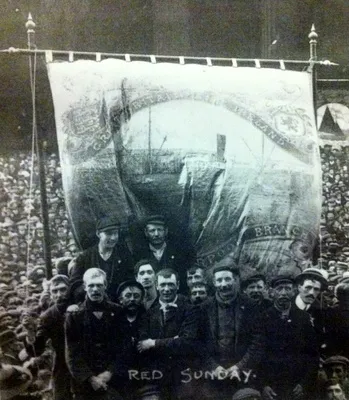
Liverpool in Revolt 1911 - 2011: meeting report

Nearly 50 people attended a public meeting organised by Liverpool Solidarity Federation about the Liverpool general transport strike of 1911.

• First off, local historian and BBC Radio Merseyside regular Frank Carlyle gave us an overview of Liverpool's growth as a port city, it's economic development, the influence of immigration and the rise of the city's working-class.

Tags

  • 1911 Liverpool strike
  • anarcho-syndicalism
  • community
  • public meetings
  • history
  • workplace organising
  • general strikes
  • resistance

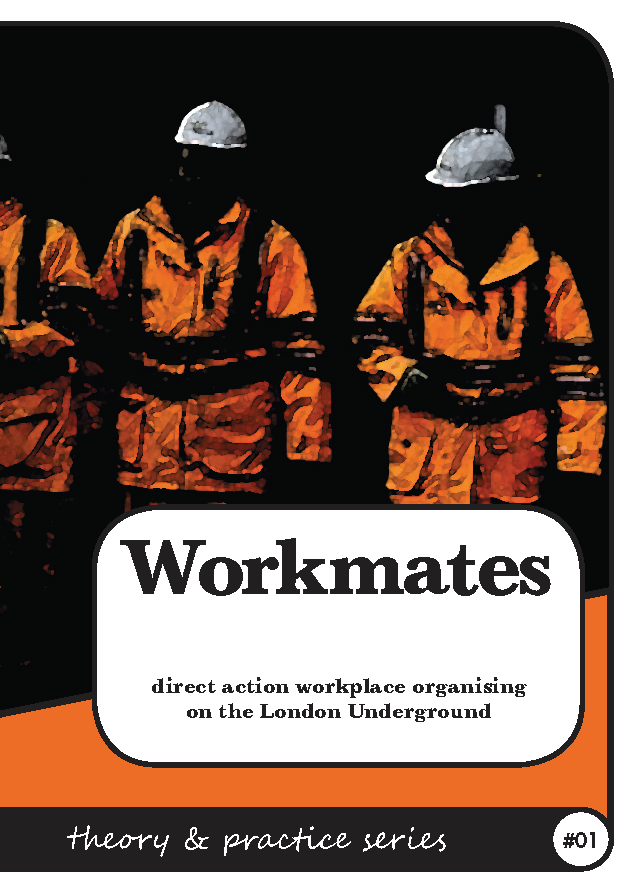
Workmates - direct action workplace organising on the London underground (2011)

Theory & Practice 1 - Workmates - direct action workplace organising on the London underground (2011)In the late 1990s, plans to outsource track maintenance on the London Underground were being pushed through by the government. Workers at one depot responded by forming a new workplace group, both inside and outside the existing union, the RMT.

This pamphlet charts the highs and lows of the Workmates collective, highlighting their successes and failures, their radically democratic organising method and their creative forms of direct action. We hope it can provide an inspiration to other workers frustrated with the limits of the existing workplace organisations.

Attachment Size
workmates.pdf (9.61 MB) 9.61 MB

Tags

  • library
  • publications
  • pamphlets and books
  • trade unions
  • workplace organising
  • North London
  • privatisation
  • transport, couriers and drivers
  • Workmates Collective
  • National Union of Rail, Maritime and Transport Workers (RMT)
By Archiver, 8 November, 2010

Problems at work No.1: Can the boss keep ignoring us?

I work in a textile factory that employs around 30 workers. We have complained to management about low temperatures, the lack of heating and poor ventilation but they ignore us and have threatened to victimise some workers. Some of us are members of a union, but there is no recognition. What are our options?

Whether you are in a recognised union or not, the first step for dealing with a health and safety issue is to establish what the problem is and how it is affecting workers. The best way to do this is for as many workers as possible to meet together to talk about the problems. The boss may immediately try and victimise any workers involved. Decide what, where and how to meet to get organised. Consider what contact you want with the union, if any.

Tags

  • health and safety
  • union recognition
  • workplace organising
  • practical advice
  • employment rights
By Archiver, 8 November, 2010

Problems at work No.5: 1st steps - Organising at Work What's the point in organising, what rights have we got?

Workers' rights are indeed in a sorry state, but this only underlines the need to organise on the job, in our own workplaces. What rights we do have, mainly in the area of health and safety, aren't properly enforced, so it's clear that the state has little interest in our welfare over and above the level necessary to keep the economy's cogs turning. Many situations at work fall outside the law and so it is down to workers themselves to ‘negotiate'. Often, this is done only in staff meetings where the agenda is controlled by the bosses, or where workers can only voice concerns individually. Clearly this is far from ideal. The employer retains absolute control as no effective threat is posed. Only by organising can workers force their boss to sit up and pay attention.

But how can we organise? There isn't a union in my workplace.

Tags

  • workplace organising
  • resistance
By Archiver, 8 November, 2010

On the Tube From grass roots unionism to workers' control

On 13th February , at a meeting of the Workmates Collective, a Tube Workers body at a west London Depot, a proposal was carried unanimously by the 150 or so attending to set up a council consisting of a delegate from each gang. Up until then, the collective had been organised by a handful of RMT workplace reps; now, organisation has passed to the newly formed Workmates Council of recallable gang delegates, moving toward a libertarian formation (anarcho-syndicalism) instead.

Workmates history

Coming from various engineering departments on the Underground (including track installers, track welders, crossing makers, carpenters, ultrasonic rail testers, track vent cleaning gangs, and lorry drivers), many people work alongside large numbers of barely unionised subcontracted labour.

Tags

  • Workmates Collective
  • workplace organising
  • tube

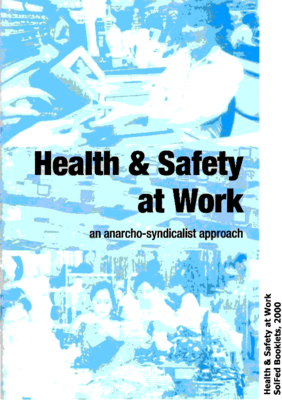
Health and safety at work - an anarcho-syndicalist approach (1997)

Health and safety at work - an anarcho-syndicalist approach (1997)This pamphlet is based on a course organised by North & East London Solidarity Federation called "Organising for Health and Safety" back in 1997.

Tags

  • library
  • publications
  • pamphlets and books
  • health and safety
  • workplace organising

Pagination

  • First page
  • Previous page
  • Page 1
  • Page 2
workplace organising

Guides

Your rights at work

Why do we organise? Capitalism is shit, oppression is shit - but what can we at SolFed do about it?

Why do we organise?

This is our flag - it tells you what we stand for

this-is-our-flag

Direct Action #2 (2024)

Direct Action #2 (2024)

Anarcho-syndicalism in Britain – a little history (2015)

Anarcho-syndicalism in Britain – a little history (2015)

Office worker’s health and safety - your rights and how to use them (2015)

Office worker’s health and safety - your rights and how to use them (2015)

Anarchism and Anarcho-syndicalism (Rudolf Rocker, 2014)

Anarchism and Anarcho-syndicalism (Rudolf Rocker, 2014)

Fighting for ourselves - anarcho-syndicalism and the class struggle (2012)

Fighting for ourselves - anarcho-syndicalism and the class struggle (2012)

Theory & Practice 1 - Workmates - direct action workplace organising on the London underground (2011)

Theory & Practice 1 - Workmates - direct action workplace organising on the London underground (2011)

The Economics of freedom (2003)

The Economics of freedom (2003)

A history of anarcho-syndicalism (SelfEd Collective, 24 unit series, 2001)

A history of anarcho-syndicalism (SelfEd Collective, 24 unit series, 2001)

Out of the frying pan, a critical look at works councils (1998)

Out of the frying pan, a critical look at works councils (1998)

Health and safety at work - an anarcho-syndicalist approach (1997)

Health and safety at work - an anarcho-syndicalist approach (1997)

Theory & Practice 2 - Anarcho-syndicalism in Puerto Real (1994)

Theory & Practice 2 - Anarcho-syndicalism in Puerto Real (1994)
RSS feed