Home
Solidarity Federation
IWA
User account menu
  • Contact
  • Log in
  • Home
    • Intro
    • Workplace organiser training
    • Industrial strategy
    • Community strategy
    • Constitution
  • SolFed
    • Brighton
    • Bristol
    • Edinburgh
    • Liverpool
    • Manchester
    • North London
    • Wales
    • Yorkshire
  • Industries & sectors
    • Claimants and unpaid
    • Education
    • Health and social care
    • Hospitality
  • Events & reports
  • Publications
    • Guides
      • Stuff your boss (doesn't want you to know)
      • Stuff your sexist boss (doesn't want you to know) (2018)
      • Stuff your landlord (doesn't want you to know) (2016)
      • Is your cleaning job killing you? A guide to cleaners health and safety (2017)
      • Office worker’s health and safety - your rights and how to use them (2015)
      • A migrant's guide to Manchester (2016) [en es]
      • A migrant's guide to London (2014) [en es pl]
      • Strike - a guide to walking out (2014)
    • Pamphlets and books
      • Anarcho-syndicalism in Britain – a little history (2015)
        • 1. 19th century to 1914 - The First International, growth of industrial unionism and the Great Unrest
        • 2. 1914–1945 - State suppression and the Bolshevik turn – how Lenin’s seeming success drew militants to the Comintern
        • 3. 1945–1994 - The Anarchist Federation of Britain, Syndicalist Workers’ Federation and Direct Action Movement
        • 4. Today’s movement - A short look at the strategy and thinking of the modern Solidarity Federation
      • Office worker’s health and safety - your rights and how to use them (2015)
      • Anarchism and Anarcho-syndicalism (Rudolf Rocker, 2014)
        • Introduction
        • 1. Ideology of Anarchism
        • 2. History of anarchist philosphy, from Lao-Tse to Kropotkin
        • 3. The origins of anarcho-syndicalism
        • 4. Socialism and anarcho-syndicalism in France
        • 5. The role of the trade unions: anarcho-syndicalist view
        • 6. The struggle in Germany and Spain
        • 7. The political struggle: anarcho-syndicalist view
        • 8. Anarcho-syndicalism since the First World War
      • Fighting for ourselves - anarcho-syndicalism and the class struggle (2012)
        • Introduction
        • 1. The mainstream workers' movement
        • 2. Radical currents in the workers' movement
        • 3. Anarcho-syndicalism in the 20th century
        • 4. Capitalism and the class struggle since World War II
        • 5. Anarcho-syndicalism in the 21st century
        • Endnotes
      • Workmates - direct action workplace organising on the London underground (2011)
      • The Economics of freedom (2003)
      • A history of anarcho-syndicalism (2001)
      • Out of the frying pan, a critical look at works councils (1998)
      • Health and safety at work - an anarcho-syndicalist approach (1997)
      • Anarcho-syndicalism in Puerto Real (1994)
    • Leaflets and flyers
      • Solidarity Federation Education Union (SFEU)
      • Solidarity Federation Hospitality Workers Union (SFHWU)
      • Why do we organise?
      • This is our flag - it tells you what we stand for
      • What is anarcho-syndicalism anyway?
      • Anarchism and Syndicalism (short version)
      • Anarchism and Syndicalism
      • Towards a better union
      • Protest is not enough
      • Building beyond elections
      • We should run our workplaces
      • We should run our communities
      • We should run our movements
    • Newsletters
      • Brighton Solidarity
        • Brighton Solidarity #3
      • Education Worker
        • Education Worker #10 Victimisation (2013)
        • Education Worker #9 (2012)
        • Education Worker #8 Academy Special (2012)
      • Wildcat!
        • Wildcat! #13 (Jan 2013)
        • Wildcat! (Winter 2012)
        • Wildcat! #6 (Summer 2011)
        • Wildcat! #5 (Spring 2011)
        • Wildcat! #4 (Dec 2010)
        • Wildcat! #3 (Oct-Nov 2010)
        • Wildcat! #2 (Jul-Aug 2010)
        • Wildcat! Football for the fans NOT for fat cats! (Jul 2010)
        • Wildcat! #1 (May-June 2010)
      • May Day Bulletin (Newcastle SolFed, 2014)
    • Direct Action
      • Direct Action #2 (2024)
      • Direct Action #1 (2023)
      • Direct action #48 (Autumn 2009)
      • Direct action #47 (Summer 2009)
      • Direct Action #46 (Spring 2009)
    • Catalyst
      • Catalyst #29 (Feb 2012)
      • Catalyst #28 (Oct 2011)
      • Catalyst #27 (Jun 2011)
      • Catalyst #26 (Mar 2011)
      • Catalyst #25 (Dec 2010)
      • Catalyst #24 (Summer 2010)
    • SelfEd
      • A history of anarcho-syndicalism
        • Block 1
          • Unit 1: The Origins of Capitalism
          • Unit 2: Britain: The Radical Period 1750-1840
          • Unit 3: The First International
          • Unit 4: France 1870-1918 Early revolutionary unions
          • Unit 5: Revolutionary Syndicalism in Britain, 1870-1910
          • Unit 6: Revolutionary Syndicalism in Britain and Ireland, 1910-17
        • Block 2
          • Unit 7: Mexico 1870-1920: Colonialism and Revolution
          • Unit 8: USA 1886-1930 - The Wobblies
          • Unit 9: Anarcho-syndicalism in Argentina 1870-1939
          • Unit 10: Sweden 1889-1939
          • Unit 11: Russia I: 1850-1917
          • Unit 12 Russia II: 1917-30
        • Block 3
          • Unit 13: Going Global - International Organisation, 1872-1922
          • Unit 14: Anarcho-syndicalism in Britain, 1914-30
          • Unit 15 Spain, 1868-1936: Build-up to Revolution
          • Unit 16 Spain: Culture, education, women and sexuality
          • Unit 17: Spain 1936-39: Revolution and Civil War
          • Unit 18: Spain - The Collectives
        • Block 4
          • Unit 19: Britain, 1930-1950 - The Era of Reform
          • Unit 20: Britain, 1950-1990 - Decline of Social Democracy
          • Unit 21: anarcho-syndicalism 1939-99
          • Unit 22: Roots of modern anarcho-syndicalism: freedom, oppression & rebellion
          • Unit 23: Roots of modern anarcho-syndicalism: morality, culture & tactics
          • Unit 24: The spirit of anarcho-syndicalism
    • Letters
  • IWA
By sifa, 23 October, 2010

Work Until Your End!

Bosses' pay has more than doubled during the past six years while workers wages have remained virtually static. It has been calculated that for every £100 earned by directors in 2000, they now earn £205 after allowing for inflation. But for employees their £100 has climbed to an average of £106.

In the City this year bonuses are expected to reach a record £9 billion. At Goldman Sachs alone, about 4,000 high-flying investment bankers are expected to receive £1 million each and those in the top grade are likely to get £10 million each.

Goldman Sachs was the centre of the recent cleaners' fight for better pay. The cleaners, many of whom are paid the £5.35-an-hour minimum wage, occupied one of the bank's most prominent sites in the City waving placards reading “Goldman Sucks”.

To rub salt into the wounds the bosses top executives have the option of retiring at 60 and enjoy access to final-salary schemes.

Tags

  • economy
By sifa, 23 October, 2010

Making a killing

Nearly twice as many people die from fatal injuries at work than are victims of homicide, a new report has revealed. At least 1,300 people died as a result of fatal occupational injuries in 2005-06 in England and Wales, compared with 765 homicide deaths. It was also found that non-fatal workplace injuries requiring hospitalisation were far higher than those needing treatment following a violent crime.

Yet at a time when crime, especially violent crime, takes centre stage and any working class youth who likes wearing a hood is stigmatized as a potential mass murderer, the violent crime and murder taking place in the workplace everyday is never reported. Moreover, while Labour responds to every Daily Mail hang-and-flog-them headline by throwing yet more people into already overcrowded jails the perpetrators of crime in the workplace get off virtually scot-free

Tags

  • employment rights
By sifa, 23 October, 2010

Service not included

Following our piece on tips in the last issue, The Independent launched a campaign on the same issue. They didn’t credit either us or the trades unions, which have been campaigning on the issue much longer.

This newspaper campaign seems to have had some effect, however. “Government insiders” now claim they will address the issue in the autumn. More significantly, a prominent “Old” Labour figure has admitted delivering restaurant workers into the hands of their exploiters when drafting minimum wage legislation in 1997.

Ian McCartney, ex-trades union official and token ex-prole in the government, admitted that he sold out workers to ensure the agreement of bosses to the minimum wage. While this ex-waiter banned the use of cash tips to top up the minimum wage, he agreed to a legal loophole allowing catering bosses to use “service charges” for the same purpose.

Tags

  • bars, catering, hotels and restaurants
  • pay and conditions
  • employment rights
By sifa, 23 October, 2010

Cleaning up on the tube

London tube cleaners have won crucial pay increases from cleaning companies, with their £5.50 an hour poverty wages being brought up to £7.45.

Cleaners on Metronet contracts were granted the ‘ London living wage’ in July through a wider initiative whilst those working for ISS (contracted by Tubelines) won a staggered pay rise in pre-strike negotiations in August.

With the 48hour RMT strike in June/July and the planned three day strike in August forcing the hand of ISS, the cleaners have demonstrated their strength and gained from it. However, their fight is far from over with the strike committee continuing to meet in pursuit of unmet demands - more holidays, better sick pay, a decent pension and an end to the scandal of ‘third party sackings’.

Tags

  • tube
  • cleaning and facilities
  • Unite the Union
By sifa, 23 October, 2010

Can I phone a friend?

Pell and Bales is a London call centre that raises funds on behalf of major charities. Since a venture capital company, ICENI, bought shares in P&B, the volume of calls staff must make has increased.

This added pressure led to friction between management and staff, and an increase in petty disciplinary actions and grievances.

Pat Carmody, a caller and CWU rep at Pell & Bales, helped build a fast-growing union that won a pay increase for the first time in 6 years and is capable of winning disciplinaries and grievances. Senior management were none too pleased.

In June, Carmody was suspended for writing an article for Socialist Worker in defence of a suspended colleague. Management claimed the article defamed the company and suspended him.

In June 2008 a solidarity picket outside of Pell & Bales’ office was called, attended by supporters, including workers from Shelter, the Solidarity Federation and the London Coalition Against Poverty.

Tags

  • Communication Workers Union (CWU)
  • employment rights
  • resistance
By Joseph Kay, 23 October, 2010

Making a killing

Nearly twice as many people die from fatal injuries at work than are victims of homicide, a new report has revealed. At least 1,300 people died as a result of fatal occupational injuries in 2005-06 in England and Wales, compared with 765 homicide deaths. It was also found that non-fatal workplace injuries requiring hospitalisation were far higher than those needing treatment following a violent crime.

Yet at a time when crime, especially violent crime, takes centre stage and any working class youth who likes wearing a hood is stigmatized as a potential mass murderer, the violent crime and murder taking place in the workplace everyday is never reported. Moreover, while Labour responds to every Daily Mail hang-and-flog-them headline by throwing yet more people into already overcrowded jails the perpetrators of crime in the workplace get off virtually scot-free

Tags

  • health and safety
By sifa, 23 October, 2010

Summer of discontent?

Following hot on the heels of recent strikes across the public sector (including teachers and the civil service), UNISON members in local government have voted to reject the government’s desultory pay offer, which amounted to another 3 years of pay cuts. This follows years of below inflation “pay rises” (in the real world, pay cuts), and comes as the government attempts to limit public sector pay claims to 2% across the board. Last year, UNISON members voted to reject the government’s initial offer, and voted to take industrial action when the offer was only raised to 2.475% - still well short of inflation, which remains at over 4%. However, despite this vote for action, UNISON instead folded, and accepted another pay cut – perhaps unsurprising from a union led by Dave Prentis, one of New Labour’s biggest supporters in the union movement.

Tags

  • resistance
By sifa, 23 October, 2010

Equal opportunities - New Labour style

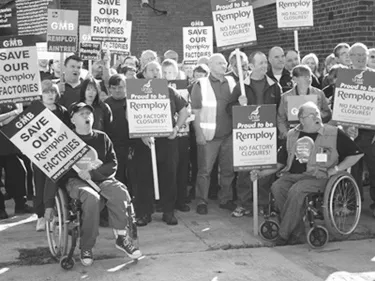
Remploy employs over 5000 disabled staff in specially adapted premises, receiving £111 million in government funding. In May last year, the government announced the closure of many factories, with between 500 and 2000 job losses.

These factories provide a safe place to work for many disabled people unlikely to find “mainstream” employment. The government pretends that it is now opposed to segregated workplaces for disabled people, but the real reason for closing the factories is cost.

Union activists called for industrial action, most Remploy workers are union members and over 80% voted for action.

West Yorkshire Solidarity Federation members joined a demonstration in Bradford in January where Anne McGuire, Minister for Disabled People, was loudly heckled.

There have been blockades and pickets of factories across the country. In York, strikers blocked lorries from taking away equipment before the factory was due to close.

Tags

  • disability
By Joseph Kay, 23 October, 2010

Education, education, education

Higher Education faces significant changes in the coming years as universities move to a market based model. Tuition and top-up fees are perhaps the more visible signs of this but many institutions are now seeing changes which, among other things, significantly affect education workers’ terms and conditions. Union responses so far have seen conferences like NUS’s (National Union of Students) ‘Reclaim the Campus’ and UCU’s ‘Challenging the market in education’ (University and College Union)

Meanwhile, the more action-minded have been far from quiet. The Universities of Sussex and Manchester, for example, both saw occupations, demonstrations and demands to end this commercialisation process. In both cases, while the impetus for action has come from student activists, university workers have also been involved. In Sussex, the ‘Sussex not 4 Sale’ campaign organised the largest rally in Brighton for 20 years.

Tags

  • occupations
  • higher education
  • education
  • University and College Union (UCU)
  • Sussex University
By sifa, 23 October, 2010

Migrant Workers Under Attack

No-one accuses non-unionised workers of driving down wages by taking low-paid jobs. So why are migrant workers who do accused of undermining pay and conditions? Migrants just want to earn a living and, like everyone, would love to have better pay and conditions. Many of them would like to organise to improve pay and conditions for all.

Immigration controls prevent people working legally and make them vulnerable to super-exploitation. The direct effect is to undermine the pay and conditions of migrants, and then all workers. To improve pay and conditions in sectors where there are many migrant workers, offer them solidarity. Organise with them and oppose immigration controls which hinder resistance.

Tags

  • immigration

Pagination

  • First page
  • Previous page
  • …
  • Page 145
  • Page 146
  • Page 147
  • Page 148
  • Page 149
  • Page 150
  • Page 151
  • Page 152
  • Page 153
  • …
  • Next page
  • Last page

Guides

Your rights at work

Why do we organise? Capitalism is shit, oppression is shit - but what can we at SolFed do about it?

Why do we organise?

This is our flag - it tells you what we stand for

this-is-our-flag

Stuff your boss (doesn't want you to know)

Stuff your boss (doesn't want you to know)

Direct Action #2 (2024)

Direct Action #2 (2024)

Stuff your sexist boss (doesn't want you to know) (2018)

Stuff your sexist boss (doesn't want you to know) (2018)

Is your cleaning job killing you? A guide to cleaners health and safety (2017)

Stuff your landlord (doesn't want you to know) (2016)

Stuff your landlord (doesn't want you to know) (2016)

A migrant's guide to Manchester (2016)

A migrant's guide to Manchester (2016)

Anarcho-syndicalism in Britain – a little history (2015)

Anarcho-syndicalism in Britain – a little history (2015)

Office worker’s health and safety - your rights and how to use them (2015)

Office worker’s health and safety - your rights and how to use them (2015)

A migrant's guide to London (2014)

A migrant's guide to London (2014)

Anarchism and Anarcho-syndicalism (Rudolf Rocker, 2014)

Anarchism and Anarcho-syndicalism (Rudolf Rocker, 2014)

Strike - a guide to walking out (2014)

Strike - a guide to walking out (2014)

Fighting for ourselves - anarcho-syndicalism and the class struggle (2012)

Fighting for ourselves - anarcho-syndicalism and the class struggle (2012)

Theory & Practice 1 - Workmates - direct action workplace organising on the London underground (2011)

Theory & Practice 1 - Workmates - direct action workplace organising on the London underground (2011)

The Economics of freedom (2003)

The Economics of freedom (2003)

A history of anarcho-syndicalism (SelfEd Collective, 24 unit series, 2001)

A history of anarcho-syndicalism (SelfEd Collective, 24 unit series, 2001)

Out of the frying pan, a critical look at works councils (1998)

Out of the frying pan, a critical look at works councils (1998)

Health and safety at work - an anarcho-syndicalist approach (1997)

Health and safety at work - an anarcho-syndicalist approach (1997)

Theory & Practice 2 - Anarcho-syndicalism in Puerto Real (1994)

Theory & Practice 2 - Anarcho-syndicalism in Puerto Real (1994)
RSS feed