There are political and economic assumptions in the way the existing, social democratic unions organise. They think workers and management have common interests, and that it is in their best interests to form partnerships. For example, to win the support of bosses in catering for the National Minimum Wage, in 1997 Labour allowed them to include workers’ tips in calculating it, in spite of the NMW being a key election manifesto point.
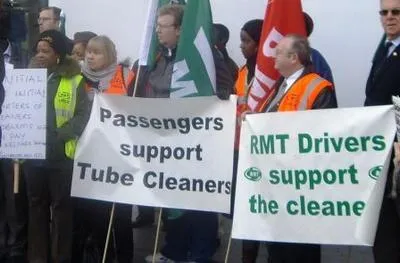
Workers’ interests are considered to be those of the Labour Party or the union bureaucracy. Representation, where politicians, union officials, or lay representatives deal with management works to resolve problems without harming the latter’s interests. Business is seen as the goose which lays the golden egg, but we think that wealth is created not by business but by workers. In contract cleaning, for example, cleaners create the wealth but are sidelined by both unions and management.