Home
Solidarity Federation
IWA
User account menu
  • Contact
  • Log in
  • Home
    • Intro
    • Workplace organiser training
    • Industrial strategy
    • Community strategy
    • Constitution
  • SolFed
    • Brighton
    • Bristol
    • Edinburgh
    • Liverpool
    • Manchester
    • North London
    • Wales
    • Yorkshire
  • Industries & sectors
    • Claimants and unpaid
    • Education
    • Health and social care
    • Hospitality
  • Events & reports
  • Publications
    • Guides
      • Stuff your boss (doesn't want you to know)
      • Stuff your sexist boss (doesn't want you to know) (2018)
      • Stuff your landlord (doesn't want you to know) (2016)
      • Is your cleaning job killing you? A guide to cleaners health and safety (2017)
      • Office worker’s health and safety - your rights and how to use them (2015)
      • A migrant's guide to Manchester (2016) [en es]
      • A migrant's guide to London (2014) [en es pl]
      • Strike - a guide to walking out (2014)
    • Pamphlets and books
      • Anarcho-syndicalism in Britain – a little history (2015)
        • 1. 19th century to 1914 - The First International, growth of industrial unionism and the Great Unrest
        • 2. 1914–1945 - State suppression and the Bolshevik turn – how Lenin’s seeming success drew militants to the Comintern
        • 3. 1945–1994 - The Anarchist Federation of Britain, Syndicalist Workers’ Federation and Direct Action Movement
        • 4. Today’s movement - A short look at the strategy and thinking of the modern Solidarity Federation
      • Office worker’s health and safety - your rights and how to use them (2015)
      • Anarchism and Anarcho-syndicalism (Rudolf Rocker, 2014)
        • Introduction
        • 1. Ideology of Anarchism
        • 2. History of anarchist philosphy, from Lao-Tse to Kropotkin
        • 3. The origins of anarcho-syndicalism
        • 4. Socialism and anarcho-syndicalism in France
        • 5. The role of the trade unions: anarcho-syndicalist view
        • 6. The struggle in Germany and Spain
        • 7. The political struggle: anarcho-syndicalist view
        • 8. Anarcho-syndicalism since the First World War
      • Fighting for ourselves - anarcho-syndicalism and the class struggle (2012)
        • Introduction
        • 1. The mainstream workers' movement
        • 2. Radical currents in the workers' movement
        • 3. Anarcho-syndicalism in the 20th century
        • 4. Capitalism and the class struggle since World War II
        • 5. Anarcho-syndicalism in the 21st century
        • Endnotes
      • Workmates - direct action workplace organising on the London underground (2011)
      • The Economics of freedom (2003)
      • A history of anarcho-syndicalism (2001)
      • Out of the frying pan, a critical look at works councils (1998)
      • Health and safety at work - an anarcho-syndicalist approach (1997)
      • Anarcho-syndicalism in Puerto Real (1994)
    • Leaflets and flyers
      • Solidarity Federation Education Union (SFEU)
      • Solidarity Federation Hospitality Workers Union (SFHWU)
      • Why do we organise?
      • This is our flag - it tells you what we stand for
      • What is anarcho-syndicalism anyway?
      • Anarchism and Syndicalism (short version)
      • Anarchism and Syndicalism
      • Towards a better union
      • Protest is not enough
      • Building beyond elections
      • We should run our workplaces
      • We should run our communities
      • We should run our movements
    • Newsletters
      • Brighton Solidarity
        • Brighton Solidarity #3
      • Education Worker
        • Education Worker #10 Victimisation (2013)
        • Education Worker #9 (2012)
        • Education Worker #8 Academy Special (2012)
      • Wildcat!
        • Wildcat! #13 (Jan 2013)
        • Wildcat! (Winter 2012)
        • Wildcat! #6 (Summer 2011)
        • Wildcat! #5 (Spring 2011)
        • Wildcat! #4 (Dec 2010)
        • Wildcat! #3 (Oct-Nov 2010)
        • Wildcat! #2 (Jul-Aug 2010)
        • Wildcat! Football for the fans NOT for fat cats! (Jul 2010)
        • Wildcat! #1 (May-June 2010)
      • May Day Bulletin (Newcastle SolFed, 2014)
    • Direct Action
      • Direct Action #2 (2024)
      • Direct Action #1 (2023)
      • Direct action #47 (Summer 2009)
    • Catalyst
      • Catalyst #29 (Feb 2012)
      • Catalyst #28 (Oct 2011)
      • Catalyst #27 (Jun 2011)
      • Catalyst #26 (Mar 2011)
      • Catalyst #25 (Dec 2010)
      • Catalyst #24 (Summer 2010)
    • SelfEd
      • A history of anarcho-syndicalism
        • Block 1
          • Unit 1: The Origins of Capitalism
          • Unit 2: Britain: The Radical Period 1750-1840
          • Unit 3: The First International
          • Unit 4: France 1870-1918 Early revolutionary unions
          • Unit 5: Revolutionary Syndicalism in Britain, 1870-1910
          • Unit 6: Revolutionary Syndicalism in Britain and Ireland, 1910-17
        • Block 2
          • Unit 7: Mexico 1870-1920: Colonialism and Revolution
          • Unit 8: USA 1886-1930 - The Wobblies
          • Unit 9: Anarcho-syndicalism in Argentina 1870-1939
          • Unit 10: Sweden 1889-1939
          • Unit 11: Russia I: 1850-1917
          • Unit 12 Russia II: 1917-30
        • Block 3
          • Unit 13: Going Global - International Organisation, 1872-1922
          • Unit 14: Anarcho-syndicalism in Britain, 1914-30
          • Unit 15 Spain, 1868-1936: Build-up to Revolution
          • Unit 16 Spain: Culture, education, women and sexuality
          • Unit 17: Spain 1936-39: Revolution and Civil War
          • Unit 18: Spain - The Collectives
        • Block 4
          • Unit 19: Britain, 1930-1950 - The Era of Reform
          • Unit 20: Britain, 1950-1990 - Decline of Social Democracy
          • Unit 21: anarcho-syndicalism 1939-99
          • Unit 22: Roots of modern anarcho-syndicalism: freedom, oppression & rebellion
          • Unit 23: Roots of modern anarcho-syndicalism: morality, culture & tactics
          • Unit 24: The spirit of anarcho-syndicalism
    • Letters
  • IWA

Observer Report from the 23rd Swedish Anarcho-Syndicalist Youth Federation Conference

By Refused, 5 February, 2013

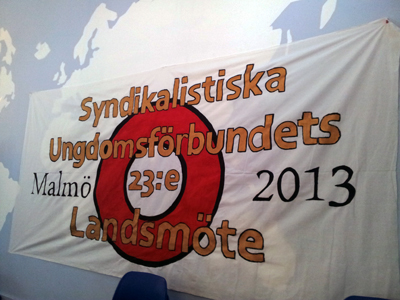
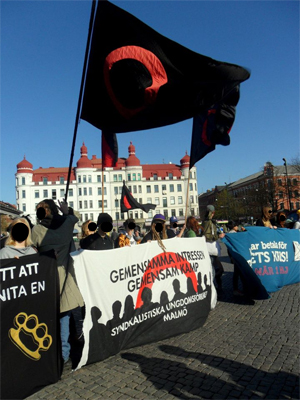
sufEarlier this month I attended the Swedish Anarcho-Syndicalist Youth Federation (SUF) Federal Conference in Malmö as an observer  from North London Solidarity Federation. This is the 23rd conference and in the 20 year anniversary of the group.

20 years ago the SUF formed in inpiration from the Central Organisation of the Workers of Sweden (SAC), the Swedish syndicalist union which left the IWA in dispute during the 50's. SUF was previously the official youth membership group of the SAC and today the two still work closely together. In Malmö, a small city in the South of Sweden, they share an HQ which allows the SUF local access to various resources and archives as well as a meeting space and office.

SUF's strategy is one of class struggle and anarcho-syndicalist direct action solidarity and they are organised federally. They are of similar size and number to SolFed. They have no upper or lower age limits but generally members will encourage themselves to leave the group at around 27.

Malmö is known as the "Crime City" for its reputation as the capital of crime in Sweden, despite the crime rate being comparable to the larger cities. The town is traditionally an "immigrant town" and the nickname is useful for politicians to propagandise cynically on a racist anti-immigration slant. Malmö's popular roller derby team the Crime City Rollers have reclaimed the moniker and I must admit, it's a fantastic name for a sports team.
suf

The conference was split over three days, held in a school just outside of the main town. Delegates, observers and participants from ten SUF locals greeted and socialised over dinner in the evening and prepared themselves for the proceedings the next day. The other International delegates were from "Motmakt" (Counter-Power) a Norwegian platformist group who are newly established and growing quickly.

The conference itself took place in a similar manner to our own, with local groups and organising committees represented. In addition four members make up a "presidium" which is two chairs and two secretaries in order to chair and document the proceedings. The International Committee even provided live translations for me. As well as discussions on strategy, activity, internal democracy and upcoming campaigns "auditors" are elected to scrutinise the work of organising committees over the coming year. Voting on the submitted motions happens near the bottom of the agenda.

I mustn't forget to add that there was a 5 minute break every hour, allowing for coffee and tea. Perfect! This lot know how to consume coffee, let me tell you. I was perfectly happy with the breakfast tea, however.

After reports from local groups and national committees there were rotating group discussions on the internal democracy and communications, anti-sexism and the international and outward face of SUF. These discussions were lively, informed and extremely interesting. Among the reports it was interesting to hear from the Women's "Seperatist" Group, who organise events and activites for self-identified women members of SUF regularly. This group acts as a fully functioning network within SUF, which is how I'd imagine and hope the Womens Network in SolFed could one day function.

International observers were given the opportunity to introduce themselves and briefly explain how their organisations work. I gave a brief overview of SolFed in its history, composition and current activity which was well received.
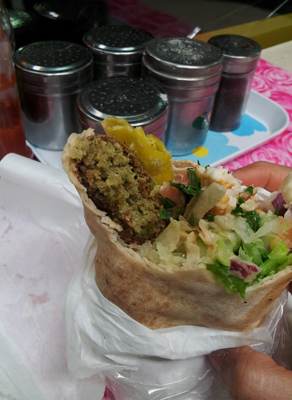
Lunch was fantastic! Home-made falafels cooked and prepared by members of SUF Malmö. In Malmö you can't move for falafel, and during my time there I partook at least once every day. Viva Falafel City!
suf

Following lunch, SAC members gave a talk on a new youth employment directive from the Swedish government which means that workers under 23 are only paid for 75% of their work, a plan which has seen collusion from the reformist unions in order to provide free labour for private companies. SAC propose that they and SUF work together to oppose and kill the government's plan. In discussions I commented to say I felt this is somewhat similar to Workfare schemes in the UK in its aims and operation and made some suggestions for combating the scheme based on similar lines. The SUF have the advantage that SAC is a strong organising union with thousands of members and SAC have the advantage that the SUF can often take more radical actions than the union. A co-ordinated campaign could be most effective and help the two organisations continue working more closely. However, SUF members are wary of being and being seen as the footsoldiers of the SAC. The struggle continues.
Later followed a demonstration of the voting procedure using a powerpoint presentation and a role play of a motion and amendment being proposed and voted on using Harry Potter house names (SUF Dumbledore's Army is something I wish existed). This allowed new conference delegates to learn the procedure and remind others in a less serious atmosphere and appropriately youth-orientated. Ankh Morpork SolFed could shamelessly steal this idea for our own conference.
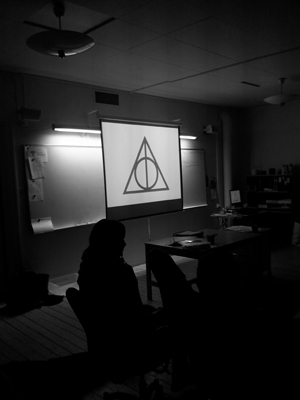
suf

The rest of the afternoon was devoted to motions and voting also happened the next day.  SUF has a strict no alcohol policy for all official events, meetings and socials. In the evening members socialised, remaining in the school and some took turns painting a special anniversary banner. The conference adjourned the next morning.
I must confess I travelled to Sweden with a rather jaded and cynical outlook and wondered exactly what I would take home from my trip. Upon witnessing the SUF's organisation in such numbers, spirit, enthusiasm and practical solidarity, I left really inspired by this group, it's strategy and their optimism. Comrades, the SUF is an organisation which struggles firmly in the 21st century and there are many lessons we can learn from the accessibility of the group and both the internal and external images they project. By its very nature the SUF must have a regular turnover of members, but this hasn't stopped it swelling and forming new local groups  every few months. As a member of SolFed, our reputation preceded me here, but I was quickly humbled by the friendliness and power of the group and I am determined that the Solidarity Federation should grow and demonstrate similar discipline.

Long live SUF! Solidarity Forever.

  • conference reports
  • SUF
  • Sweden
  • international

Guides

Your rights at work

Why do we organise? Capitalism is shit, oppression is shit - but what can we at SolFed do about it?

Why do we organise?

This is our flag - it tells you what we stand for

this-is-our-flag

Direct Action #2 (2024)

Direct Action #2 (2024)

Anarcho-syndicalism in Britain – a little history (2015)

Anarcho-syndicalism in Britain – a little history (2015)

Office worker’s health and safety - your rights and how to use them (2015)

Office worker’s health and safety - your rights and how to use them (2015)

Anarchism and Anarcho-syndicalism (Rudolf Rocker, 2014)

Anarchism and Anarcho-syndicalism (Rudolf Rocker, 2014)

Fighting for ourselves - anarcho-syndicalism and the class struggle (2012)

Fighting for ourselves - anarcho-syndicalism and the class struggle (2012)

Theory & Practice 1 - Workmates - direct action workplace organising on the London underground (2011)

Theory & Practice 1 - Workmates - direct action workplace organising on the London underground (2011)

The Economics of freedom (2003)

The Economics of freedom (2003)

A history of anarcho-syndicalism (SelfEd Collective, 24 unit series, 2001)

A history of anarcho-syndicalism (SelfEd Collective, 24 unit series, 2001)

Out of the frying pan, a critical look at works councils (1998)

Out of the frying pan, a critical look at works councils (1998)

Health and safety at work - an anarcho-syndicalist approach (1997)

Health and safety at work - an anarcho-syndicalist approach (1997)

Theory & Practice 2 - Anarcho-syndicalism in Puerto Real (1994)

Theory & Practice 2 - Anarcho-syndicalism in Puerto Real (1994)
RSS feed