Home
Solidarity Federation
IWA
User account menu
  • Contact
  • Log in
  • Home
    • Intro
    • Workplace organiser training
    • Industrial strategy
    • Community strategy
    • Constitution
  • SolFed
    • Brighton
    • Bristol
    • Edinburgh
    • Liverpool
    • Manchester
    • North London
    • Wales
    • Yorkshire
  • Industries & sectors
    • Claimants and unpaid
    • Education
    • Health and social care
    • Hospitality
  • Events & reports
  • Publications
    • Guides
      • Stuff your boss (doesn't want you to know)
      • Stuff your sexist boss (doesn't want you to know) (2018)
      • Stuff your landlord (doesn't want you to know) (2016)
      • Is your cleaning job killing you? A guide to cleaners health and safety (2017)
      • Office worker’s health and safety - your rights and how to use them (2015)
      • A migrant's guide to Manchester (2016) [en es]
      • A migrant's guide to London (2014) [en es pl]
      • Strike - a guide to walking out (2014)
    • Pamphlets and books
      • Anarcho-syndicalism in Britain – a little history (2015)
        • 1. 19th century to 1914 - The First International, growth of industrial unionism and the Great Unrest
        • 2. 1914–1945 - State suppression and the Bolshevik turn – how Lenin’s seeming success drew militants to the Comintern
        • 3. 1945–1994 - The Anarchist Federation of Britain, Syndicalist Workers’ Federation and Direct Action Movement
        • 4. Today’s movement - A short look at the strategy and thinking of the modern Solidarity Federation
      • Office worker’s health and safety - your rights and how to use them (2015)
      • Anarchism and Anarcho-syndicalism (Rudolf Rocker, 2014)
        • Introduction
        • 1. Ideology of Anarchism
        • 2. History of anarchist philosphy, from Lao-Tse to Kropotkin
        • 3. The origins of anarcho-syndicalism
        • 4. Socialism and anarcho-syndicalism in France
        • 5. The role of the trade unions: anarcho-syndicalist view
        • 6. The struggle in Germany and Spain
        • 7. The political struggle: anarcho-syndicalist view
        • 8. Anarcho-syndicalism since the First World War
      • Fighting for ourselves - anarcho-syndicalism and the class struggle (2012)
        • Introduction
        • 1. The mainstream workers' movement
        • 2. Radical currents in the workers' movement
        • 3. Anarcho-syndicalism in the 20th century
        • 4. Capitalism and the class struggle since World War II
        • 5. Anarcho-syndicalism in the 21st century
        • Endnotes
      • Workmates - direct action workplace organising on the London underground (2011)
      • The Economics of freedom (2003)
      • A history of anarcho-syndicalism (2001)
      • Out of the frying pan, a critical look at works councils (1998)
      • Health and safety at work - an anarcho-syndicalist approach (1997)
      • Anarcho-syndicalism in Puerto Real (1994)
    • Leaflets and flyers
      • Solidarity Federation Education Union (SFEU)
      • Solidarity Federation Hospitality Workers Union (SFHWU)
      • Why do we organise?
      • This is our flag - it tells you what we stand for
      • What is anarcho-syndicalism anyway?
      • Anarchism and Syndicalism (short version)
      • Anarchism and Syndicalism
      • Towards a better union
      • Protest is not enough
      • Building beyond elections
      • We should run our workplaces
      • We should run our communities
      • We should run our movements
    • Newsletters
      • Brighton Solidarity
        • Brighton Solidarity #3
      • Education Worker
        • Education Worker #10 Victimisation (2013)
        • Education Worker #9 (2012)
        • Education Worker #8 Academy Special (2012)
      • Wildcat!
        • Wildcat! #13 (Jan 2013)
        • Wildcat! (Winter 2012)
        • Wildcat! #6 (Summer 2011)
        • Wildcat! #5 (Spring 2011)
        • Wildcat! #4 (Dec 2010)
        • Wildcat! #3 (Oct-Nov 2010)
        • Wildcat! #2 (Jul-Aug 2010)
        • Wildcat! Football for the fans NOT for fat cats! (Jul 2010)
        • Wildcat! #1 (May-June 2010)
      • May Day Bulletin (Newcastle SolFed, 2014)
    • Direct Action
      • Direct Action #2 (2024)
      • Direct Action #1 (2023)
      • Direct action #47 (Summer 2009)
    • Catalyst
      • Catalyst #29 (Feb 2012)
      • Catalyst #28 (Oct 2011)
      • Catalyst #27 (Jun 2011)
      • Catalyst #26 (Mar 2011)
      • Catalyst #25 (Dec 2010)
      • Catalyst #24 (Summer 2010)
    • SelfEd
      • A history of anarcho-syndicalism
        • Block 1
          • Unit 1: The Origins of Capitalism
          • Unit 2: Britain: The Radical Period 1750-1840
          • Unit 3: The First International
          • Unit 4: France 1870-1918 Early revolutionary unions
          • Unit 5: Revolutionary Syndicalism in Britain, 1870-1910
          • Unit 6: Revolutionary Syndicalism in Britain and Ireland, 1910-17
        • Block 2
          • Unit 7: Mexico 1870-1920: Colonialism and Revolution
          • Unit 8: USA 1886-1930 - The Wobblies
          • Unit 9: Anarcho-syndicalism in Argentina 1870-1939
          • Unit 10: Sweden 1889-1939
          • Unit 11: Russia I: 1850-1917
          • Unit 12 Russia II: 1917-30
        • Block 3
          • Unit 13: Going Global - International Organisation, 1872-1922
          • Unit 14: Anarcho-syndicalism in Britain, 1914-30
          • Unit 15 Spain, 1868-1936: Build-up to Revolution
          • Unit 16 Spain: Culture, education, women and sexuality
          • Unit 17: Spain 1936-39: Revolution and Civil War
          • Unit 18: Spain - The Collectives
        • Block 4
          • Unit 19: Britain, 1930-1950 - The Era of Reform
          • Unit 20: Britain, 1950-1990 - Decline of Social Democracy
          • Unit 21: anarcho-syndicalism 1939-99
          • Unit 22: Roots of modern anarcho-syndicalism: freedom, oppression & rebellion
          • Unit 23: Roots of modern anarcho-syndicalism: morality, culture & tactics
          • Unit 24: The spirit of anarcho-syndicalism
    • Letters
  • IWA

Coronavirus lockdown sees domestic violence against women surge

By Tony, 20 April, 2020

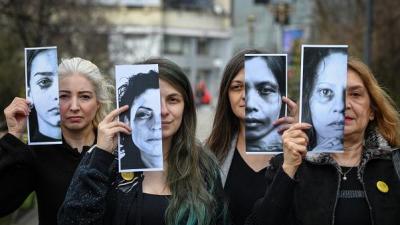
Abusive men are using coronavirus as an excuse for domestic violence, campaigners have warned, as horrifying new figures reveal men are killing women and girls at a rate of almost one a day since the lockdown began. This represents a doubling of the average rate of deaths and highlights the extreme danger faced by women and girls trapped in the same house as violent partners and other male relatives.

These figures only go to highlight the dangers faced by women during the lockdown. Nor is violence the only issue they face. Domestic violence impacts all aspects of women’s lives. It is estimated that around three women a week commit suicide as a result of domestic violence. Women who experience domestic violence are twice as likely to experience depression, far more likely to suffer from substance abuse, more likely to lose their jobs, more likely to lose their homes and end up homeless, and more likely suffer from long term health problems such as arthritis and chronic pain.  

Figures show that almost one in three women aged 16-59 will experience domestic abuse in their lifetime. Meanwhile, reports from those countries worse affected by the coronavirus show that domestic violence is increasing. This is hardly surprising, as women and girls will find themselves at an increased risk of all forms of abuse-based violence, as they are trapped with perpetrators and there is a lot less scrutiny. There is also clear evidence that financial hardship caused by the coronavirus will increase levels of domestic violence; for example, during the Greek financial crash in 2011 there was a 53.9% increase in family violence.

Given these horrors, there is much to be done, from trying to support women that may be experiencing domestic violence through to putting pressure on the government to release emergency funds to hard pressed domestic violence support services. Once the crisis has passed, there must be no return to the austerity that has done so much damage to women trying to escape abusive relationships, not least in the brutal cuts to government funding of women’s refuges.

Part of this has to be raising the issue of domestic violence in the workplace. Domestic abuse does not stop once women leave home. Surveys show that up to 53% of women suffering from domestic violence have reported that the violence has continued at or near their workplaces. This can take the form of abusive emails and phone calls through to partners turning up at work and making threats or stalking women outside their workplaces. In extreme cases, women have been killed by their partners or ex-partners in the workplace.

Domestic violence also impacts on women in the workplace in ways that often result in them losing or leaving their jobs. In a TUC survey, 80 per cent of women who had experienced domestic violence reported that the violence had affected their work performance due to being distracted, tired or unwell. Other research has found that 56 per cent of abused women arrive late for work at least five times a month and 53 per cent miss at least three days of work a month.

Clearly then, domestic violence is not just about the home; it is also a workplace issue and there is much that can be done in the workplace to support women suffering from domestic violence. One of the biggest barriers to break is the isolation and stigma felt by victims. This can be done by simply raising the issue of domestic violence in the workplace, approaching those you suspect to be victims of domestic violence, offering support and accompanying them in disciplinary hearings and sickness reviews.

Ultimately, the best way to support victims is to organise your workplace and make domestic violence an issue as a means of forcing employers to act. Demands can be made to bring in paid leave for victims and introduce safety policies, such as changing or screening work phone numbers or emails, providing a security alarm, providing transport to and from work, or alerting security staff to potential threats. All of this creates a supportive workplace culture in which victims feel they can begin to talk about the abuse they are suffering.

If you want to get involved fighting domestic abuse, Sisters Uncut takes a direct action approach to campaigning. They can be contacted at http://www.sistersuncut.org. In the North West Safety4Sisters support migrant women, they can be contacted at http://www.safety4sisters.org

If you are suffering from domestic abuse there are a number of helplines including a 24/7 helpline  0808 2000 247. And there is also LGBT Domestic Violence Helpline - 0300 999 5428

If you are interested in organising in your workplace the Solidarity Federation run a number of training courses including a training course aimed at women who wish to organise in their workplaces. For more information email solfed.training@gmail.com

  • Covid-19
  • women
  • Manchester

Guides

Your rights at work

Why do we organise? Capitalism is shit, oppression is shit - but what can we at SolFed do about it?

Why do we organise?

This is our flag - it tells you what we stand for

this-is-our-flag

Direct Action #2 (2024)

Direct Action #2 (2024)

Anarcho-syndicalism in Britain – a little history (2015)

Anarcho-syndicalism in Britain – a little history (2015)

Office worker’s health and safety - your rights and how to use them (2015)

Office worker’s health and safety - your rights and how to use them (2015)

Anarchism and Anarcho-syndicalism (Rudolf Rocker, 2014)

Anarchism and Anarcho-syndicalism (Rudolf Rocker, 2014)

Fighting for ourselves - anarcho-syndicalism and the class struggle (2012)

Fighting for ourselves - anarcho-syndicalism and the class struggle (2012)

Theory & Practice 1 - Workmates - direct action workplace organising on the London underground (2011)

Theory & Practice 1 - Workmates - direct action workplace organising on the London underground (2011)

The Economics of freedom (2003)

The Economics of freedom (2003)

A history of anarcho-syndicalism (SelfEd Collective, 24 unit series, 2001)

A history of anarcho-syndicalism (SelfEd Collective, 24 unit series, 2001)

Out of the frying pan, a critical look at works councils (1998)

Out of the frying pan, a critical look at works councils (1998)

Health and safety at work - an anarcho-syndicalist approach (1997)

Health and safety at work - an anarcho-syndicalist approach (1997)

Theory & Practice 2 - Anarcho-syndicalism in Puerto Real (1994)

Theory & Practice 2 - Anarcho-syndicalism in Puerto Real (1994)
RSS feed