A DAM pamphlet from the 1980's outlining what is wrong with trade unionism, then a mass movement, and the anarcho-syndicalist alternative
The union makes us strong
"The union makes us strong is an axiom most people would agree with, but if we look at the question closely doubts appear.
Consider the trade union movement as a whole, the numbers are there, when Callaghan left office the T.U.C. had a membership of some 13 million out of a workforce of 20 million. This meant that over half the working population were organised. It is in this organisation that the weakness is apparent, the movement
In Spain we are able to provide cheap holidays, where you, the tourists, have value for your money, good cheap food and fine hotels which provide good service at prices you can afford — altogether splendid value.
How do we do this? We keep the cost of living low, by preventing strikes that would put up wages. Our absence of strikes makes your holiday cheap.
However, some malicious people try to alter this situation — and spoil your holidays. You will be glad to hear that we have ways to solve this. One is by garrotting the trouble-makers.
Garrotting is a method of humane execution, in which the
A POLITICIAN who has one single overpowering aim and pursues it relentlessly, even wading in blood, has, it circumstances are favourable, a chance of success. He is not usually good at longsight or broadsight, but on a single aim he makes fluffy liberals his victims. The same is true of tycoons.
Lenin and the Bolshevik party had that single purpose. to gain and keep absolute power; all other things were means to that end, or were forced on them by the pursuit of it. This is true of collectivism and
“I look around my colleagues and I see landlords, capitalists and lawyers. We are a cross-section of the national life and this is something that has never happened before.”
Arthur Greenwood, Labour Lord Privy Seal, Hansard, August 17, 1945,
Atomic insanity
The war in Europe ended on May 5, 1945. As a result of the General Election that followed, the Labour Government took office on July 26, 1945. Eleven days later, on August 6, the first atom bomb was dropped on Hiroshima. The second atom bomb devastated Nagasaki on August 9. The total
THE AIR RAID sirens had hardly sounded the last all-clear when Britain was thrust into the hurly-burly of a General Election. Before the world’s first atom bombs had fallen on Japanese cities, a Labour Government with an overwhelming majority ruled the House of Commons, and when victory over Japan followed victory over Germany, a Labour Prime Minister, head of a victorious Labour Government, rose to tell a House of Commons packed to the roof with his jubilant comrades.
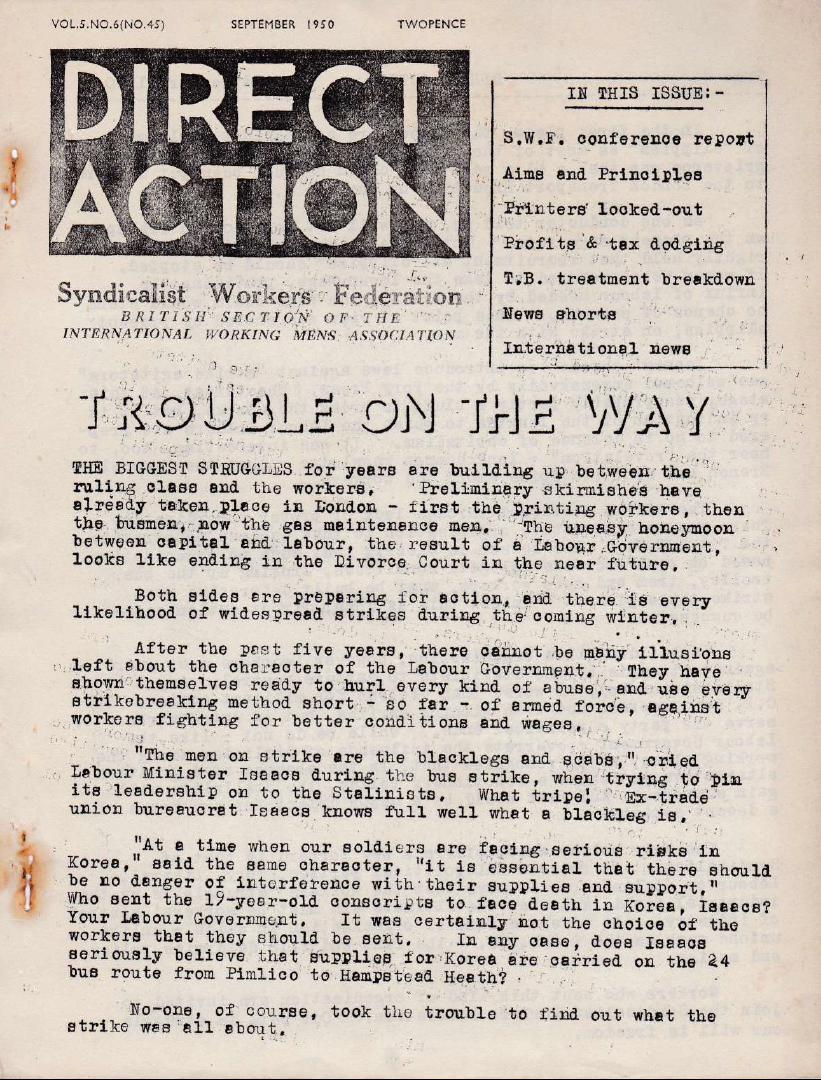
The repeal of the 1927 Trades Disputes Act by the Labour Parliament makes little difference to the prospect of a General Strike. The Labour leaders believe that, for the present at least, they can better suppress strikes by their control of the trade unions than by Parliament. On the other hand, when the workers are willing to engage the class enemy in a General Strike they will not consult Acts of
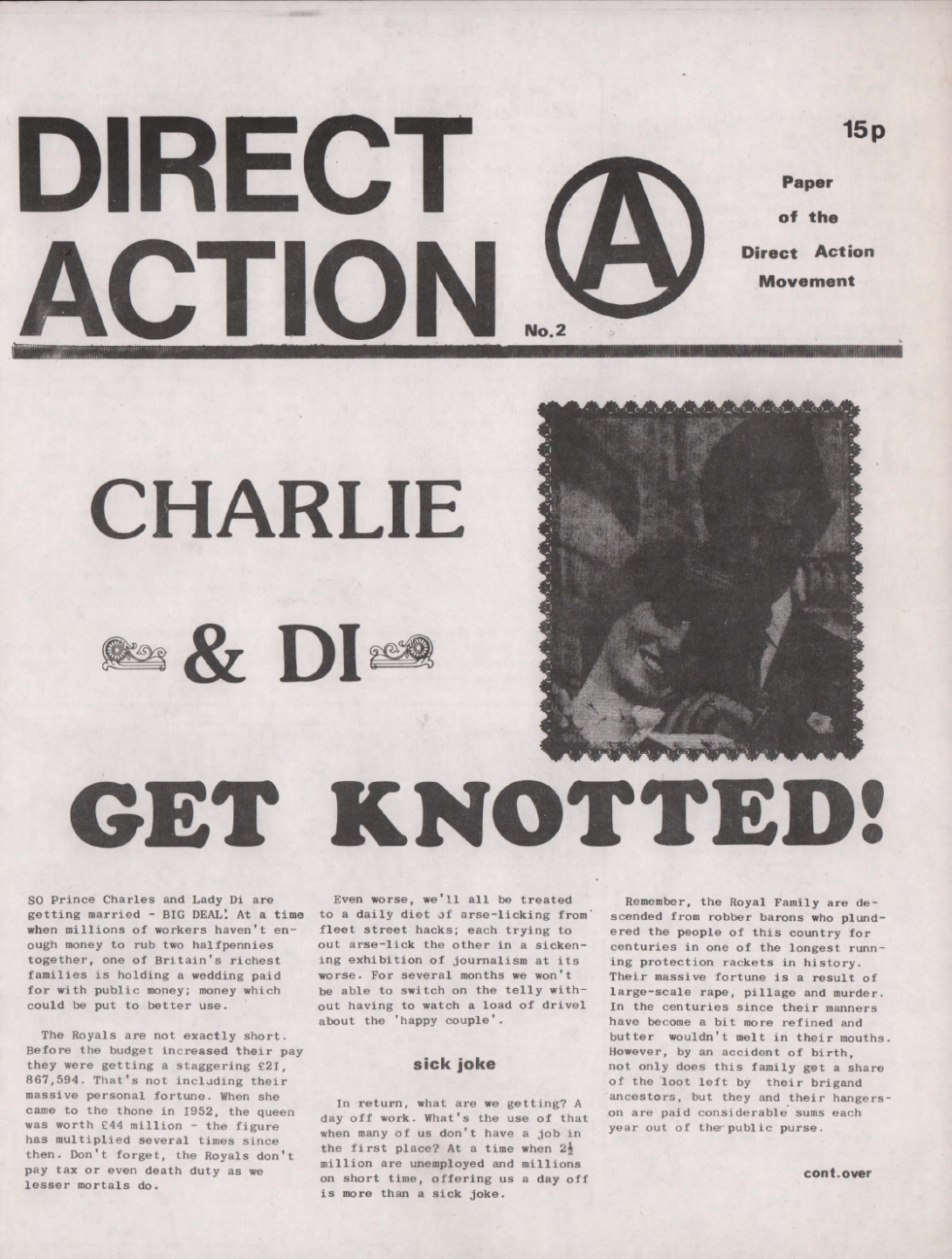

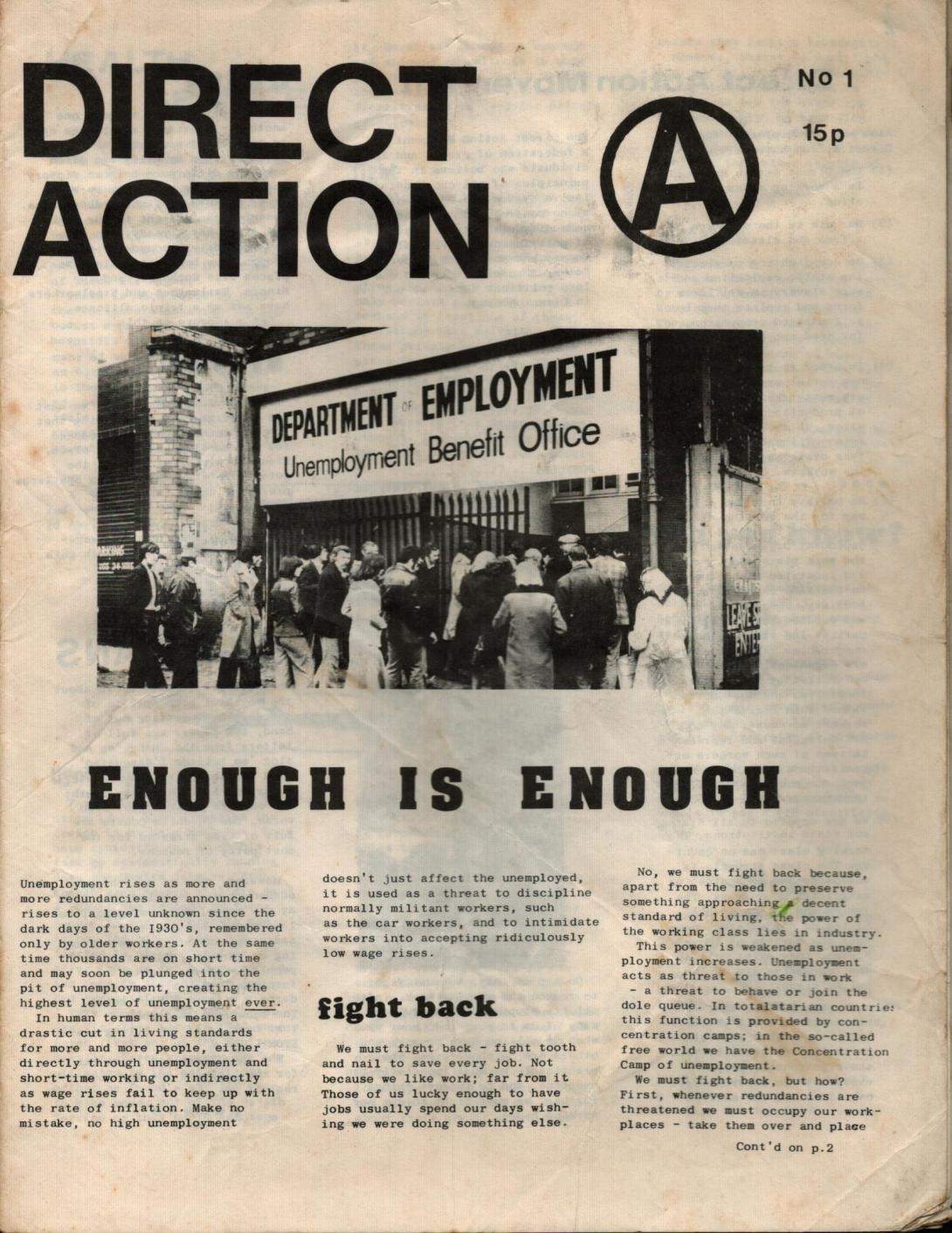
 A DAM pamphlet from the 1980's outlining what is wrong with trade unionism, then a mass movement, and the anarcho-syndicalist alternative
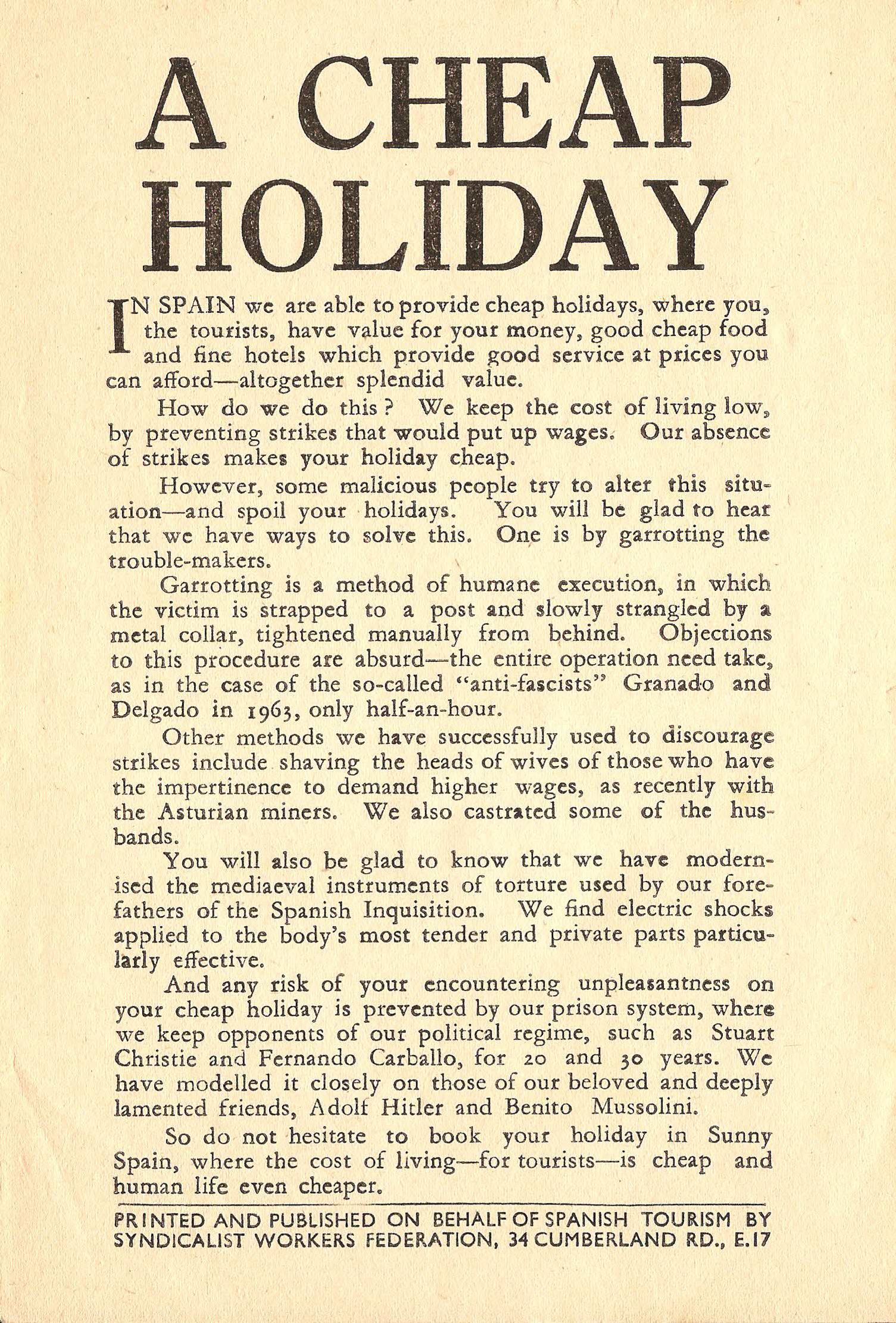 In Spain we are able to provide cheap holidays, where you, the tourists, have value for your money, good cheap food and fine hotels which provide good service at prices you can afford — altogether splendid value.
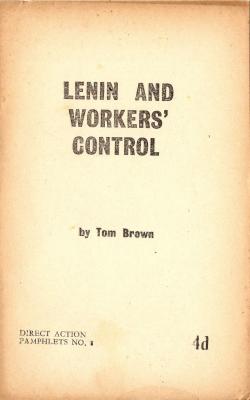 LENIN AND WORKERS' CONTROL
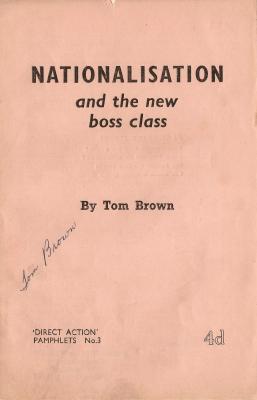 Nationalisation and the new boss class