Latest edition of our regular newsletter including articles on recent Brighton Hospitality Workers conflicts, the effect on NHS workers of the 2014 Immigration Act, and workers' rights advice.
The Immigration Act of 2014 has far reaching strands that pushes society further to the right. It affects many areas of life such as housing and health. In health, the government want clinical, administrative and auxiliary staff to enquire to and report on the immigration status of patients, which could lead to charging or the withholding of healthcare services.
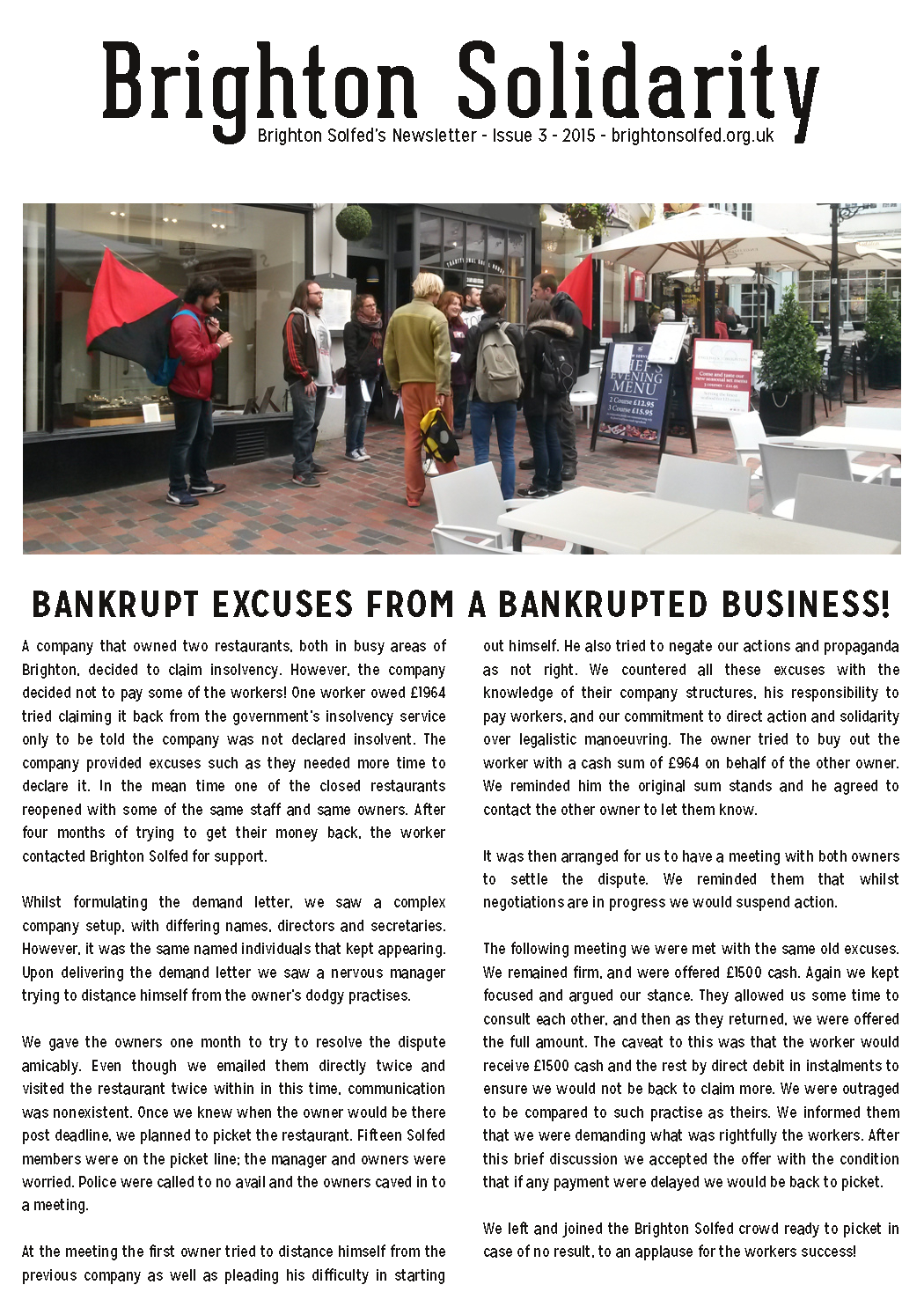
A company that owned two restaurants, both in busy areas of Brighton, decided to claim insolvency. All the workers were called to a meeting to announce that the company was going insolvent and the restaurants would close. Some of the employees were paid off, some were given contracts for a ‘new’ restaurant and some got nothing!
A Valentine's Day dispute leads to satisfaction for two workers. You quit your job and your former employer refuses to pay what he owes you? That sounds familiar. And it is exactly what happened to A. and D. who had been working in the kitchen of a Hanover pub.
Newcastle SolFed are planning regular trips into the country. For those new or used to hiking, rambling or just casually strolling well away from the hustle of the cities and towns, this is a great way to meet members of Newcastle SolFed in a relaxed and friendly atmosphere. Not all of us are outdoors types - some of us will have to be dragged kicking and screaming - so there are no pressures if you are a novice or unfit. People with any concerns regarding access or mobility should first contact us for further details.
We won't be advertising all of these events, and so are asking those interested to keep in touch, either by email or by phone - or better still by joining our email list.
Recently I have received some very sad news. Our friend Peggy has passed away in Zaragoza (Spain) after a month in the hospital. Peggy was living in Brighton for nearly two years. She inherited from her family a passion for classical music, and she took part in the Brighton Choir. One of her favourite pieces was Mozart´s Requiem.
The Brighton Solfed Health and Social Care network holds monthly drop in surgeries, on the last Monday of each month. The next one will be on Monday 25th May, 7 - 9 pm at Saint Georges Inn, (33 Upper Sudeley Street, Kemp Town, BN2 1HE). If you have any workplace issues that you would like to talk about with Solfed members working in health or in social care, then come along this Bank Holiday Monday.
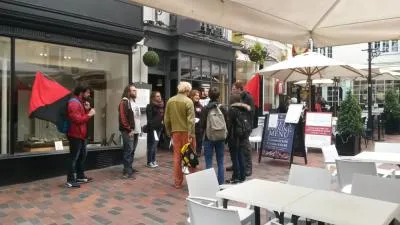
In the hospitality sector in Brighton it is very common to find employers who do not pay the minimum wage or pay the holidays owed to their workers. This problem is more common for migrants who do not necessarily have a great command of language or a thorough knowledge of labor laws.
This was the case for an employee of a restaurant in The Lanes. His situation in the workplace was made more complicated by the fact the rest of the kitchen staff, like him, were migrants, so communication was very difficult. He was paid minimum wage, 6.5 pounds per hour, and last minute changes to the rota were quite common, sometimes reaching up to 50 hours per week.
Taking advantage of the difficulties in communication and the lack of labor legislation, his boss tried to convince the worker not to take his holiday, and then refused to pay the holiday entitlement arguing that "If you did not work during your holiday then you're not entitled to payment".
En el sector de la hostelería en Brighton es muy habitual encontrarse con empresarios que no pagan el salario mínimo o que intentan no pagar las vacaciones a sus trabajadores. Esta problemática es más común en los trabajadores migrantes que no tienen un gran dominio del idioma ni un conocimiento profundo de la legislación laboral.
Este el caso de un trabajador de un restaurante en The Lanes. El entorno en que se desarrollaba su trabajo era bastante complejo, el resto del personal de la cocina, como él, eran inmigrantes, por lo que la comunicación se hacía muy complicada. Su trabajo se abonaba con el mínimo posible, 6,5 libras por hora, y los cambios de horarios a última hora eran bastante habituales, alcanzando en algunos casos jornadas semanales de más de 50 horas.


 Newcastle SolFed are planning regular trips into the country. For those new or used to hiking, rambling or just casually strolling well away from the hustle of the cities and towns, this is a great way to meet members of Newcastle SolFed in a relaxed and friendly atmosphere. Not all of us are outdoors types - some of us will have to be dragged kicking and screaming - so there are no pressures if you are a novice or unfit. People with any concerns regarding access or mobility should first contact us for further details.
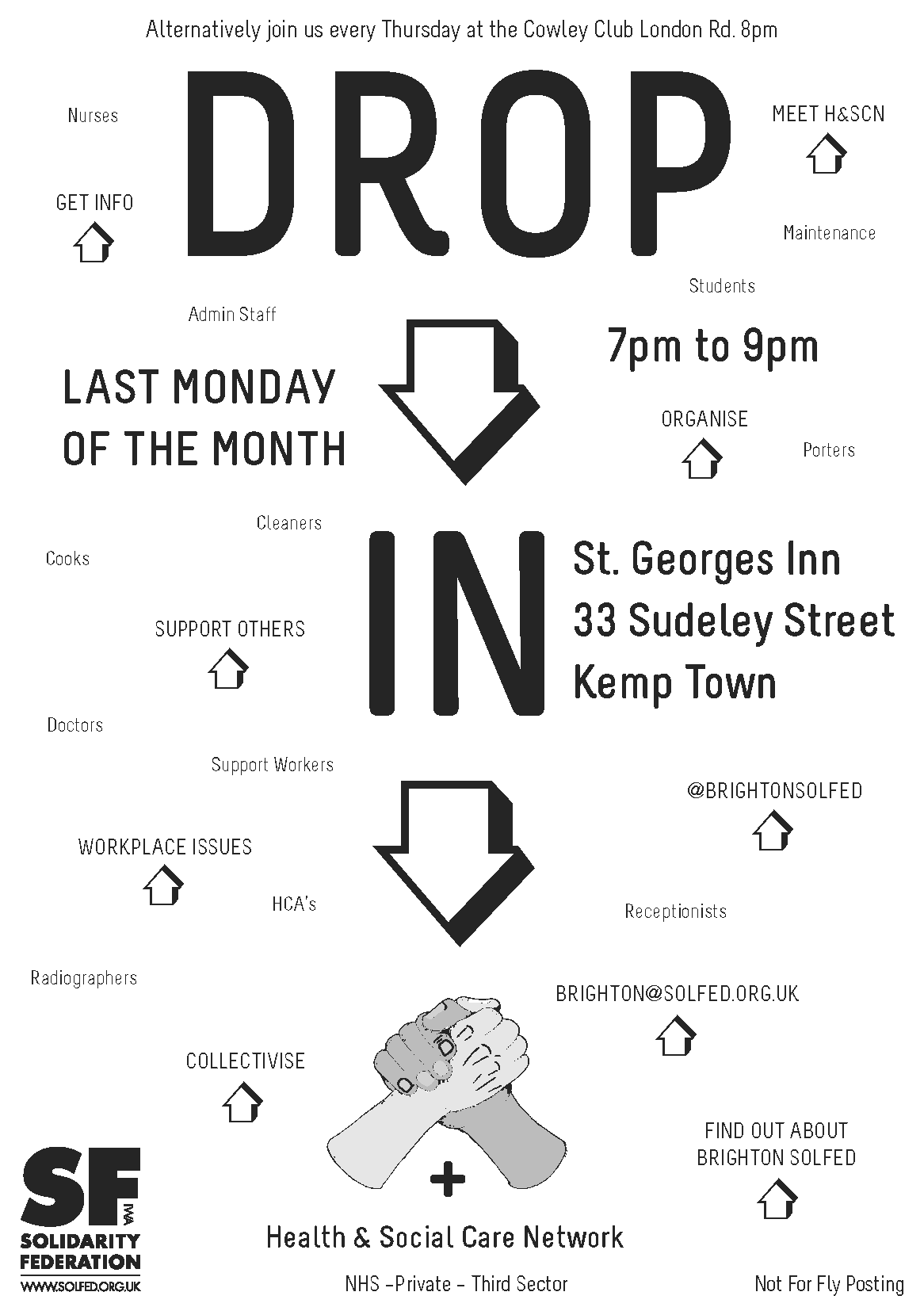 The Brighton Solfed Health and Social Care network holds monthly drop in surgeries, on the last Monday of each month. The next one will be on Monday 25th May, 7 - 9 pm at Saint Georges Inn, (33 Upper Sudeley Street, Kemp Town, BN2 1HE).
 Brighton Solfed's Newsletter - Issue 3 - 2015 - brightonsolfed.org.uk