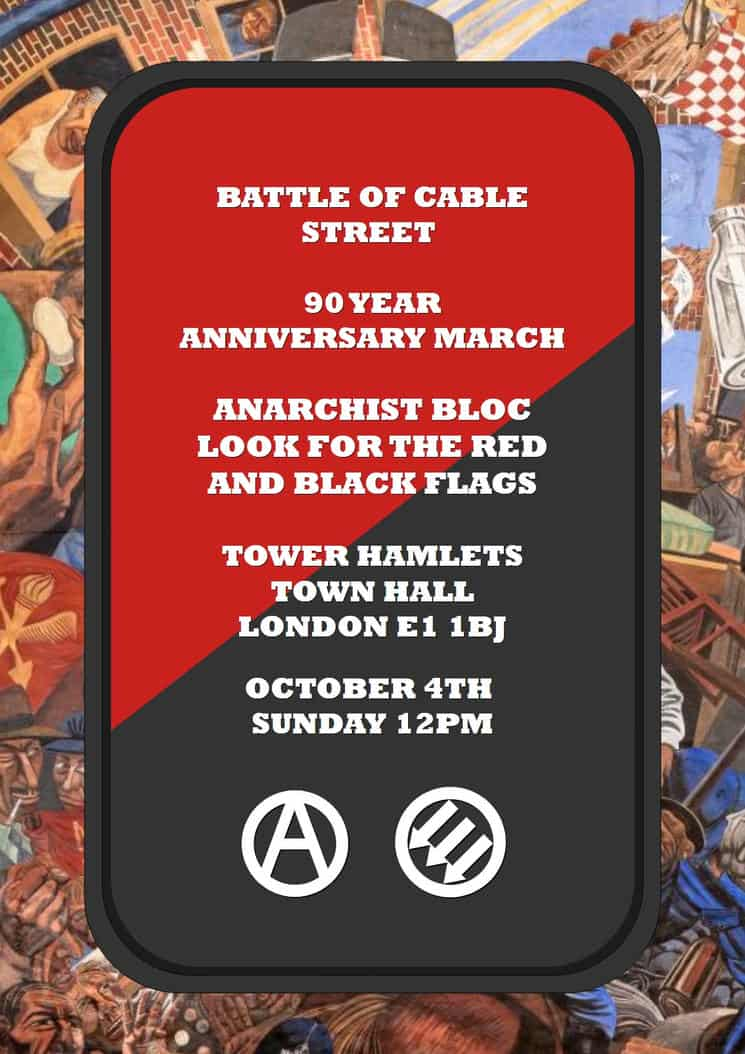
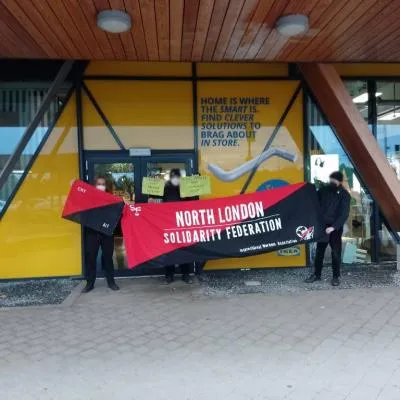
 There will be an anarchist bloc at the upcoming October 4th march to commemorate the 90th anniversary of the Battle of Cable Street. During this battle, people from all over London came together to drive the British Union of Fascists and the police that protected them out of the east end. This was made possible by decades of previous organising in workplaces and the community that built working class solidarity, including between migrant Jewish garment workers and migrant Irish dock workers.
Section of the International Workers Association
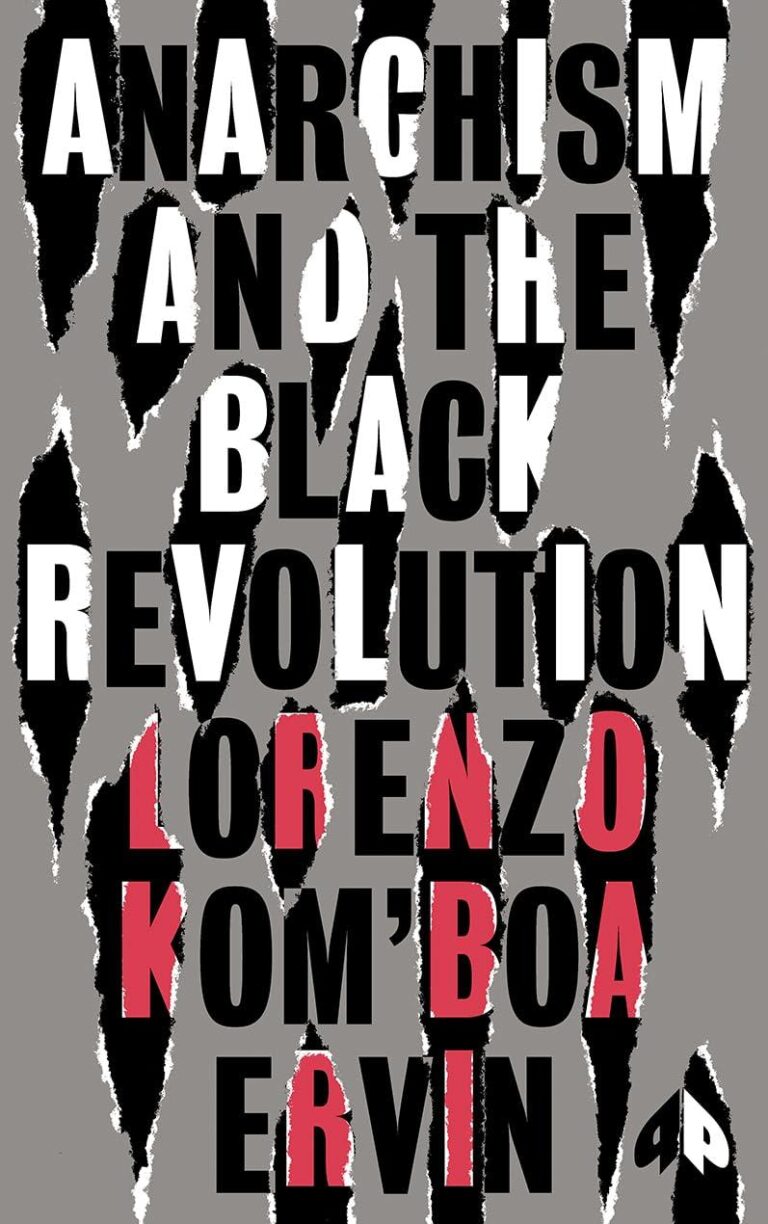 For our fifth reading group we will be reading Anarchism and The Black Revolution by Lorenzo Kom’boa Ervin. Ervin was a Vietnam war conscript who became an anti-war activist, went on to join the Black Panthers, and became an anarchist while in prison for high-jacking an aircraft to escape to Cuba after being alleged in an attempt to kill a Ku Klux Klan leader. Anarchism and The Black Revolution, written in prison and first published in 1979, is not only a classic work of late 20th century anarchism, but brings a black perspective to anarchism that has often been missing in a movement dominated by the ideas of white European thinkers.
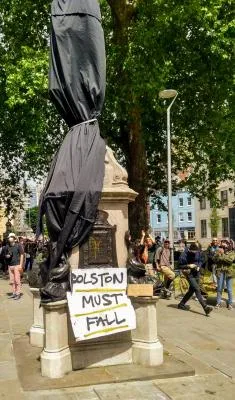
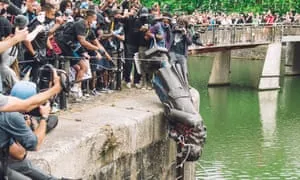
 The Black Lives Matter movement across the world has certainly created a space for resistance against racism, white supremacy and the dynamics of colonialism. Colonialism in the past but also the remains of colonial ideas in the present. The idea that black people and People of Colour, should be "grateful" to the society that offers individuals work and, sometimes, offers asylum and refugee status, is a product of that old colonial mentality that we have to destroy at its roots. The uprooting of the Edward Colston statue that seems to have caused so much uproar is a sign of this on-going and all-pervading colonialist mentality.