Home
Solidarity Federation
Section of the International Workers Association
CAPTCHA
Solve this simple math problem and enter the result. E.g. for 1+3, enter 4.
This question is for testing whether or not you are a human visitor and to prevent automated spam submissions.
User account menu
  • Contact
  • Log in
CAPTCHA
Solve this simple math problem and enter the result. E.g. for 1+3, enter 4.
This question is for testing whether or not you are a human visitor and to prevent automated spam submissions.
  • Home
    • About SolFed
    • Workplace organiser training
    • Industrial strategy
    • Community strategy
    • Constitution
  • SolFed
    • Brighton
    • Bristol
    • Edinburgh
    • Liverpool
    • Manchester
    • North London
    • Wales
    • Yorkshire
  • Industries and sectors
    • Claimants and unpaid
    • Education
    • Health and social care
    • Hospitality
  • Events & reports
  • Publications
    • Guides
      • Stuff your boss (doesn't want you to know)
      • Stuff your sexist boss (doesn't want you to know) (2018)
      • Stuff your landlord (doesn't want you to know) (2016)
      • Is your cleaning job killing you? A guide to cleaners health and safety (2017)
      • Office worker’s health and safety - your rights and how to use them (2015)
      • A migrant's guide to Manchester (2016) [en es]
      • A migrant's guide to London (2014) [en es pl]
      • Strike - a guide to walking out (2014)
    • Pamphlets and books
      • Anarcho-syndicalism in Britain – a little history (2015)
      • Office worker’s health and safety - your rights and how to use them (2015)
      • Anarchism and Anarcho-syndicalism (Rudolf Rocker, 2014)
      • Fighting for ourselves - anarcho-syndicalism and the class struggle (2012)
      • Workmates - direct action workplace organising on the London underground (2011)
      • The Economics of freedom (2003)
      • A history of anarcho-syndicalism (2001)
      • Health and safety at work - an anarcho-syndicalist approach (1997)
      • Out of the frying pan, a critical look at works councils (1998)
      • Anarcho-syndicalism in Puerto Real (1994)
    • Leaflets and flyers
    • Posters and stickers
    • Newsletters
    • Direct Action
    • Catalyst
    • SelfEd
    • Reference
  • IWA

Care worker organising in a pandemic

By Tony, 10 April, 2020

Care workers right now are facing a huge challenge. We were overworked, at risk and underpaid before Covid-19 came along. A lot of us are facing massive upheaval in our work and personal lives. Lockdown is stopping us from seeing our friends, family and colleagues, and the demands nowaced on the NHS, care homes and other workplaces have increased and changed rapidly. So now more than ever we are asking, what can we do?

What are we facing?

Some of the issues we are facing are new, and some are old problems exacerbated by the current crisis. The first one we are going to look at is the most common and well known right now.

PPE

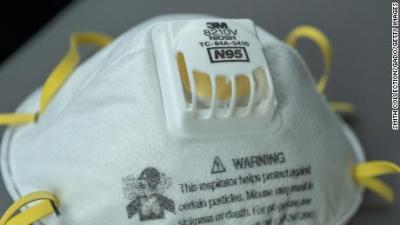
If you didn't know how important PPE was a few months ago, you probably know now. PPE (Thats Personal Protective Equipment in case you missed it) is desperately needed. Because Coronavirus is a respiratory virus, you are at risk of contracting it if you are in close contact with anybody (Hence social distancing measures). That risk is increased massively when working with patients who are displaying symptoms, and even more so if your work involves procedures that are aerosol generating (opening airways, ventilating etc). The PPE you need, as advised by the World Health Organisation (WHO) and Public Health England (PHE) is detailed online, depending where you work and what kind of work you do. The highest level of PPE, and therefore the safest, is:
Gloves
Gowns (arm or leg covering)
FFP3 mask
Face visor

Every single item of this should be single use and not re-used. I know personally that workers such as myself, at the highest level of risk, are not being provided with the correct equipment, or being asked to re-use it to save on PPE. This is hugely dangerous and puts everyone at risk, yourself, your family and any other patients you come into contact with.

What can we do?

First step is to find out what PPE you need to do your work safely. Do not ask your managers what this is, and do not trust what they tell you. Go online and find out what the guidance is, or ask colleagues what they have heard. Chances are there will be varying opinions and stories, advice has changed almost every day since lockdown, so its important you find out what your colleagues and you need to protect yourselves.

If there is an issue (there will be) then raise it with everyone. Start with your colleagues, discuss the importance of pressuring management to provide you with a supply of correct PPE and make sure it continues. Emphasise that unless you are protected as workers, you cannot possibly care for and protect your patients properly. Also emphasise the huge risk to yourselves and your loved ones, doctors nurses and healthcare assistants have all died of Coronavirus during this pandemic, this would not have happened if they were properly protected from day one.

What can you expect? Management are most likely going to try and push your concerns aside, they will cite shortages and ‘advice’ from other management about what you need and it will not be what you want. Unfortunately, you can also expect some pushback or apathy from your colleagues. Care work has an unpleasant tendency for some workers to adapt a ‘get on with it’ approach. So used to cutbacks, poor pay and overwork, this is not surprising, but it needs to be challenged and overcome as much as possible.


How can we get what we want? This will depend hugely on what work you do, your colleagues, patients, management etc. The first thing to think about is how to apply pressure, what do management want more than anything, and can you use that as leverage. Right now, the continuation of the service is top priority, if you and your colleagues feel at risk with the PPE being provided, or not provided with any, then try and stop that service. This may be a big challenge, and will take a lot of discussion. Emotional blackmail is one of the things we often encounter when organising as care workers, ‘who will look after the patients’, ‘people will suffer’ even ‘people will die’. But remember, this is a very unique situation, nobody has faced a working environment like this in living memory, so it is vitally important that we start trying to counter attitudes and beliefs which put the patient over the safety of workers. If we get sick, if we die, there then will be nobody to provide the care that is needed. We are a specialised workforce, and regardless of how badly paid and treated we are, we are not easily replaced. Our experience and training means we must stay safe if the management want that work to continue, because we all know they aren't able or willing to do it…

Publicity is another potential pressure point. Most organisations, especially the NHS, are trying very hard right now to appear as though things are ‘under control’, even when we know as workers that it is far from the truth. If you feel like putting out information about the dangerous working conditions will help your cause, then find a way to do it. Just be aware that it will most likely be best to be as anonymous as possible.

The law? If the law wasn't a huge amount of use to us before, then it certainly isn't now. However it is still useful to have some backing when convincing colleagues and threatening management. There are laws which surround safety in the workplace, adequate PPE and so on. Its not worth your while learning all of these back to front, however there are certain passages of law it can be useful to quote and share around, section 100 of the 1996 Employee rights act is a good start. It essentially covers workers who stop working because of facing dangerous situations in the workplace.

Stick together and fight

We have to start fighting for more and better PPE now, and we have to look after each other. This is a hugely stressful and frightening time for care workers, so now more than ever we need to stick together, look after each other, and have each others backs.

We can't let this issue slide like we have in the past, this is not simply a pay cut, another understaffed shift, or extra job for you to do. This is our wellbeing, our lives and our health. If we don't fight back now, we may never get another chance. 

    • Covid-19
    • Manchester
    • health and social care
    • health and safety

    Guides

    Your rights at work

    About SolFed

    About SolFed

    Do you sometimes feel your union isn’t listening to you? (Solidarity Federation Education Union - SFEU)

    SFEU-flyer-2024-front

    What is wage theft?

    What is wage theft

    This is our flag - it tells you what we stand for

    this-is-our-flag

    Solidarity Federation Hospitality Workers Union (SFHWU)

    sfhwu leaflet front

    Stuff your boss (doesn't want you to know)

    Stuff your boss (doesn't want you to know)

    Why do we organise? Capitalism is shit, oppression is shit - but what can we at SolFed do about it?

    Why do we organise?

    Stuff your sexist boss (doesn't want you to know) (2018)

    Stuff your sexist boss (doesn't want you to know) (2018)

    Cost of living - Organise and fight back with the Solidarity Federation

    Cost of living - Organise and fight back with the Solidarity Federation

    Don't cross picket lines! Solidarity is the most powerful force in the world

    Don't cross picket lines

    Direct Action #2 (2024)

    Direct Action #2 (2024)

    Don't just moan - Organise!

    Don't just moan - Organise!

    Is your cleaning job killing you? A guide to cleaners health and safety (2017)

    Stuff your landlord (doesn't want you to know) (2016)

    Stuff your landlord (doesn't want you to know) (2016)

    Fed up with your landlord? Organise and fight back!

    Fed up with your landlord? Organise and fight back!

    A migrant's guide to Manchester (2016)

    A migrant's guide to Manchester (2016)

    SolFed supports trans liberation - transphobia is a workplace and housing issue

    SolFed supports Trans Liberation - transphobia is a workplace and housing issue

    Office worker’s health and safety - your rights and how to use them (2015)

    Office worker’s health and safety - your rights and how to use them (2015)

    Solidarity Federation - Where we stand

    Solidarity Federation - Where we stand

    Anarcho-syndicalism in Britain – a little history (2015)

    Anarcho-syndicalism in Britain – a little history (2015)

    Strike - a guide to walking out (2014)

    Strike - a guide to walking out (2014)

    Anarchism and Anarcho-syndicalism (Rudolf Rocker, 2014)

    Anarchism and Anarcho-syndicalism (Rudolf Rocker, 2014)

    There's power in a union

    theres-power-in-a-union

    A migrant's guide to London (2014)

    A migrant's guide to London (2014)

    Fighting for ourselves - anarcho-syndicalism and the class struggle (2012)

    Fighting for ourselves - anarcho-syndicalism and the class struggle (2012)

    Theory & Practice 1 - Workmates - direct action workplace organising on the London underground (2011)

    Theory & Practice 1 - Workmates - direct action workplace organising on the London underground (2011)

    The Economics of freedom (2003)

    The Economics of freedom (2003)

    A history of anarcho-syndicalism (SelfEd Collective, 24 unit series, 2001)

    A history of anarcho-syndicalism (SelfEd Collective, 24 unit series, 2001)

    Out of the frying pan, a critical look at works councils (1998)

    Out of the frying pan, a critical look at works councils (1998)

    Health and safety at work - an anarcho-syndicalist approach (1997)

    Health and safety at work - an anarcho-syndicalist approach (1997)

    Theory & Practice 2 - Anarcho-syndicalism in Puerto Real (1994)

    Theory & Practice 2 - Anarcho-syndicalism in Puerto Real (1994)

    RSS feed

    The Solidarity Federation is an anarcho-syndicalist union, a means for people seeking to improve our lives to organise in our workplaces and communities. SolFed brings together people in all occupations regardless of industry, sector or trade – whether we’re employed or not.

    SolFed seeks the abolition of capitalism and the institutions of power that are associated with it, such as the state. Our goal is to create a society centred on needs rather than profit, based upon the principle ‘from each according to ability, to each according to need’.

    We believe in the principle of direct action – that means doing something for ourselves and not expecting leaders or representatives to act on our behalf.

    SolFed members organise ourselves in a federation of local unions; in education we are in the Solidarity Federation Education Union (SFEU) and our members in hospitality are in the Solidarity Federation Hospitality Workers Union (SFHWU)

    Join us!