Home
Solidarity Federation
IWA
User account menu
  • Contact
  • Log in
  • Home
    • Intro
    • Workplace organiser training
    • Industrial strategy
    • Community strategy
    • Constitution
  • SolFed
    • Brighton
    • Bristol
    • Edinburgh
    • Liverpool
    • Manchester
    • North London
    • Wales
    • Yorkshire
  • Industries & sectors
    • Claimants and unpaid
    • Education
    • Health and social care
    • Hospitality
  • Events & reports
  • Publications
    • Guides
      • Stuff your boss (doesn't want you to know)
      • Stuff your sexist boss (doesn't want you to know) (2018)
      • Stuff your landlord (doesn't want you to know) (2016)
      • Is your cleaning job killing you? A guide to cleaners health and safety (2017)
      • Office worker’s health and safety - your rights and how to use them (2015)
      • A migrant's guide to Manchester (2016) [en es]
      • A migrant's guide to London (2014) [en es pl]
      • Strike - a guide to walking out (2014)
    • Pamphlets and books
      • Anarcho-syndicalism in Britain – a little history (2015)
        • 1. 19th century to 1914 - The First International, growth of industrial unionism and the Great Unrest
        • 2. 1914–1945 - State suppression and the Bolshevik turn – how Lenin’s seeming success drew militants to the Comintern
        • 3. 1945–1994 - The Anarchist Federation of Britain, Syndicalist Workers’ Federation and Direct Action Movement
        • 4. Today’s movement - A short look at the strategy and thinking of the modern Solidarity Federation
      • Office worker’s health and safety - your rights and how to use them (2015)
      • Anarchism and Anarcho-syndicalism (Rudolf Rocker, 2014)
        • Introduction
        • 1. Ideology of Anarchism
        • 2. History of anarchist philosphy, from Lao-Tse to Kropotkin
        • 3. The origins of anarcho-syndicalism
        • 4. Socialism and anarcho-syndicalism in France
        • 5. The role of the trade unions: anarcho-syndicalist view
        • 6. The struggle in Germany and Spain
        • 7. The political struggle: anarcho-syndicalist view
        • 8. Anarcho-syndicalism since the First World War
      • Fighting for ourselves - anarcho-syndicalism and the class struggle (2012)
        • Introduction
        • 1. The mainstream workers' movement
        • 2. Radical currents in the workers' movement
        • 3. Anarcho-syndicalism in the 20th century
        • 4. Capitalism and the class struggle since World War II
        • 5. Anarcho-syndicalism in the 21st century
        • Endnotes
      • Workmates - direct action workplace organising on the London underground (2011)
      • The Economics of freedom (2003)
      • A history of anarcho-syndicalism (2001)
      • Out of the frying pan, a critical look at works councils (1998)
      • Health and safety at work - an anarcho-syndicalist approach (1997)
      • Anarcho-syndicalism in Puerto Real (1994)
    • Leaflets and flyers
      • Solidarity Federation Education Union (SFEU)
      • Solidarity Federation Hospitality Workers Union (SFHWU)
      • Why do we organise?
      • This is our flag - it tells you what we stand for
      • What is anarcho-syndicalism anyway?
      • Anarchism and Syndicalism (short version)
      • Anarchism and Syndicalism
      • Towards a better union
      • Protest is not enough
      • Building beyond elections
      • We should run our workplaces
      • We should run our communities
      • We should run our movements
    • Newsletters
      • Brighton Solidarity
        • Brighton Solidarity #3
      • Education Worker
        • Education Worker #10 Victimisation (2013)
        • Education Worker #9 (2012)
        • Education Worker #8 Academy Special (2012)
      • Wildcat!
        • Wildcat! #13 (Jan 2013)
        • Wildcat! (Winter 2012)
        • Wildcat! #6 (Summer 2011)
        • Wildcat! #5 (Spring 2011)
        • Wildcat! #4 (Dec 2010)
        • Wildcat! #3 (Oct-Nov 2010)
        • Wildcat! #2 (Jul-Aug 2010)
        • Wildcat! Football for the fans NOT for fat cats! (Jul 2010)
        • Wildcat! #1 (May-June 2010)
      • May Day Bulletin (Newcastle SolFed, 2014)
    • Direct Action
      • Direct Action #2 (2024)
      • Direct Action #1 (2023)
      • Direct action #47 (Summer 2009)
    • Catalyst
      • Catalyst #29 (Feb 2012)
      • Catalyst #28 (Oct 2011)
      • Catalyst #27 (Jun 2011)
      • Catalyst #26 (Mar 2011)
      • Catalyst #25 (Dec 2010)
      • Catalyst #24 (Summer 2010)
    • SelfEd
      • A history of anarcho-syndicalism
        • Block 1
          • Unit 1: The Origins of Capitalism
          • Unit 2: Britain: The Radical Period 1750-1840
          • Unit 3: The First International
          • Unit 4: France 1870-1918 Early revolutionary unions
          • Unit 5: Revolutionary Syndicalism in Britain, 1870-1910
          • Unit 6: Revolutionary Syndicalism in Britain and Ireland, 1910-17
        • Block 2
          • Unit 7: Mexico 1870-1920: Colonialism and Revolution
          • Unit 8: USA 1886-1930 - The Wobblies
          • Unit 9: Anarcho-syndicalism in Argentina 1870-1939
          • Unit 10: Sweden 1889-1939
          • Unit 11: Russia I: 1850-1917
          • Unit 12 Russia II: 1917-30
        • Block 3
          • Unit 13: Going Global - International Organisation, 1872-1922
          • Unit 14: Anarcho-syndicalism in Britain, 1914-30
          • Unit 15 Spain, 1868-1936: Build-up to Revolution
          • Unit 16 Spain: Culture, education, women and sexuality
          • Unit 17: Spain 1936-39: Revolution and Civil War
          • Unit 18: Spain - The Collectives
        • Block 4
          • Unit 19: Britain, 1930-1950 - The Era of Reform
          • Unit 20: Britain, 1950-1990 - Decline of Social Democracy
          • Unit 21: anarcho-syndicalism 1939-99
          • Unit 22: Roots of modern anarcho-syndicalism: freedom, oppression & rebellion
          • Unit 23: Roots of modern anarcho-syndicalism: morality, culture & tactics
          • Unit 24: The spirit of anarcho-syndicalism
    • Letters
  • IWA

The paradox of reformism - a call for economic blockades

By Joseph Kay, 20 January, 2011

Neoliberal ideology is a crock of shit and everyone left of Labour knows it. Critics have pointed out its flawed assumptions regarding perfect competition, consumer access to information, human nature and a host of other factors that nowhere apply in the real world. They’ve also pointed out that where neoliberal policies have been applied, the results have often been disastrous and rarely matched the promised outcomes of prosperity for the rich and trickle down for the poor. One famous example was the so-called J-curve model for transitioning the former USSR to Western-style capitalism. The ‘J’, a small downswing in transition followed by a long upswing when neoliberal policies worked their magic, turned into something more resembling an ‘L’, plunging millions into worse poverty than before.

And then there’s the cuts.

Here too it is pointed out how neoliberal deregulation in the financial sector led to the kind of speculative antics that triggered the financial crisis – yet more neoliberalism is prescribed as the cure. The PCS union and UKUncut activists point out the massive £120bn or so ‘tax gap’ that if collected could easily save more than austerity (instead, the government is cutting tax collectors). It is pointed out that the welfare state was founded at a time when Britain was bankrupt and heavily indebted from WWII, but is now being dismantled in the upswing from a relatively minor recession and a modest national debt. In short, there’s no shortage of arguments as to the ineffectiveness or unreasonableness of neoliberal policies. So why aren’t we winning?

The reason that reason gets us nowhere is that politics is not based on good arguments but on power relations. Democracies institutionalise power struggles to a certain extent, since it’s rather disruptive to have periodic coups and civil wars every time there needs to be a change of government. But only certain interests are institutionalised. Here’s a clue: they’re not ours. Thus none of the parties anywhere near power oppose the cuts (Labour included). The Lib Dems are a textbook example of what happens when previously minor parties get near power – they become all-but indistinguishable from the rest. Since our interests do not figure in this system, reasoned argument gets us nowhere. We win the argument, the cuts go ahead anyway and at best we can feel a sense of righteous indignation.

If we want to win, we need to recognise that being right doesn’t cut it. It’s a matter of power. A case in point: it is true that the British welfare state was founded at a time when the national finances were in a far worse state. But it’s worth looking at what the ruling class were saying when the welfare state was founded. For the avoidance of any doubt, let’s hear from a Tory: “We must give them reforms or they will give us revolution”, said Quintin Hogg in 1943. When the ruling class feared the working class, a welfare state was a price worth paying. Now they don’t fear us, they feel confident to dismantle it. So the paradox is without the threat of revolution, reformism is a non-starter. On the other hand, with an unruly mob on the streets and a strike-prone workforce, those reasoned reformists all of a sudden look like workable negotiation partners to whoever's in government. They'll no doubt claim it was their 'responsible' protests which got them there.

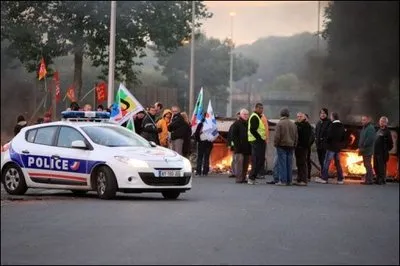
It’s all about the balance of class forces. It’s primarily a power struggle, not a moral argument. We might have right on our side, but might will determine the outcome. For the fight against the cuts, there are several implications. Symbolic protest won’t cut it. If actions like UKUncut move from largely awareness-raising into the realms of economic blockades, then we’ll be getting somewhere. And the state will react accordingly, we must be prepared for more police violence if we’re serious about winning. No doubt such tactics will also be condemned by those notionally on ‘our side’ just like Aaron Porter condemned the Millbank Riot which kick-started this movement. The irony is without such a movement, they’re powerless too. But given the TUC is in thrall to the Labour Party, and the lack of independent workers’ organisation, sustained, co-ordinated strike action against austerity looks unlikely. On the other hand economic blockades have been used to great effect in France both as a standalone tactic and in support of strike action.

The essence of the idea is to blockade economically significant targets from shopping centres to commuter hubs to fuel depots in order to inflict economic damage comparable to a strike. To be effective, these must be mass actions, otherwise the police are adept at arresting the participants, especially if d-locked or glued-on in the activist fashion. We don’t need martyrs, we need results! We’ve already seen that large crowds can be capable of defending themselves against police attacks, especially if they go prepared knowing what to expect (like some of the protective clothing that has appeared on London demos). Winning the arguments and making reasoned criticisms is all well and good, but it won’t stop the cuts. As a man who spent most of his life making criticisms said, "not criticism but revolution is the driving force of history".* When the ruling class fear us, we’ll start winning concessions.


* Karl Marx, The German Ideology – his philosophical attack on those in his day who thought ideas alone drove the course of history.

  • analysis
  • cuts
  • exploitation
  • workers' movement
  • resistance

Guides

Your rights at work

Why do we organise? Capitalism is shit, oppression is shit - but what can we at SolFed do about it?

Why do we organise?

This is our flag - it tells you what we stand for

this-is-our-flag

Direct Action #2 (2024)

Direct Action #2 (2024)

Anarcho-syndicalism in Britain – a little history (2015)

Anarcho-syndicalism in Britain – a little history (2015)

Office worker’s health and safety - your rights and how to use them (2015)

Office worker’s health and safety - your rights and how to use them (2015)

Anarchism and Anarcho-syndicalism (Rudolf Rocker, 2014)

Anarchism and Anarcho-syndicalism (Rudolf Rocker, 2014)

Fighting for ourselves - anarcho-syndicalism and the class struggle (2012)

Fighting for ourselves - anarcho-syndicalism and the class struggle (2012)

Theory & Practice 1 - Workmates - direct action workplace organising on the London underground (2011)

Theory & Practice 1 - Workmates - direct action workplace organising on the London underground (2011)

The Economics of freedom (2003)

The Economics of freedom (2003)

A history of anarcho-syndicalism (SelfEd Collective, 24 unit series, 2001)

A history of anarcho-syndicalism (SelfEd Collective, 24 unit series, 2001)

Out of the frying pan, a critical look at works councils (1998)

Out of the frying pan, a critical look at works councils (1998)

Health and safety at work - an anarcho-syndicalist approach (1997)

Health and safety at work - an anarcho-syndicalist approach (1997)

Theory & Practice 2 - Anarcho-syndicalism in Puerto Real (1994)

Theory & Practice 2 - Anarcho-syndicalism in Puerto Real (1994)
RSS feed