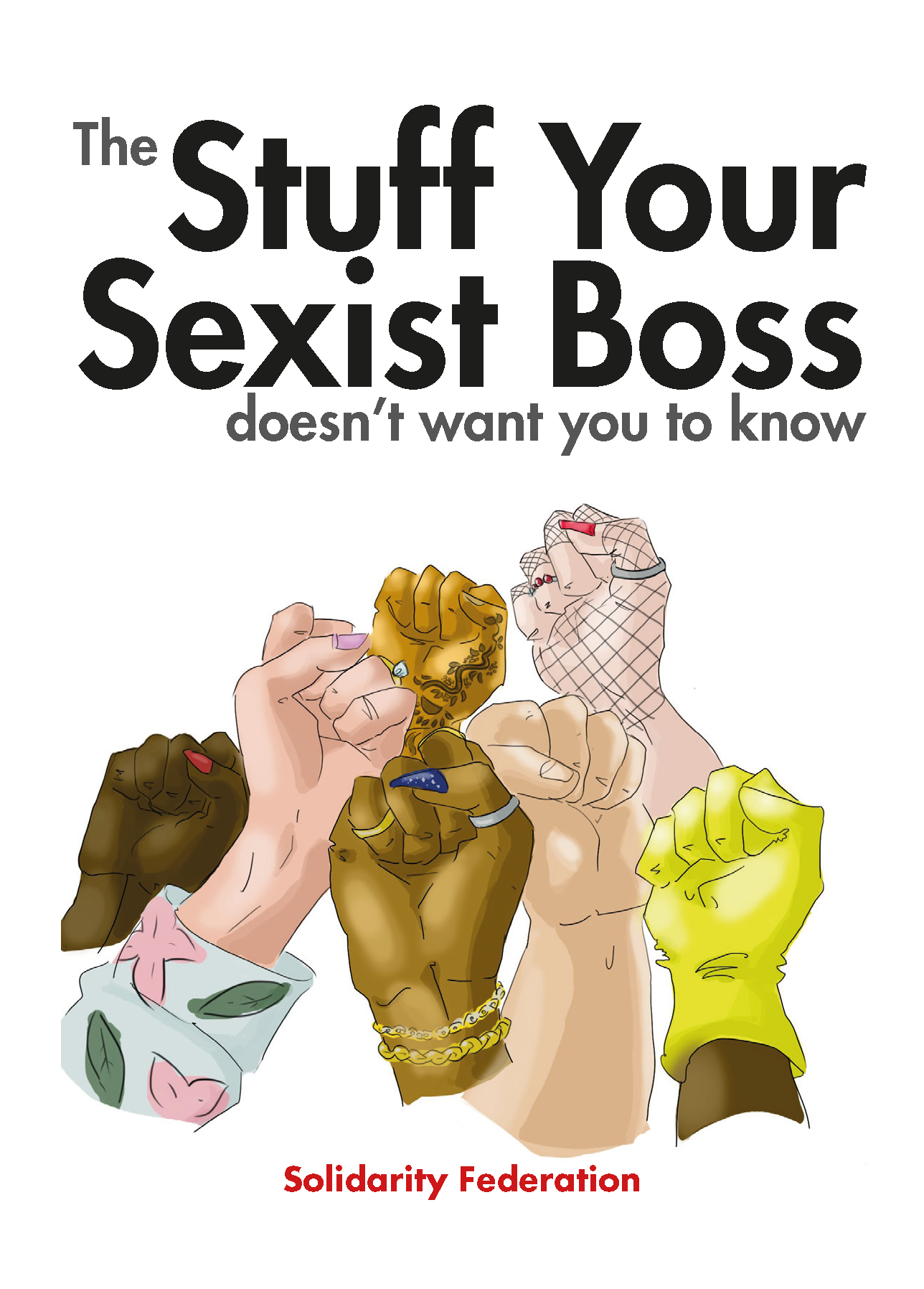
Sexism is a constant presence in many workplaces where it can take many forms. From lower pay, to expectations of unpaid work, to sexual harassment by bosses, other workers or customers, sexism means women and workers seen as women are treated unequally on the basis of sex or gender.
This pamphlet looks at the reality of sexism in the workplace and what we can do about it. As anarcho-syndicalists we favour direct, collective strategies that build and maintain a culture of resistance in the workplace. We consider how workers can directly confront sexism or cope when confrontation is not possible, building a culture of solidarity and support at work, which ultimately means you and others experiencing sexism are less isolated and more likely to win.
The Law and its Limits | Your legal situation | Problems with the legal approach
Sexism at work | You are not alone | What does sexism look like? | Unequal treatment | Objectification | Sexual harassment | Structural disadvantage | Microagressions
What to do about it | Strategies, tactics, solidarity | Coping strategies | Tactics of resistance
Solidarity and Support | Mutual aid | Acts of Solidarity | Building Wider Support
Cleaners have a vital role in society, yet their job is poorly paid and routinely dismissed as a job carried out mainly by women to earn a bit of extra cash. Cleaning is also not generally seen as a particularly physically hard or dangerous job. Most people see cleaning as involving a bit of dusting, mopping and hoovering.
Written by a cleaner, this pamphlet draws on research from across the world to show the reality of cleaning and the impact the job has on the health and wellbeing of cleaners. The pamphlet not only examines the more obvious aspects of the job that affect cleaners’ health, such as the physical demands of the job and the effects of cleaning chemicals, but also takes into account the detrimental impact of factors such as low pay, ever- increasing workloads, low status, sexual harassment and family commitments on the everyday lives of cleaners. In doing so, the pamphlet exposes the true cost being paid by cleaners and their families for job that is central to the wellbeing of society as a whole.
As such, this pamphlet is not only essential reading for cleaners but for all those interested in seeing greater justice for one of the most exploited and marginalised groups of workers.
Introduction
Background to the UK Cleaning Industry
The Real Risks to Cleaners’ Health - Work-Related Stress | Musculoskeletal Disorders | Work-Related Asthma | Skin Diseases | Accidents at Work | Biological Hazards | Heat Stress | Cancer and Risk to the Reproductive System | Sexual Harassment and Assault | Violence and Discrimination | Overall Impact of Cleaning on Health
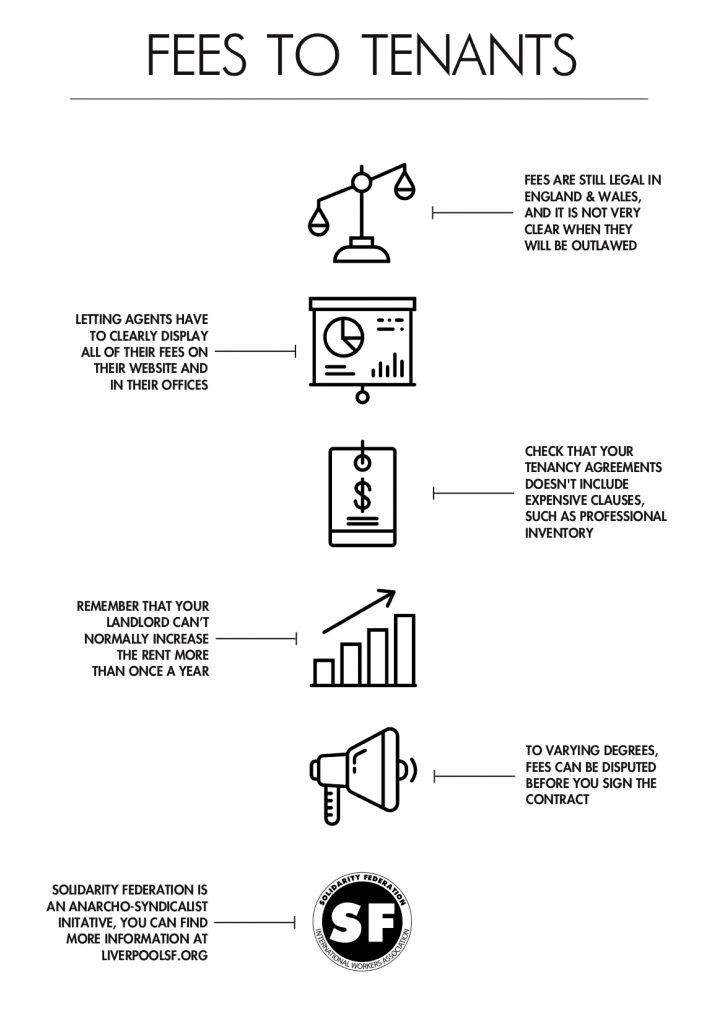
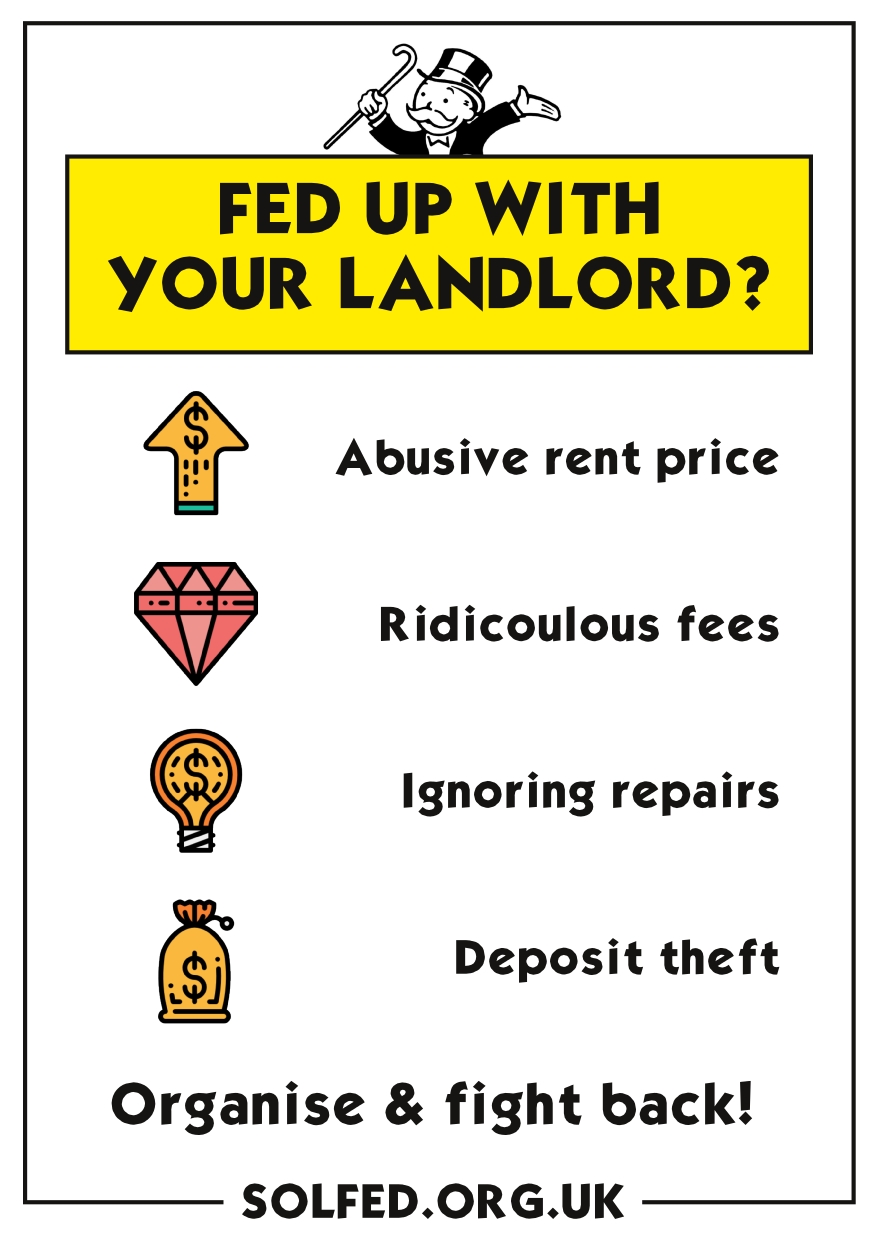
On 23rd November 2016, the Treasury announced in the Autumn Statement that they “will ban fees to tenants as soon as possible”. So, right now fees are still legal in England & Wales, and it is not very clear when they will be outlawed.
Meanwhile, here is some information about what fees are and how to challenge them.
What are fees? Fees are an amount of money you pay to the letting agency as a “service charge”. Letting agencies normally charge you “administration fees” for preparing your tenancy agreement, checking your references, making up the inventory, checks on guarantors, immigration or
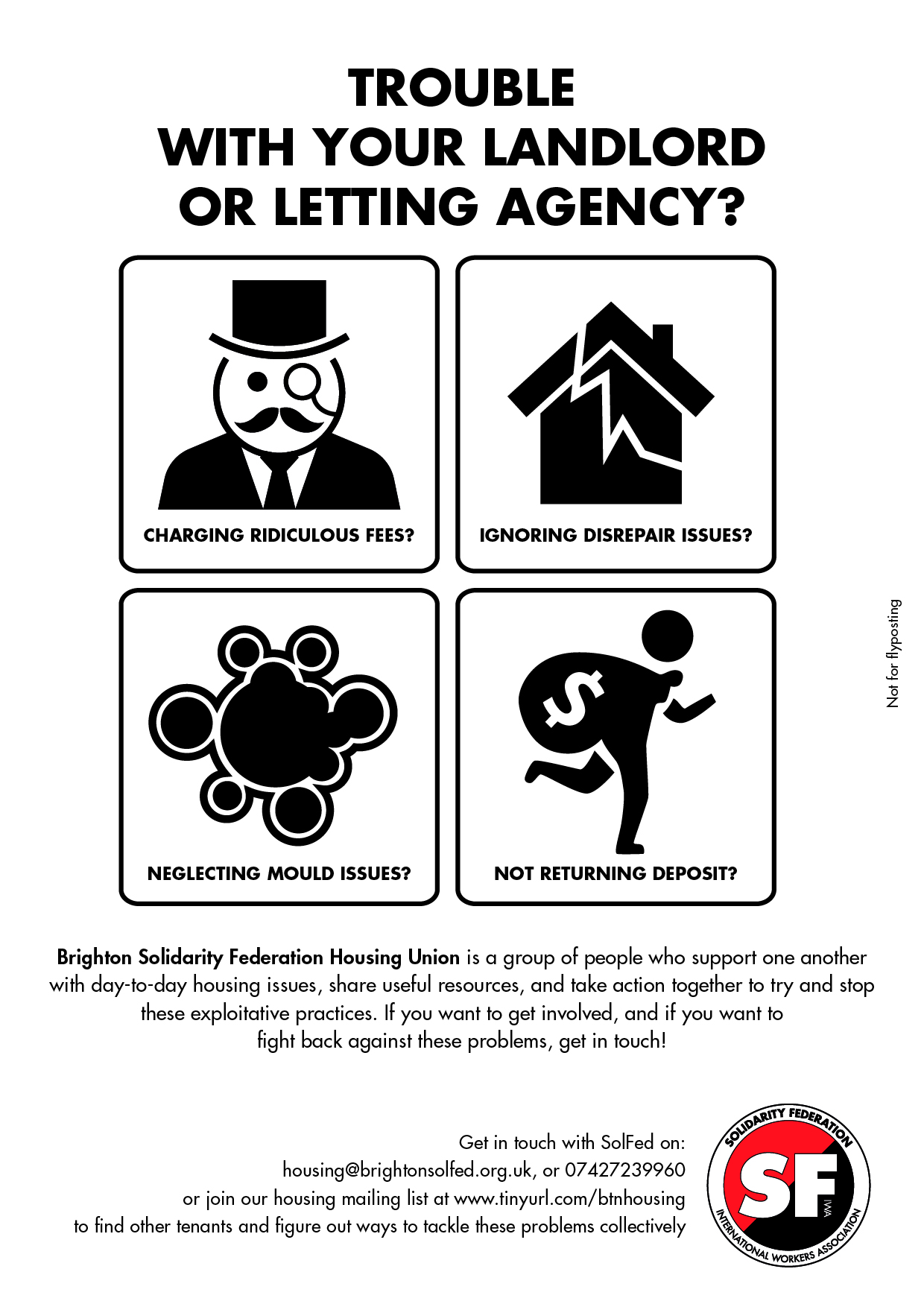
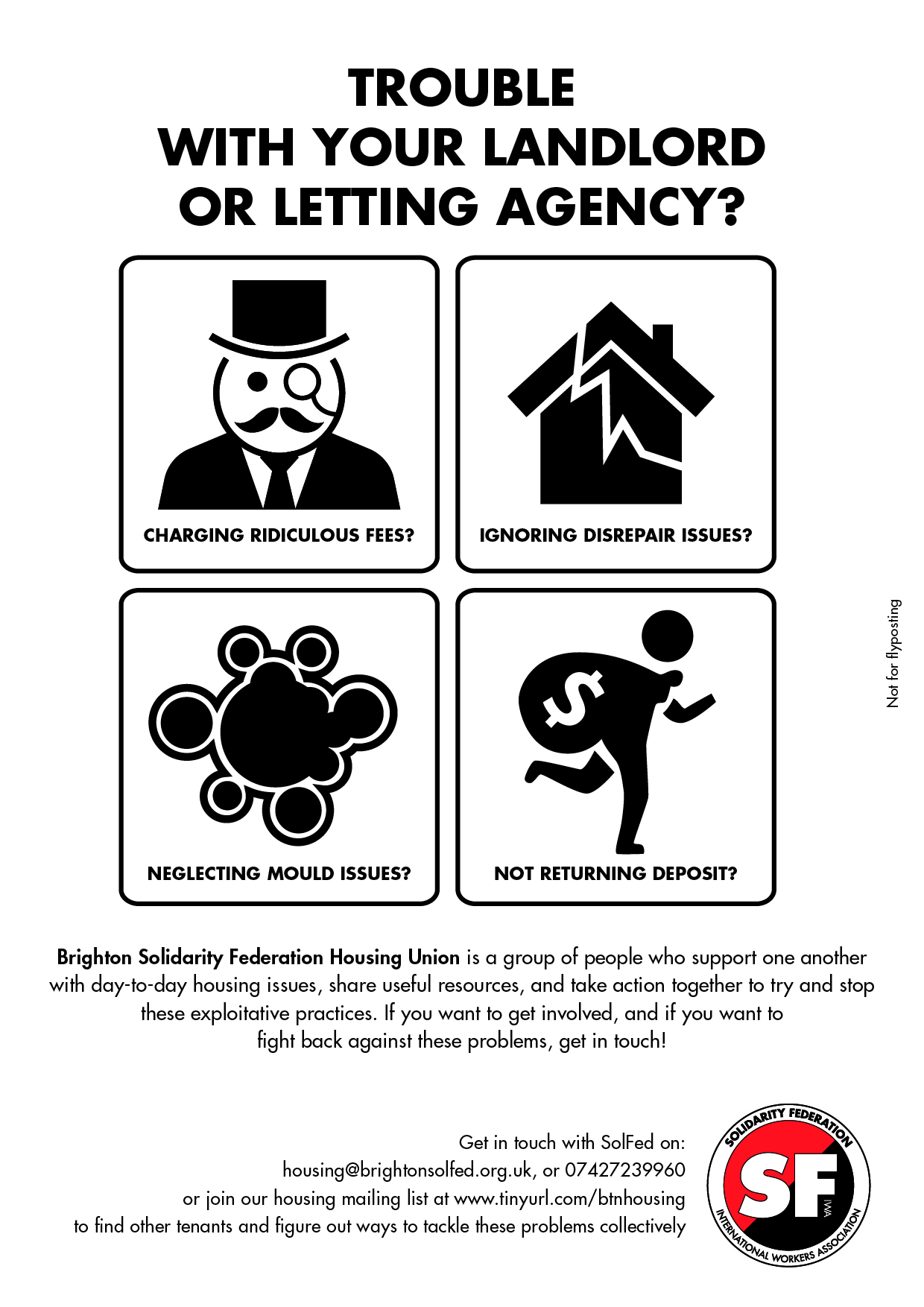
Brighton Solidarity Federation Housing Union is a group of people who support one another with day-to-day housing issues, share useful resources, and take action together to try and stop these exploitative practices. If you want to get involved, and if you want to fight back against these problems, get in touch!
Starting a new life in the UK can be intimidating. Many things are different to how they were at home. Most things are expensive, and some things are just plain difficult. There might be a new language or a new culture to contend with. Dealing with all this whilst struggling to find a job or accommodation can feel impossible. With this in mind, Manchester Solidarity Federation have put together a short guide to the city. We've tried to cover all the basics about living and working here, and where to go for help and what resources are available.
The guide is available at manchestermigrantsguide.org.uk. We hope to have translations into languages other than English in the near future. We must emphasise the guide is a work in progress and if you have any suggestions, corrections or comments please do not hesitate to contact us.
Some useful advice for people starting a new life in Manchester
Table of Contents
Introduction | Transport | Internet & phones | Cheap food & other stuff | Bank accounts | Learning English | Healthcare | Home | Work | Benefits | Legal Issues | Domestic violence and sexual assault | LGBT* (lesbian, gay, bisexual and trans*) | Other useful contacts | Who are we and why do we care?
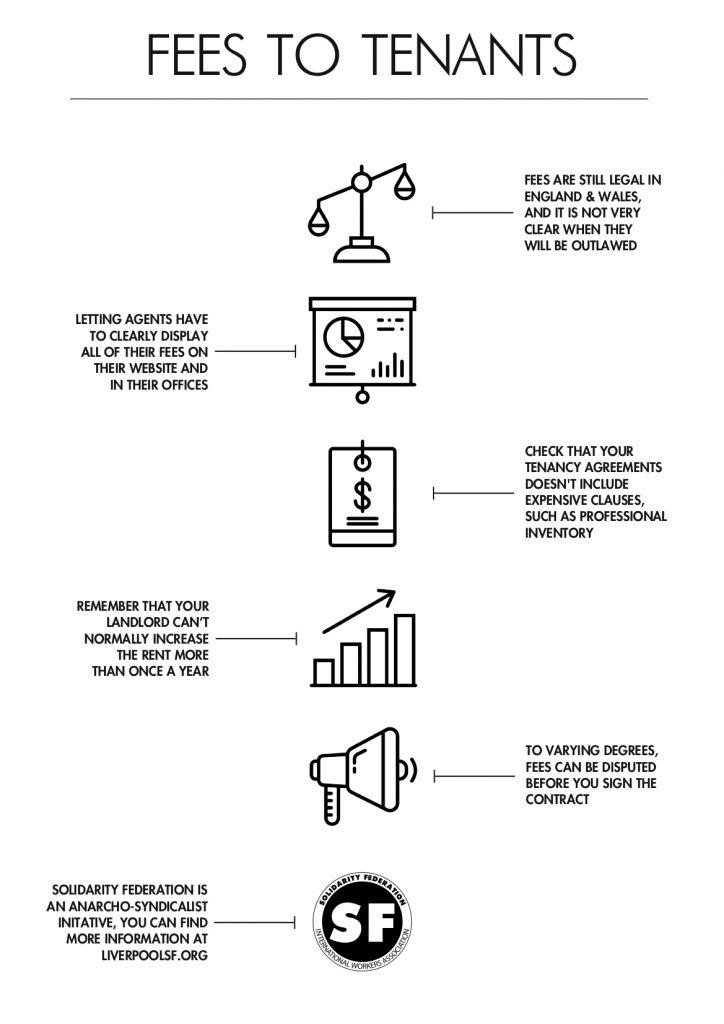 On 23rd November 2016, the Treasury announced in the Autumn Statement that they “will ban fees to tenants as soon as possible”. So, right now fees are still legal in England & Wales, and it is not very clear when they will be outlawed.
 Starting a new life in the UK can be intimidating. Many things are different to how they were at home. Most things are expensive, and some things are just plain difficult. There might be a new language or a new culture to contend with. Dealing with all this whilst struggling to find a job or accommodation can feel impossible. With this in mind, Manchester Solidarity Federation have put together a short guide to the city. We've tried to cover all the basics about living and working here, and where to go for help and what resources are available.