The government’s answer to the problem of unemployment during the biggest economic crisis since the 1930s is not to create any new jobs, but to launch a massive attack on our living standards.
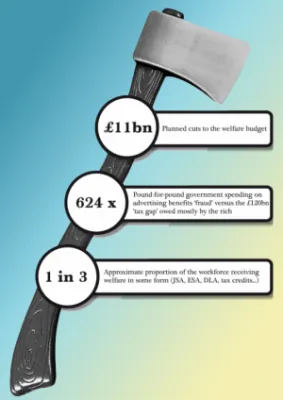
In the emergency budget, one group of people who will be hit the hardest is welfare claimants.
Benefits are not just for the unemployed. They supplement low pay and give those with disabilities or caring responsibilities a means by which to survive, as well as providing income to those who cannot find unemployment. With around 2.5 million people claiming Job Seekers Allowance (JSA), 2.9 million receiving Disability Living Allowance (DLA), around 5 million reeceiving working tax credits and further claimants on other tax credit schemes and Employment and Support Allowance (ESA), more than one-in-three of Britain’s 30 million strong workforce are receiving some form of state welfare.
The Government’s “tough but fair” budget will hit the poorest the hardest, as well as having a disproportionate impact on women, two reports have found.
The Institute for Fiscal Studies (IFS) describes the budget as signalling the “longest, deepest, sustained period of cuts to public services spending at least since WWII”. Chancellor George Osborne claims austerity is “unavoidable” in order to reduce Britain’s deficit, and business leaders have sounded their approval for the plans. However, trade unions warned of hundreds of thousands of job losses, accusing the government of “declaring war on public services”.