Home
Solidarity Federation
IWA
User account menu
  • Contact
  • Log in
  • Home
    • Intro
    • Workplace organiser training
    • Industrial strategy
    • Community strategy
    • Constitution
  • SolFed
    • Brighton
    • Bristol
    • Edinburgh
    • Liverpool
    • Manchester
    • North London
    • Wales
    • Yorkshire
  • Industries & sectors
    • Claimants and unpaid
    • Education
    • Health and social care
    • Hospitality
  • Events & reports
  • Publications
    • Guides
      • Stuff your boss (doesn't want you to know)
      • Stuff your sexist boss (doesn't want you to know) (2018)
      • Stuff your landlord (doesn't want you to know) (2016)
      • Is your cleaning job killing you? A guide to cleaners health and safety (2017)
      • Office worker’s health and safety - your rights and how to use them (2015)
      • A migrant's guide to Manchester (2016) [en es]
      • A migrant's guide to London (2014) [en es pl]
      • Strike - a guide to walking out (2014)
    • Pamphlets and books
      • Anarcho-syndicalism in Britain – a little history (2015)
        • 1. 19th century to 1914 - The First International, growth of industrial unionism and the Great Unrest
        • 2. 1914–1945 - State suppression and the Bolshevik turn – how Lenin’s seeming success drew militants to the Comintern
        • 3. 1945–1994 - The Anarchist Federation of Britain, Syndicalist Workers’ Federation and Direct Action Movement
        • 4. Today’s movement - A short look at the strategy and thinking of the modern Solidarity Federation
      • Office worker’s health and safety - your rights and how to use them (2015)
      • Anarchism and Anarcho-syndicalism (Rudolf Rocker, 2014)
        • Introduction
        • 1. Ideology of Anarchism
        • 2. History of anarchist philosphy, from Lao-Tse to Kropotkin
        • 3. The origins of anarcho-syndicalism
        • 4. Socialism and anarcho-syndicalism in France
        • 5. The role of the trade unions: anarcho-syndicalist view
        • 6. The struggle in Germany and Spain
        • 7. The political struggle: anarcho-syndicalist view
        • 8. Anarcho-syndicalism since the First World War
      • Fighting for ourselves - anarcho-syndicalism and the class struggle (2012)
        • Introduction
        • 1. The mainstream workers' movement
        • 2. Radical currents in the workers' movement
        • 3. Anarcho-syndicalism in the 20th century
        • 4. Capitalism and the class struggle since World War II
        • 5. Anarcho-syndicalism in the 21st century
        • Endnotes
      • Workmates - direct action workplace organising on the London underground (2011)
      • The Economics of freedom (2003)
      • A history of anarcho-syndicalism (2001)
      • Out of the frying pan, a critical look at works councils (1998)
      • Health and safety at work - an anarcho-syndicalist approach (1997)
      • Anarcho-syndicalism in Puerto Real (1994)
    • Leaflets and flyers
      • Solidarity Federation Education Union (SFEU)
      • Solidarity Federation Hospitality Workers Union (SFHWU)
      • Why do we organise?
      • This is our flag - it tells you what we stand for
      • What is anarcho-syndicalism anyway?
      • Anarchism and Syndicalism (short version)
      • Anarchism and Syndicalism
      • Towards a better union
      • Protest is not enough
      • Building beyond elections
      • We should run our workplaces
      • We should run our communities
      • We should run our movements
    • Newsletters
      • Brighton Solidarity
        • Brighton Solidarity #3
      • Education Worker
        • Education Worker #10 Victimisation (2013)
        • Education Worker #9 (2012)
        • Education Worker #8 Academy Special (2012)
      • Wildcat!
        • Wildcat! #13 (Jan 2013)
        • Wildcat! (Winter 2012)
        • Wildcat! #6 (Summer 2011)
        • Wildcat! #5 (Spring 2011)
        • Wildcat! #4 (Dec 2010)
        • Wildcat! #3 (Oct-Nov 2010)
        • Wildcat! #2 (Jul-Aug 2010)
        • Wildcat! Football for the fans NOT for fat cats! (Jul 2010)
        • Wildcat! #1 (May-June 2010)
      • May Day Bulletin (Newcastle SolFed, 2014)
    • Direct Action
      • Direct Action #2 (2024)
      • Direct Action #1 (2023)
      • Direct action #47 (Summer 2009)
    • Catalyst
      • Catalyst #29 (Feb 2012)
      • Catalyst #28 (Oct 2011)
      • Catalyst #27 (Jun 2011)
      • Catalyst #26 (Mar 2011)
      • Catalyst #25 (Dec 2010)
      • Catalyst #24 (Summer 2010)
    • SelfEd
      • A history of anarcho-syndicalism
        • Block 1
          • Unit 1: The Origins of Capitalism
          • Unit 2: Britain: The Radical Period 1750-1840
          • Unit 3: The First International
          • Unit 4: France 1870-1918 Early revolutionary unions
          • Unit 5: Revolutionary Syndicalism in Britain, 1870-1910
          • Unit 6: Revolutionary Syndicalism in Britain and Ireland, 1910-17
        • Block 2
          • Unit 7: Mexico 1870-1920: Colonialism and Revolution
          • Unit 8: USA 1886-1930 - The Wobblies
          • Unit 9: Anarcho-syndicalism in Argentina 1870-1939
          • Unit 10: Sweden 1889-1939
          • Unit 11: Russia I: 1850-1917
          • Unit 12 Russia II: 1917-30
        • Block 3
          • Unit 13: Going Global - International Organisation, 1872-1922
          • Unit 14: Anarcho-syndicalism in Britain, 1914-30
          • Unit 15 Spain, 1868-1936: Build-up to Revolution
          • Unit 16 Spain: Culture, education, women and sexuality
          • Unit 17: Spain 1936-39: Revolution and Civil War
          • Unit 18: Spain - The Collectives
        • Block 4
          • Unit 19: Britain, 1930-1950 - The Era of Reform
          • Unit 20: Britain, 1950-1990 - Decline of Social Democracy
          • Unit 21: anarcho-syndicalism 1939-99
          • Unit 22: Roots of modern anarcho-syndicalism: freedom, oppression & rebellion
          • Unit 23: Roots of modern anarcho-syndicalism: morality, culture & tactics
          • Unit 24: The spirit of anarcho-syndicalism
    • Letters
  • IWA

Breadcrumb

  1. Home

theory

By Jerome Baxter, 7 December, 2012
s

How do you build a movement?

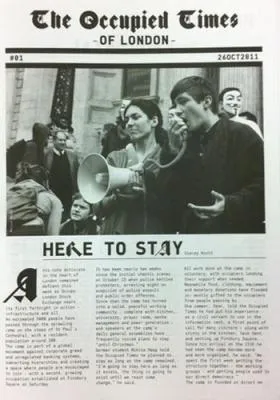
This article was written by a SolFed member and originally appeared in the "How do you build a movement?" column of the Occupied Times.

The article focuses on a practical approach to organising in which theory follows practice, is designed to appeal beyond a politicised core, and by which a movement is built by achieving concrete and escalating victories.

OT Issue 18 here.
Tags

  • events and reports
  • direct action
  • strategy
  • revolutionary unions
  • theory
  • North London
By Joseph Kay, 17 July, 2011
bsf

SolFed on the radio

A member of Brighton SolFed was interviewed on the Novara show on Resonance FM last week. The hour long show talks about the history and theory of anarchism and anarcho-syndicalism, the differences with Marxist ideas, the occupations at Sussex University, the current anti-cuts movement and more. Listen using the player below (requires flash).

Novara July 12th 2011: anarcho-syndicalism by richard-3

Attachment Size
Novara July 12th 2011 anarcho-syndicalism.zip (55.13 MB) 55.13 MB

Tags

  • interviews
  • anarcho-syndicalism
  • audio
  • anarcho-syndicalism today
  • history
  • theory
By Cobbler, 10 February, 2011

Working Class Paradox - one person's discussion

I had a discussion with a work colleague last week. It began with a newspaper headline about the situation in Egypt. Apparently, many years ago he had served in Egypt in the forces. He had been shocked at the level of poverty he observed there, and realised that things had probably not moved on much for many people. And so he could understand why there was an uprising there.

Then the discussion moved to the UK, and although I did not suggest a parity of conditions to him we did talk about areas of poverty in the UK, people loving in poor quality run down housing on low incomes etc.

Tags

  • theory
  • politics
By Archiver, 26 December, 2010

The Social General Strike

The idea of the revolutionary social general strike occupies a central place in anarcho-syndicalist theory. It marks the breach between those socialists who seek to capture the state - by revolutionary or democratic means - and those who see the need for the state to be shattered before libertarian communism can be achieved.

For anarcho-syndicalists it is the declaration of the independence of the labour movement, an independence that can only be brought about by the efforts of the working class itself.

Tags

  • anarcho-syndicalism
  • general strikes
  • theory
By Archiver, 26 December, 2010

Anarchism, Fascism & the State

This year marks the 75th anniversary of Hitler’s accession to power, it is appropriate therefore to look again at fascism, and to remind ourselves of those salient features of fascist movements and regimes which have become obscured with the passage of time. There is more to fascism than the legacy of war and genocide. That was where fascism ended, but during its rise, and where it took power in the years before the Second World War, many observers, particularly those on the left, noted its anti-working class bias and the nature of the economic system over which it presided.

Tags

  • anti-fascism
  • state
  • theory
  • history
By no1, 3 December, 2010

Workers Control, not Controlled Workers: the case for libertarian socialism & workers control

Much work carried out in today’s society is boring, useless and stressful, affording workers little in the way of genuine autonomy or self-determination. Further, the forces of capitalist industry are profligate in the use of our time, talents and natural creativity, making us mere minions to the machinery of profit. This wastefulness is compounded during times of recession when unemployment levels soar. Under capitalism, workers are typically paid far less than the true value of their labours, while the owners of capital grow ever richer by creaming off the surplus value in the form of profit. Mass poverty and social inequality are other by-products of the profit economy, sanctioned in the final analysis by the institutions of government. Moreover, capitalist production as a whole is damaging to the environment and leads to wars between nation states over resources, territory and markets.

Tags

  • self-management
  • theory
By no1, 26 September, 2010

Anarchism and Crime

Tags

  • anarchism
  • crime
  • police
  • theory
By no1, 26 September, 2010

The Union or the Party?

Anarcho-syndicalism has always been a theory of change derived from the practice of the working class. It started as a movement, expressing itself through action, and any theorists that emerged were militant workers who wrote for workers, not for social philosophers. They dealt with issues of the moment, not with metaphysical niceties that so impress intellectuals and academics. As such, their writings are not to be found in academic books but in pamphlets, newspapers and leaflets. Nevertheless anarcho-syndicalists have always had an overall, coherent view of ends and means.

Tags

  • anarcho-syndicalism
  • political parties
  • trade unions
  • revolutionary unions
  • theory
By no1, 26 September, 2010

The Dead End of Nationalisation: how state ownership of industry does not, never has, and never will serve working class interests

Tags

  • nationalisation
  • theory
  • state capitalism

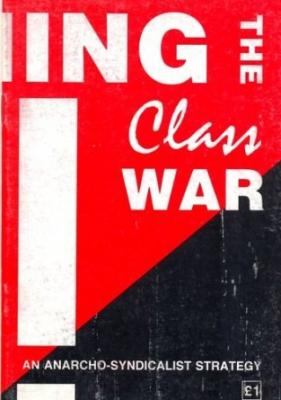
Winning the class war - an anarcho-syndicalist strategy (DAM, 1991)

winning the class war

The Direct Action Movement's 1991 pamphlet on strategy, setting out a vision of networks of militant workers seeking to create explicitly revolutionary workplace and community based groups capable of initiating collective direct action - revolutionary unions. The DAM became Solidarity Federation in 1994.

  • Throwing down the gauntlet
  • The phoney war
  • Class mobilisation
  • On the offensive
  • A call to arms
"One must try to increase as much as possible the theoretical content of all our activities, but without the 'dry and shriveled doctrinalism' which could destroy in part the great constructive action which our comrades are carrying forward in the relentless fight between the haves and the have nots. Our people stand for action on the march. It is while going forward that we overtake. Don't hold them back, even to teach them `the most beautiful theories' ..."
Francisco Ascaso, from Durruti — the People Armed

Tags

  • library
  • publications
  • pamphlets and books
  • anarcho-syndicalism
  • Direct Action Movement (DAM-IWA)
  • Thatcher
  • trade unions
  • theory
theory

Guides

Your rights at work

Why do we organise? Capitalism is shit, oppression is shit - but what can we at SolFed do about it?

Why do we organise?

This is our flag - it tells you what we stand for

this-is-our-flag

Direct Action #2 (2024)

Direct Action #2 (2024)

Anarcho-syndicalism in Britain – a little history (2015)

Anarcho-syndicalism in Britain – a little history (2015)

Office worker’s health and safety - your rights and how to use them (2015)

Office worker’s health and safety - your rights and how to use them (2015)

Anarchism and Anarcho-syndicalism (Rudolf Rocker, 2014)

Anarchism and Anarcho-syndicalism (Rudolf Rocker, 2014)

Fighting for ourselves - anarcho-syndicalism and the class struggle (2012)

Fighting for ourselves - anarcho-syndicalism and the class struggle (2012)

Theory & Practice 1 - Workmates - direct action workplace organising on the London underground (2011)

Theory & Practice 1 - Workmates - direct action workplace organising on the London underground (2011)

The Economics of freedom (2003)

The Economics of freedom (2003)

A history of anarcho-syndicalism (SelfEd Collective, 24 unit series, 2001)

A history of anarcho-syndicalism (SelfEd Collective, 24 unit series, 2001)

Out of the frying pan, a critical look at works councils (1998)

Out of the frying pan, a critical look at works councils (1998)

Health and safety at work - an anarcho-syndicalist approach (1997)

Health and safety at work - an anarcho-syndicalist approach (1997)

Theory & Practice 2 - Anarcho-syndicalism in Puerto Real (1994)

Theory & Practice 2 - Anarcho-syndicalism in Puerto Real (1994)
RSS feed