Home
Solidarity Federation
IWA
User account menu
  • Contact
  • Log in
  • Home
    • Intro
    • Workplace organiser training
    • Industrial strategy
    • Community strategy
    • Constitution
  • SolFed
    • Brighton
    • Bristol
    • Edinburgh
    • Liverpool
    • Manchester
    • North London
    • Wales
    • Yorkshire
  • Industries & sectors
    • Claimants and unpaid
    • Education
    • Health and social care
    • Hospitality
  • Events & reports
  • Publications
    • Guides
      • Stuff your boss (doesn't want you to know)
      • Stuff your sexist boss (doesn't want you to know) (2018)
      • Stuff your landlord (doesn't want you to know) (2016)
      • Is your cleaning job killing you? A guide to cleaners health and safety (2017)
      • Office worker’s health and safety - your rights and how to use them (2015)
      • A migrant's guide to Manchester (2016) [en es]
      • A migrant's guide to London (2014) [en es pl]
      • Strike - a guide to walking out (2014)
    • Pamphlets and books
      • Anarcho-syndicalism in Britain – a little history (2015)
        • 1. 19th century to 1914 - The First International, growth of industrial unionism and the Great Unrest
        • 2. 1914–1945 - State suppression and the Bolshevik turn – how Lenin’s seeming success drew militants to the Comintern
        • 3. 1945–1994 - The Anarchist Federation of Britain, Syndicalist Workers’ Federation and Direct Action Movement
        • 4. Today’s movement - A short look at the strategy and thinking of the modern Solidarity Federation
      • Office worker’s health and safety - your rights and how to use them (2015)
      • Anarchism and Anarcho-syndicalism (Rudolf Rocker, 2014)
        • Introduction
        • 1. Ideology of Anarchism
        • 2. History of anarchist philosphy, from Lao-Tse to Kropotkin
        • 3. The origins of anarcho-syndicalism
        • 4. Socialism and anarcho-syndicalism in France
        • 5. The role of the trade unions: anarcho-syndicalist view
        • 6. The struggle in Germany and Spain
        • 7. The political struggle: anarcho-syndicalist view
        • 8. Anarcho-syndicalism since the First World War
      • Fighting for ourselves - anarcho-syndicalism and the class struggle (2012)
        • Introduction
        • 1. The mainstream workers' movement
        • 2. Radical currents in the workers' movement
        • 3. Anarcho-syndicalism in the 20th century
        • 4. Capitalism and the class struggle since World War II
        • 5. Anarcho-syndicalism in the 21st century
        • Endnotes
      • Workmates - direct action workplace organising on the London underground (2011)
      • The Economics of freedom (2003)
      • A history of anarcho-syndicalism (2001)
      • Out of the frying pan, a critical look at works councils (1998)
      • Health and safety at work - an anarcho-syndicalist approach (1997)
      • Anarcho-syndicalism in Puerto Real (1994)
    • Leaflets and flyers
      • Solidarity Federation Education Union (SFEU)
      • Solidarity Federation Hospitality Workers Union (SFHWU)
      • Why do we organise?
      • This is our flag - it tells you what we stand for
      • What is anarcho-syndicalism anyway?
      • Anarchism and Syndicalism (short version)
      • Anarchism and Syndicalism
      • Towards a better union
      • Protest is not enough
      • Building beyond elections
      • We should run our workplaces
      • We should run our communities
      • We should run our movements
    • Newsletters
      • Brighton Solidarity
        • Brighton Solidarity #3
      • Education Worker
        • Education Worker #10 Victimisation (2013)
        • Education Worker #9 (2012)
        • Education Worker #8 Academy Special (2012)
      • Wildcat!
        • Wildcat! #13 (Jan 2013)
        • Wildcat! (Winter 2012)
        • Wildcat! #6 (Summer 2011)
        • Wildcat! #5 (Spring 2011)
        • Wildcat! #4 (Dec 2010)
        • Wildcat! #3 (Oct-Nov 2010)
        • Wildcat! #2 (Jul-Aug 2010)
        • Wildcat! Football for the fans NOT for fat cats! (Jul 2010)
        • Wildcat! #1 (May-June 2010)
      • May Day Bulletin (Newcastle SolFed, 2014)
    • Direct Action
      • Direct Action #2 (2024)
      • Direct Action #1 (2023)
      • Direct action #48 (Autumn 2009)
      • Direct action #47 (Summer 2009)
      • Direct Action #46 (Spring 2009)
      • Direct Action #45 (Winter 2008)
    • Catalyst
      • Catalyst #29 (Feb 2012)
      • Catalyst #28 (Oct 2011)
      • Catalyst #27 (Jun 2011)
      • Catalyst #26 (Mar 2011)
      • Catalyst #25 (Dec 2010)
      • Catalyst #24 (Summer 2010)
    • SelfEd
      • A history of anarcho-syndicalism
        • Block 1
          • Unit 1: The Origins of Capitalism
          • Unit 2: Britain: The Radical Period 1750-1840
          • Unit 3: The First International
          • Unit 4: France 1870-1918 Early revolutionary unions
          • Unit 5: Revolutionary Syndicalism in Britain, 1870-1910
          • Unit 6: Revolutionary Syndicalism in Britain and Ireland, 1910-17
        • Block 2
          • Unit 7: Mexico 1870-1920: Colonialism and Revolution
          • Unit 8: USA 1886-1930 - The Wobblies
          • Unit 9: Anarcho-syndicalism in Argentina 1870-1939
          • Unit 10: Sweden 1889-1939
          • Unit 11: Russia I: 1850-1917
          • Unit 12 Russia II: 1917-30
        • Block 3
          • Unit 13: Going Global - International Organisation, 1872-1922
          • Unit 14: Anarcho-syndicalism in Britain, 1914-30
          • Unit 15 Spain, 1868-1936: Build-up to Revolution
          • Unit 16 Spain: Culture, education, women and sexuality
          • Unit 17: Spain 1936-39: Revolution and Civil War
          • Unit 18: Spain - The Collectives
        • Block 4
          • Unit 19: Britain, 1930-1950 - The Era of Reform
          • Unit 20: Britain, 1950-1990 - Decline of Social Democracy
          • Unit 21: anarcho-syndicalism 1939-99
          • Unit 22: Roots of modern anarcho-syndicalism: freedom, oppression & rebellion
          • Unit 23: Roots of modern anarcho-syndicalism: morality, culture & tactics
          • Unit 24: The spirit of anarcho-syndicalism
    • Letters
  • IWA
By Joseph Kay, 8 March, 2012

Employment tribunal rules agency worker's blacklisting is legal

Despite rhetoric that the new EU agency worker regulations will ‘stifle business’ and ‘cost jobs’, the extent to which the British government will go to use agency work to attack hard-won legal rights and undermine working conditions is becoming increasingly clear.

A case-in-point is the recent decision by the Central London Employment Tribunal that Dave Smith, a union activist and blacklisted construction engineer, is not entitled to legal protection against blacklisting because he was employed through an agency. This is despite Carillion, the firm who ultimately employed Smith, admitting in a signed statement that their managers had supplied the blacklist with information about Mr. Smith.
Tags

  • blacklisting
By Joseph Kay, 8 March, 2012

Electricians beat back BESNA

Firms drop proposed 35% pay cut after direct action campaign from ‘Sparks’

Electricians are celebrating a major breakthrough in their battle to stop a co-ordinated attempt by some of Britain’s biggest construction firms to deskill their jobs and impose pay cuts of up to 35% after main players Balfour Beatty and NG Bailey threw in the towel. A source told a trade magazine that “one thing is definite, BESNA is finished.” The news was later confirmed in Construction News.

The employers had wanted to kill off JIB, an industry-wide agreement on pay and conditions, so it could be replaced with the vastly inferior BESNA plan. This would have let contractors raise and lower hourly pay rather than maintaining a standard wage for skilled work. For some electricians this would have meant a fall in hourly rates from £16.25 to £10 – a 35% cut.

Tags

  • wildcat strikes
By Joseph Kay, 8 March, 2012

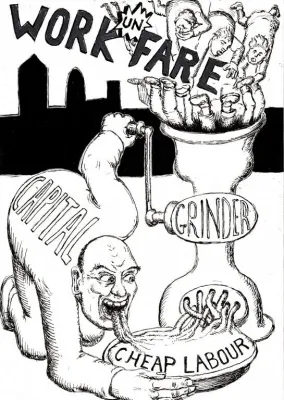
The great workfare scandal

There is little evidence that workfare increases the likelihood of finding work. It can even reduce employment chances by limiting the time available for job search and by failing to provide the skills and experience valued by employers. (…) Workfare is least effective in getting people into jobs in weak labour markets where unemployment is high.


Department for Work & Pensions (DWP) Research Report No 533

Workfare means doing unpaid work for your job seekers allowance (JSA) of up to £67 per week. The government claims workfare helps the unemployed and create jobs, and yet their own report says this is not true, especially when unemployment is high (see quote above).

Tags

  • workfare
By Sal Madge, 7 March, 2012

Workfare demo, Islington

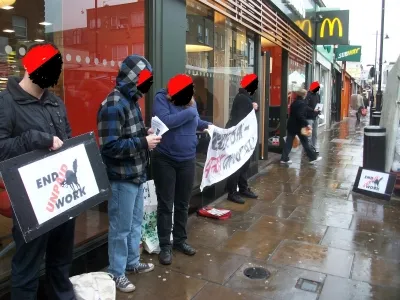
As part of Boycott Workfare's National day of action against the government,s divisive workfare program, members of NLSF met up In Islington to show their opposition. McDonalds on Chaple Market was our first port of call. Loads of leaflet were handed and some good conversations were struck up, mostly in support of our presence outside these exploitative and unscrupulous shops. Although couple of the market stallholders gave us a bit of verbal and the McDonald's manager couldn't understand why his shop was being targeted as "they had nothing to do with the program", Chaple Market was undeniably supportive. Moving on to Upper St, the manager at Holland & Barrett just didn't want us there at all. We didn't plan staying there too long as some wanted to go to the main event in central London. But after the manager informed us they'd called the police, we thought we would stick around for a bit longer.

Tags

  • North London
  • workfare
By rich portsmouth, 5 March, 2012

Solent Solfeds First Picket!

Solent Solfed answered the call from Boycott Workfare on Saturday morning (3rd March) and joined a picket outside Primark in Portsmouth’s Commercial Road. A small group of anarchists from Solfed, Surrey and Hants Afed, and Portsmouth Anarchists turned out alongside the local SWP group. Although the anarchists and socialists had their own specific leaflets it was good to see political differences put to the side to unite against workfare. Our leaflets were drawn up and printed by Surrey and hants Afed, (thanks guys!).


The cops came for a quick chat and to read the leaflets, with one saying he would be with us if he didn’t have to work…not sure we believed him! Once they realised we were peaceable types with no commanding officer they warned Primark what was happening and left us to it. The reaction from the public seemed good; the only problem was that we ran out of the anarchist leaflets really quickly!

Tags

  • Afed
  • pickets
  • Portsmouth
  • workfare
  • Primark
  • Solent
  • Boycott Workfare
By Joseph Kay, 4 March, 2012

Anti-workfare action in Brighton

Saturday March 3rd was a national day of action against workfare, called by Boycott Workfare. In Brighton, members of Solidarity Federation headed down to Jubilee Street to support the Brighton Benefits Campaign picket of Tesco.

Turnout was encouraging, with over 50 people in attendance. A sizeable socialist contingent marched from Tesco in St James Street to Jubilee Street, before moving on to McDonalds. As numbers were still high outside Tesco, we were able to take another group to picket the Tesco store on Queens Rd. This was quite successful in turning people away, with only one person manning the checkouts inside the store.

Tags

  • supermarkets
  • workfare
  • retail
  • Tesco
By AKBlackandRed, 3 March, 2012

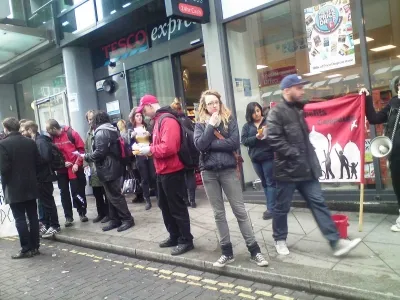
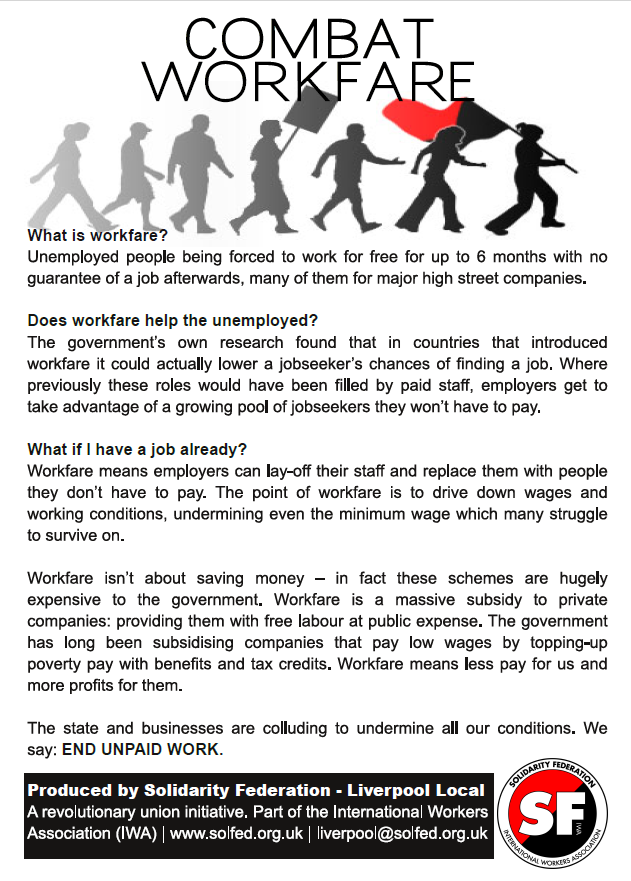
Combat Workfare public leaflet

workfareLeaflet handed to the public during the Combat Workfare demonstration in Liverpool.
Attachment Size
combat_workfare_leaflet.pdf (239.86 KB) 239.86 KB

Tags

  • leaflets and flyers
By AKBlackandRed, 3 March, 2012

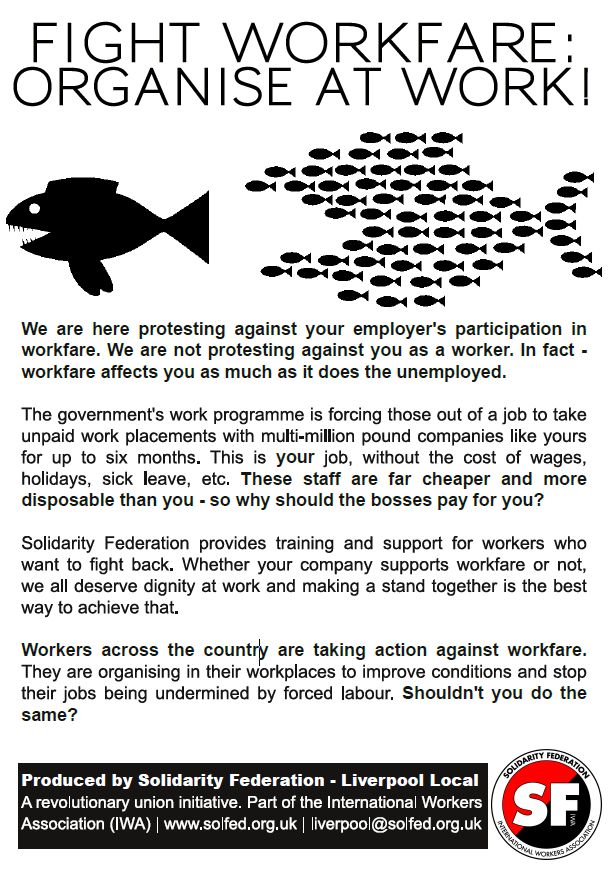
Workfare staff leaflet

workfareA leaflet for the Combat Workfare day of action, specifically aimed at workers in the companies that support the workfare programme.

Attachment Size
combat_workfare_leaflet_2.pdf (230.91 KB) 230.91 KB

Tags

  • leaflets and flyers
  • workfare
By www, 3 March, 2012

History of the Federalist IWMA

Article by Vadim Damier at the occasion of the 140th anniversary of the Federalist International Workingmen´s Association

The “first” International Workingmen´s Association was founded in 1864 through the initiative of workers themselves but also with some participation of “politicians”.  Organizationally, it was built as an association of workers´ unions. According to the Statutes, there was no centralism. The workers of the same profession or area formed a section, all sections of any country formed a federation, and every country federation sent delegates to the General Council. This Council was purely a coordinating body - it could  not issue any decrees, instructions, etc. It was to analyze disputes and misunderstandings between the sections. All sections and federations maintained their autonomy.

Tags

  • IWA-AIT
  • reformism
  • history
  • international
  • revolutionary unions
By Choccy, 3 March, 2012
a

Report: Combating Workfare in Birmingham

Brief report on the Boycott Workfare demo in Birmingham 3rd March.

About 60 people in Birmingham today protested against the government’s Workfare schemes, which see people forced to work for up to 6 months in order to keep their benefits for already obscenely profitable companies. Boycott Workfare had organised March 3rd as a national day of action, including London, Brighton and Belfast.

Many companies have already pulled out of the scheme due to public outcry, including, TK Maxx, Sainsburys and Waterstones. Protestors hoped that greater pressure will force more companies to pull out of the scheme.

Tags

  • McDonalds
  • workfare
  • Poundland
  • West Midlands

Pagination

  • First page
  • Previous page
  • …
  • Page 84
  • Page 85
  • Page 86
  • Page 87
  • Page 88
  • Page 89
  • Page 90
  • Page 91
  • Page 92
  • …
  • Next page
  • Last page

Guides

Your rights at work

Why do we organise? Capitalism is shit, oppression is shit - but what can we at SolFed do about it?

Why do we organise?

This is our flag - it tells you what we stand for

this-is-our-flag

Stuff your boss (doesn't want you to know)

Stuff your boss (doesn't want you to know)

Direct Action #2 (2024)

Direct Action #2 (2024)

Stuff your sexist boss (doesn't want you to know) (2018)

Stuff your sexist boss (doesn't want you to know) (2018)

Is your cleaning job killing you? A guide to cleaners health and safety (2017)

Stuff your landlord (doesn't want you to know) (2016)

Stuff your landlord (doesn't want you to know) (2016)

A migrant's guide to Manchester (2016)

A migrant's guide to Manchester (2016)

Anarcho-syndicalism in Britain – a little history (2015)

Anarcho-syndicalism in Britain – a little history (2015)

Office worker’s health and safety - your rights and how to use them (2015)

Office worker’s health and safety - your rights and how to use them (2015)

A migrant's guide to London (2014)

A migrant's guide to London (2014)

Anarchism and Anarcho-syndicalism (Rudolf Rocker, 2014)

Anarchism and Anarcho-syndicalism (Rudolf Rocker, 2014)

Strike - a guide to walking out (2014)

Strike - a guide to walking out (2014)

Fighting for ourselves - anarcho-syndicalism and the class struggle (2012)

Fighting for ourselves - anarcho-syndicalism and the class struggle (2012)

Theory & Practice 1 - Workmates - direct action workplace organising on the London underground (2011)

Theory & Practice 1 - Workmates - direct action workplace organising on the London underground (2011)

The Economics of freedom (2003)

The Economics of freedom (2003)

A history of anarcho-syndicalism (SelfEd Collective, 24 unit series, 2001)

A history of anarcho-syndicalism (SelfEd Collective, 24 unit series, 2001)

Out of the frying pan, a critical look at works councils (1998)

Out of the frying pan, a critical look at works councils (1998)

Health and safety at work - an anarcho-syndicalist approach (1997)

Health and safety at work - an anarcho-syndicalist approach (1997)

Theory & Practice 2 - Anarcho-syndicalism in Puerto Real (1994)

Theory & Practice 2 - Anarcho-syndicalism in Puerto Real (1994)
RSS feed