A pamphlet produced in January 2009 by Brighton Solidarity Federation as a clarification of the meaning of anarcho-syndicalism in the 21st century, and as a contribution to the debate over strategy and organisation.
Anarcho-syndicalism, a theory and practice of working class revolution, was developed not by scholars working in libraries but by the workers themselves. The anarcho-syndicalist movement of the 20th century extended to all the industrialized countries of the world and even agricultural regions. This was not a fringe phenomenon but involved millions of workers.
Mainstream labour unions and social-democratic parties have become increasingly powerless to protect the gains of workers. In this situation, anarcho-syndicalism — the revolutionary, non-authoritarian alternative to reformism — is once again on the agenda. This critical study of anarcho-syndicalism in the last century reveals a history of struggle which has often been neglected but holds many valuable lessons for the present.
This introductory unit provides a background for the course. It examines the emergence of capitalism through the agrarian and industrial revolutions in Britain. Although this period pre-dates the emergence of anarcho-syndicalist ideas, it provides important context to the course.
Anarcho-syndicalism originated as a response to capitalism, and seeks to replace capitalism. This Unit therefore gives us an insight into how capitalism came about, and an indication of how it works. It also serves as an example of how historical change comes about.
Major historical change is neither mere accident, nor a result of the actions of prominent historical figures. Rather, the course of history is determined by the interaction of economic development and social movements. Thus, capitalism did not arise from the efforts of a few inventors causing an industrial revolution, nor because British capitalists had some special "enterprising spirit". It arose from the systematic breakdown of feudalism as a social and economic system and the imposition of a wage labour system in its place.
The period 1750-1830 saw the rapid rise of the market economy in Britain, so that by the early 1830s ‘full-blown' capitalism had become firmly established. During this same period, as capitalism tightened its grip on the emerging working class, so the first signs of real resistance against this new form of economic oppression began to be developed. Particularly during the early part of the 19th Century, there was a radical period in Britain, and the working class started organising themselves and trying out methods of resistance. Of these, one of the most significant was the idea of the Grand National Holiday - the forerunner of the General Strike. Although a coherent set of ideas and tactics was not yet developed, some important lessons were already being learned which would later contribute to the advent of early anarcho-syndicalism.
Unit 2 highlighted some of the tactics developed by the working class in 18th Century Britain that would later contribute to anarcho-syndicalism. However, during this time, the idea still dominated that political change would only come about through reform, in the guise of more representative government. Hence, the Chartists' main aim was greater political equality, through the extension of the vote. Many workers still mistakenly saw corrupt, unrepresentative government, rather than the inequalities of the economic system, as the main source of oppression.
However, as capitalist exploitation grew in the 19th Century, the focus shifted towards economic inequality. A growing number of workers realised that political reform was not enough, and that working class emancipation could only come about with the overthrow of capitalism and its replacement by an economic system based on collective ownership. Increasingly, the labour movement of the mid-late 19th Century was characterised by growing polarisation of two approaches; (1) political reform leading to economic change towards collective ownership, and; (2) the replacement of parliament altogether with a collective system based on direct control by the working class.
In Unit 3 we examined how the conflicts within the First International contributed to the development of anarchism. Now we turn our attention to the years after the demise of the First International. This was a period of rapid growth of a new revolutionary movement, as the anarchists put their methods and ideas into practice. Although it would spread across the world, it was in France that this emerging workers movement first took off.
This Unit charts the efforts of the French working class who, during this period, were to take anarchism and fuse its methods and ideas with trade unionism to create revolutionary unionism - a forerunner of anarcho-syndicalism.
Unit 4 is concerned with how anarchism developed within the French workers' movement to form the basis of anarcho-syndicalism. Units 5 and 6 chart the effect of these events in France as they spread to Britain, where similar ideas were put into practice, especially in the first years of the Twentieth Century. However, these events indicate that the development of anarcho-syndicalism during this period varied from country to country. Indeed, while anarchism emerged as a number of fundamental ideas, the actions that this body of ideas led to were adapted and developed in practical reality.
Thus, anarcho-syndicalism did not emerge as a rigid theory with a single blueprint for change to be applied regardless of current economic conditions. On the contrary, it emerged as numerous ever-changing tactics based on a set of basic principles. Hence, it is the application of these principles which has led to the use of a range of tactics to meet the human conditions in different places at different times.
The year 1910 proved to be a turning point in the development of revolutionary syndicalism in Britain, and the years leading up to the outbreak of the First World War were a time of major development. During a few short years, a recognisable and co-ordinated movement for revolutionary change emerged and grew rapidly.
This Unit follows on from Unit 5, which described the development of the revolutionary tendencies within the British labour movement over the forty-year period 1870-1910. The conditions that proved to be appropriate for a major burst of revolutionary working class activity around 1910 are also discussed in Unit 5. Here, a more detailed account is presented of the critical 4-year period that followed.
Units 1-6 chart some of the important beginnings of anarcho-syndicalism in Britain and Europe. In Block 2 (Units 7-12), we turn our attention to case studies from around the world.
Unit 7 concentrates on Mexico, in particular, the Mexican revolution of 1910. In this brief overview of a critical period in Mexico's history, it becomes apparent that, like all revolutions, this was a time of great difficulty and complexity. To attempt to view this period in doctrinaire or simplistic terms would be wrong. Revolutions, far from being simplistic, are made by human beings, not by political theory. As such, they are complex social events that never conform to any master plan.
The development of anarcho-syndicalism in North America around the turn of the last century was dominated by the fortunes of the revolutionary union Industrial Workers of the World (IWW). While the IWW never became explicitly anarcho-syndicalist as an organisation, the influence on its development was considerable, and many anarcho-syndicalists were involved in the IWW (a situation that still exists today). An overview and some analysis of these influences and other tendencies within the IWW is the central purpose of this Unit. In particular, we shall examine the conflicts that arose within the IWW over internal democracy and look briefly at the success of the IWW in creating a distinct ‘working class revolution' culture. It was this cultural aspect which reflected and developed further the important anarcho-syndicalist concept of ‘building the new society within the shell of the old'.
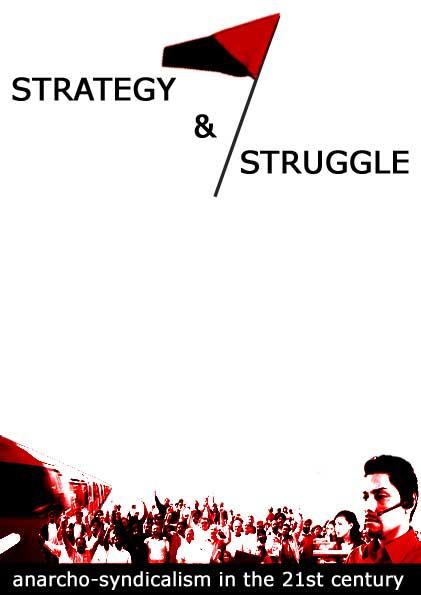 A pamphlet produced in January 2009 by Brighton Solidarity Federation as a clarification of the meaning of anarcho-syndicalism in the 21st century, and as a contribution to the debate over strategy and organisation.
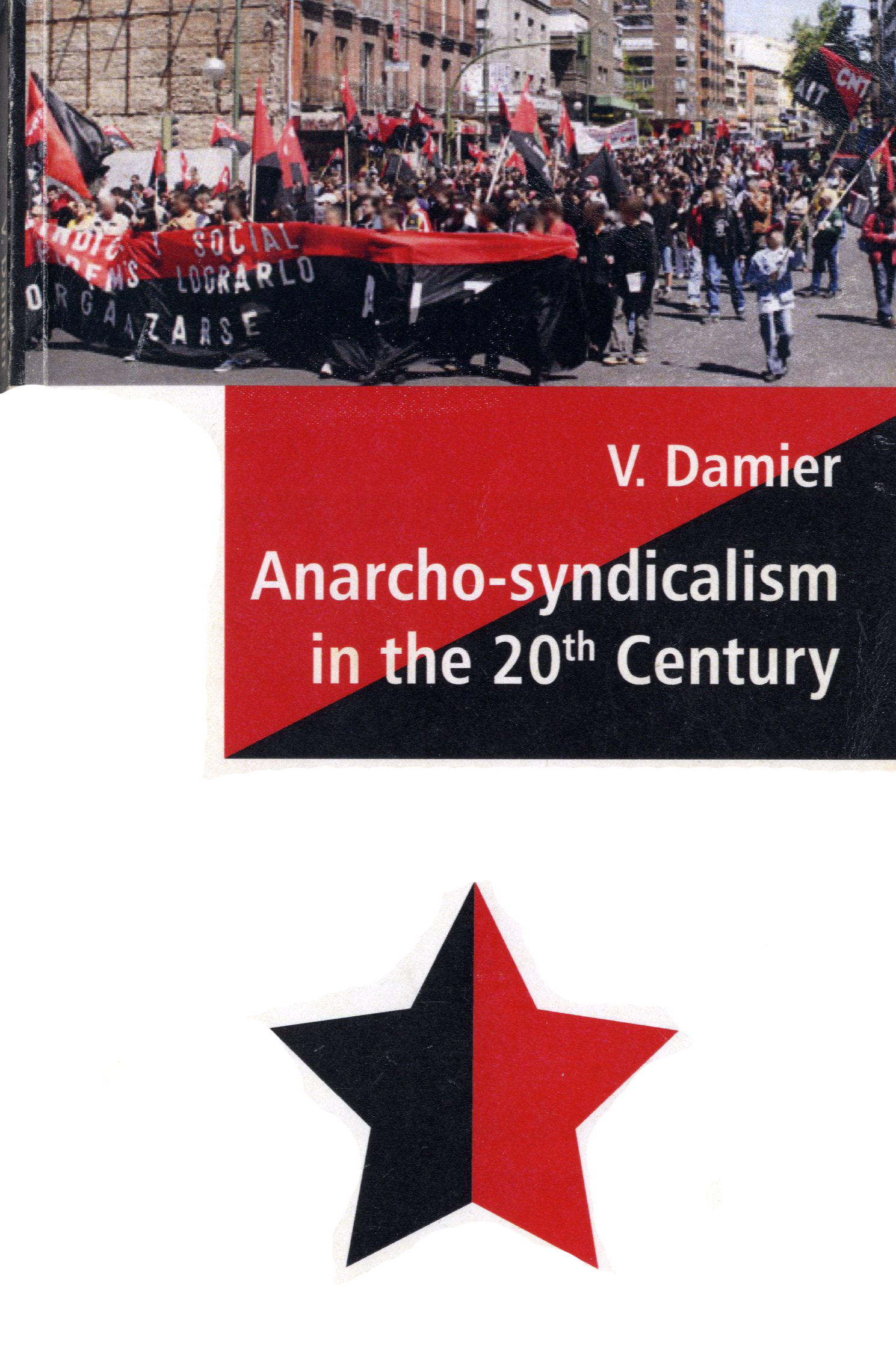 Anarcho-syndicalism, a theory and practice of working class revolution, was developed not by scholars working in libraries but by the workers themselves. The anarcho-syndicalist movement of the 20th century extended to all the industrialized countries of the world and even agricultural regions. This was not a fringe phenomenon but involved millions of workers.