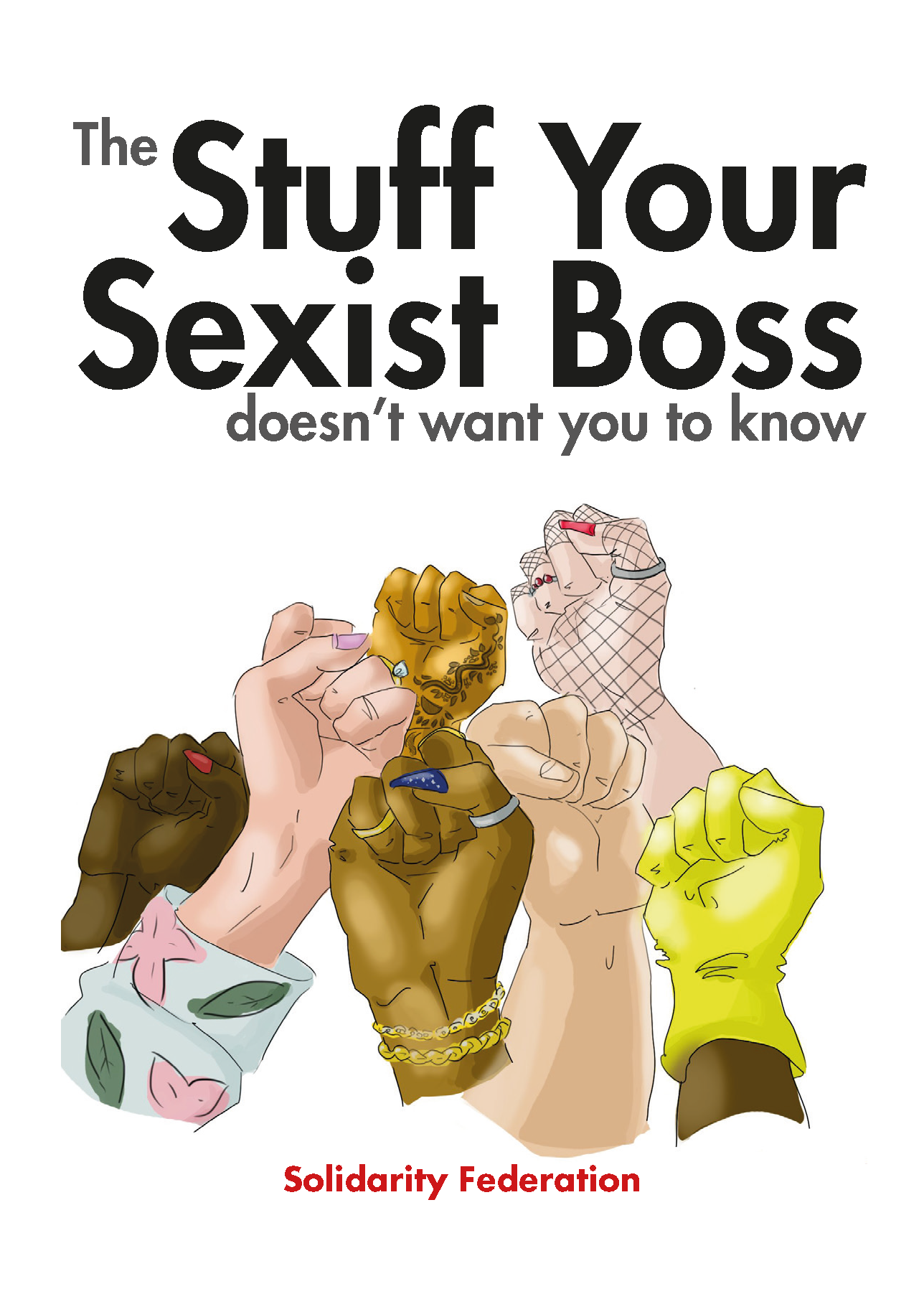
Sexism is a constant presence in many workplaces where it can take many forms. From lower pay, to expectations of unpaid work, to sexual harassment by bosses, other workers or customers, sexism means women and workers seen as women are treated unequally on the basis of sex or gender.
This pamphlet looks at the reality of sexism in the workplace and what we can do about it. As anarcho-syndicalists we favour direct, collective strategies that build and maintain a culture of resistance in the workplace. We consider how workers can directly confront sexism or cope when confrontation is not possible, building a culture of solidarity and support at work, which ultimately means you and others experiencing sexism are less isolated and more likely to win.
The Law and its Limits | Your legal situation | Problems with the legal approach
Sexism at work | You are not alone | What does sexism look like? | Unequal treatment | Objectification | Sexual harassment | Structural disadvantage | Microagressions
What to do about it | Strategies, tactics, solidarity | Coping strategies | Tactics of resistance
Solidarity and Support | Mutual aid | Acts of Solidarity | Building Wider Support
Cleaners have a vital role in society, yet their job is poorly paid and routinely dismissed as a job carried out mainly by women to earn a bit of extra cash. Cleaning is also not generally seen as a particularly physically hard or dangerous job. Most people see cleaning as involving a bit of dusting, mopping and hoovering.
Written by a cleaner, this pamphlet draws on research from across the world to show the reality of cleaning and the impact the job has on the health and wellbeing of cleaners. The pamphlet not only examines the more obvious aspects of the job that affect cleaners’ health, such as the physical demands of the job and the effects of cleaning chemicals, but also takes into account the detrimental impact of factors such as low pay, ever- increasing workloads, low status, sexual harassment and family commitments on the everyday lives of cleaners. In doing so, the pamphlet exposes the true cost being paid by cleaners and their families for job that is central to the wellbeing of society as a whole.
As such, this pamphlet is not only essential reading for cleaners but for all those interested in seeing greater justice for one of the most exploited and marginalised groups of workers.
We are aware of the recent news of a serious assault against a former student of Sussex University by Lee Salter, a (now former) lecturer. In the past we have worked with Lee Salter, and wish to make clear we will never do so again. We condemn his actions and all gendered violence. We are currently producing a fuller statement on the matter, but we felt it was important to immediately respond and stand in solidarity with the survivor
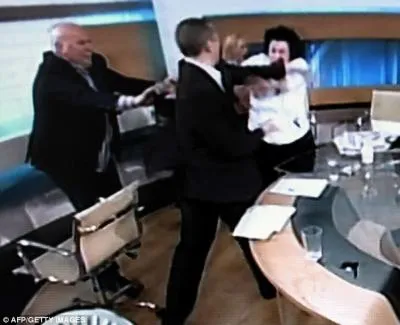
Last night (December 28th), Channel 4 broadcast a programme called The 50 Funniest Moments of 2012 which, bizarrely, included TV footage of Ilias Kasidiaris, a Greek Member of Parliament and spokesperson for the neo-Nazi Golden Dawn party, physically assaulting Communist politician Liana Kanelli.
There is clearly nothing funny about a woman being violently attacked by a man, let alone a man who is a fascist politician. Such incidents must be condemned and organised against. They should not be used as a pretext for comedy.
This statement is in response to the publication of details pertaining to the actions of a member of the Solidarity Federation which has disrupted an ongoing internal process. This statement should not be seen as a defence of the person or actions in question but an examination of the impact that acting outside process has on survivors and the community as a whole. This statement comes from discussions within the gender working group of the Brighton local of the Solidarity Federation and is supported by the National Women’s Officer and the survivor involved.
We reiterate our previous commitment to accountability processes made here and strongly challenge actions made outside of collective process and against the wishes of the survivor.
This statement comes from recent discussions within South London and North London Solidarity Federation locals, and in response to a recent case of sexual assault which took place in the wider activist community. Following the actions taken by North London, South London and Brighton Solidarity Federation locals, this statement was written by the South London Gender Working Group.
We want to state clearly a number of things.
We believe that in the event of sexual assault it is necessary to take action, and that it is appropriate to look towards processes of community accountability. In exploring how to deal with such situations, we have looked at the experiences of other activist and political communities, and the literature that has stemmed from these. We strongly support other groups who have initiated these processes; these enact a sense of responsibility and care we should have for and with each other.
In the news recently, there have been a few articles about a cop and various politicians downplaying the seriousness of rape. These unfortunately aren’t only the words of a few ‘out of touch’ old sexist men, they reflect a wider culture that blames women being 'provocative' for rape, and excuses rapist men on the grounds that they have uncontrollable sexual drives.
Management at Floplast in Bobbing, Kent responded to moves by the workforce to get recognition under the 50% rule by promptly sacking 6 people. Since the new legislation came into force, employers in Britain have been employing law firms to get advice on union busting and intimidating workers. If Floplast get away with it, other bosses will follow suit.
So, send support/solidarity and get action details;
Floplast Workers C/O GPMU Kent Branch, 155 London Rd, Sittingbourne, Kent ME10 1PA
Telephone: 01795 423 993 Fax: 01795 471 791
Email: dannym@gpmukent.demon.co.uk
Also, let Floplast Operations manager Derek Bartrip know what you think - Fax him on 01795 431 188
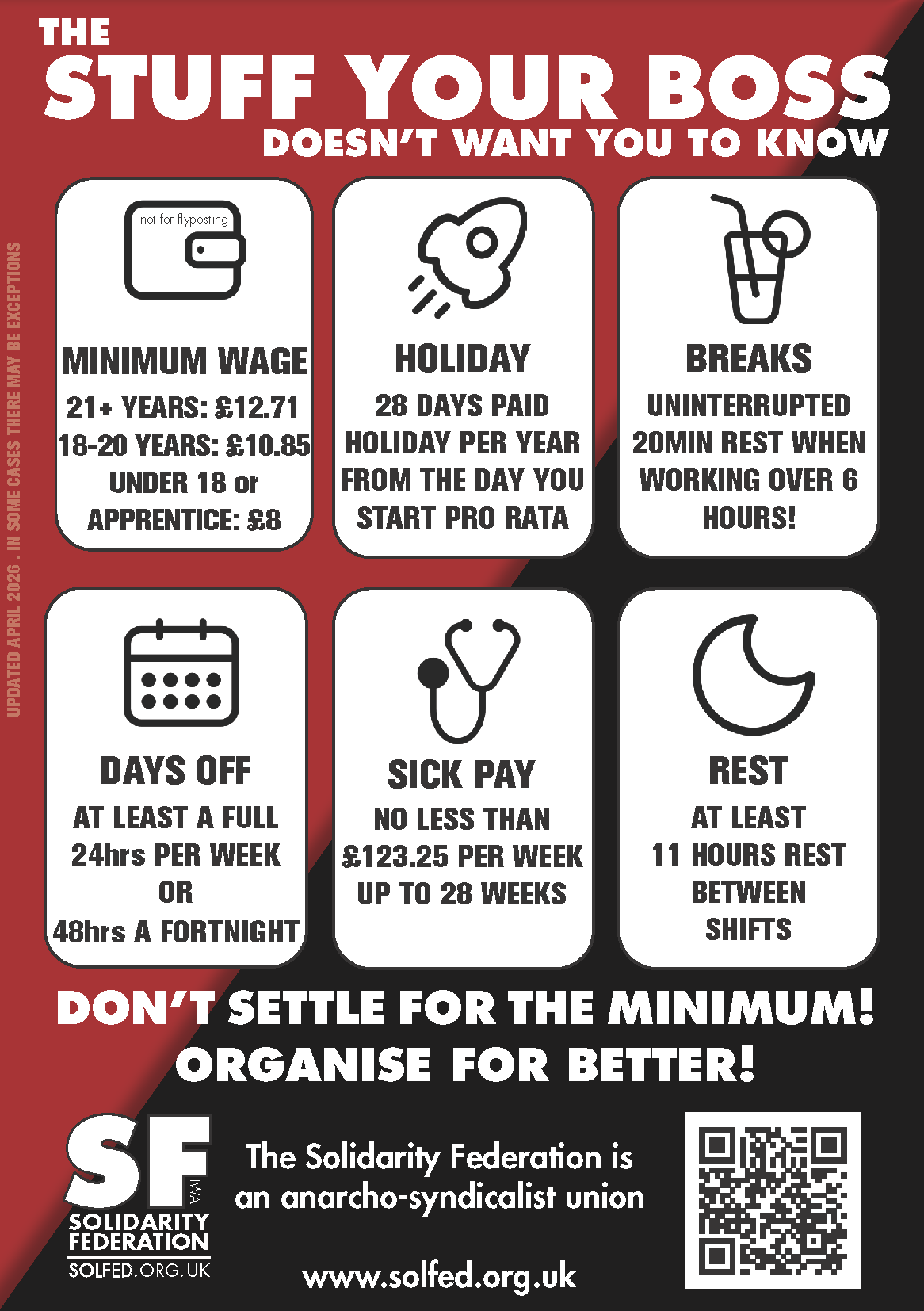 Key rights at work
 For our fifteenth reading group we will be reading What About The Rapists by Dysophia. From the blurb: