The Solidarity Federation Education Union (SFEU) would like to express its solidarity with university academic staff currently engaged in the Marking and Assessment Boycott as part of their demand for restored salaries, the elimination of the gender and race pay gap, workloads and casualization.
Unison, Unite, EIS, GMB and UCU have all proceded to cancel their strikes as a result of decisions by their union General Secretaries or Executives, a position that emerges out of the ACAS talks. To the majority of members of these unions, it's not clear exactly what they've been offered beyond a "limited improvement" to the pay offer for 2022-23. After so much sacrifice, this doesn't sound great.
SFEU (Solidarity Federation Education Union) continues to stand in solidarity with those workers who are currently involved in the UCU industrial actions taking place at FE and HE institutions across the country.
The UCU, at a Special Higher Education Sector Conference, has now set out the terms of the continuing dispute centred on pensions and the Four Fights (casualization, workload, equal pay and conditions for women and BAME workers and the broader issue of pay).
The University and College Union (UCU) is continuing its action in defence of fair pensions and fair working conditions. Staff will be on strike in February and March in relation to both the pension dispute and the “Four Fights” (pay, workload, casualization, structural inequality).
The Solidarity Federation Education Union (SFEU) supports this action because…
● University lecturers’ pay has fallen by 20%.
● One third of academic staff are on precarious, short-term contracts.
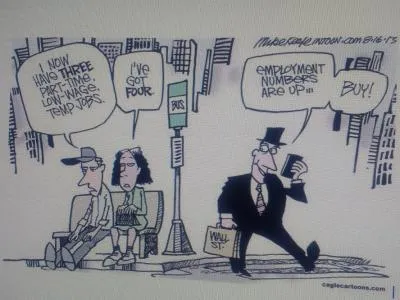
Underemployment is the term used for workers who get fewer hours than they want and need to live on. In the UK there are now at least 1.4 million workers on zero-hours contracts and 865,000 agency workers, many of whom struggle to get enough hours a week to survive on. Added to which, companies are increasingly employing people on a part-time basis, often on contracts of 10 hours or less. This leaves workers dependent on any extra hours management may choose to offer them. According to the Office for National Statistics, just under 10% of the working population or 3.3 million people want more hours; or to put it another way, are part unemployed. To put this into context there are now twice as many people underemployed as there are unemployed.
A Brighton hospitality worker supported by SolFed has won a victory against the exploitative conditions prevalent in the local hospitality sector, as a restaurant paid £1,200 in response to pay demands made by the worker.
The public campaign in support of the worker ended after a single picket - and some back-and-forth emailing - with the worker receiving all the money she had asked for.
We've been holding Mayday events for the past few years, trying to bring International Workers Day back to its roots in worker militancy and anarchist organising. This year, we're joining in the call from a coalition of local grassroots initiatives organising against casualised working conditions and the housing crisis. Meet 7pm Jubilee Square - A critical mass bike block will lead the (walking) demonstration - if you want to take part in that block, just bring a bike. The only way we’ll make our lives better is by fighting together!
This week Brighton SolFed is attending a call out for solidarity with Spanish workers of Arvato-Qualytel. This company provides the telecommunications services to Orange.
Arvato-Qualytel has a call centre in Salamanca in which comrades from CNT, our sister section in Spain, have decided to stand up against the abuses that they are suffering.
This company is covering the workforce through agencies like Adecco or Randstad. Hundreds of workers have to renew their contracts each ten, fifteen or thirty days and are sacked each two years for six month. In this way, the company is able to not give the workers fixed contacts.
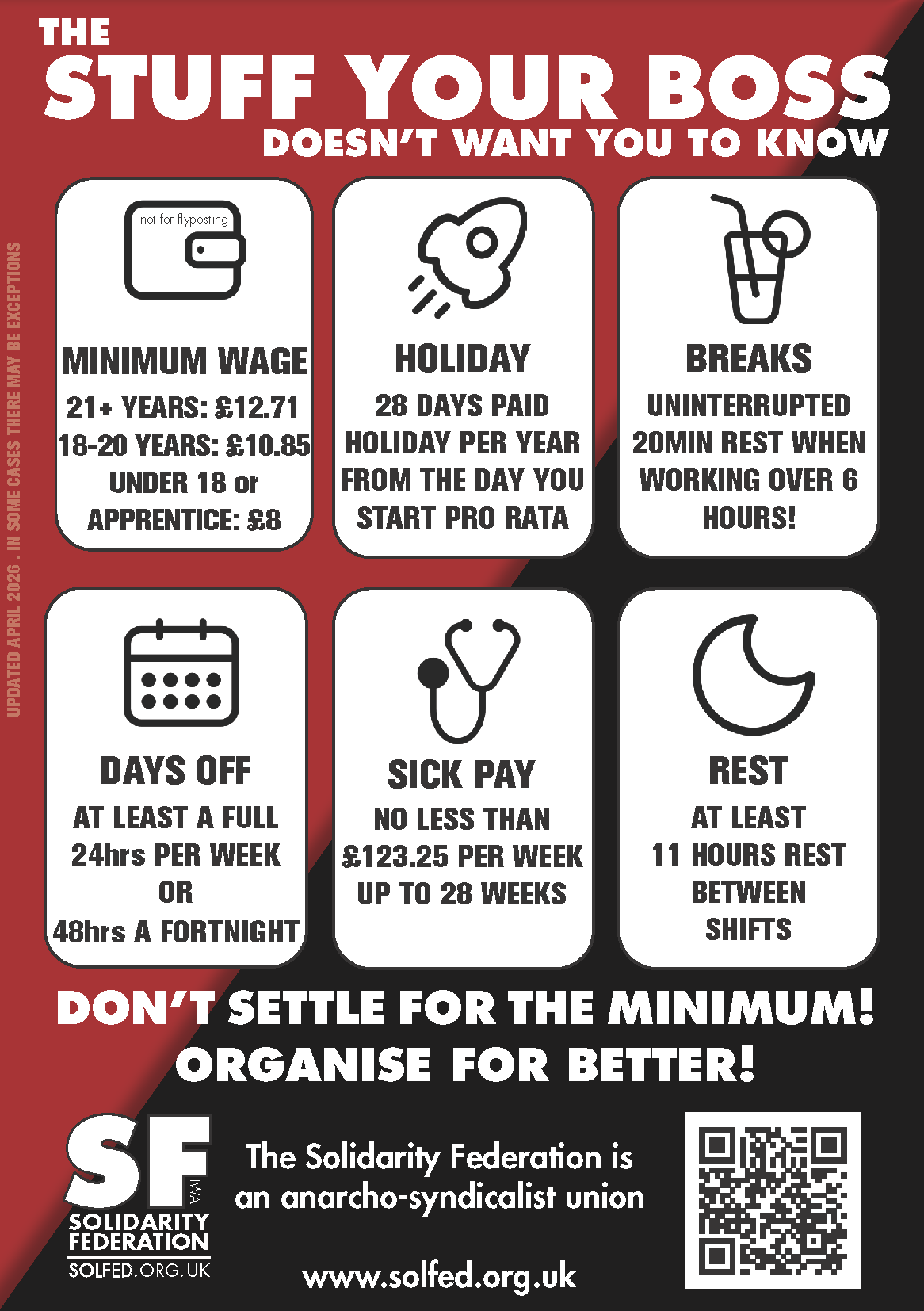 Key rights at work

 A Brighton hospitality worker supported by SolFed has won a victory against the exploitative conditions prevalent in the local hospitality sector, as a restaurant paid £1,200 in response to pay demands made by the worker.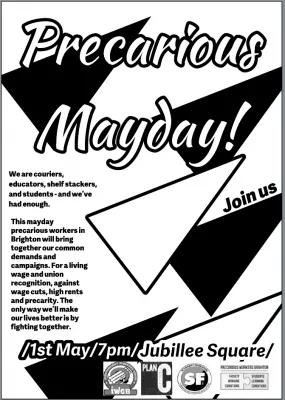
 This week Brighton SolFed is attending a call out for solidarity with Spanish workers of Arvato-Qualytel. This company provides the telecommunications services to Orange.