This week is the International Week Against Unpaid Wages.
The system of wage labour is exploitative by definition, and workers’ legal rights regarding pay are pitiful – but even this low bar is frequently ignored by employers. For many workers, then, demanding the bare minimum that this society allows is an important first step to taking control of their workplaces and their lives.
Here are just a few examples of what unpaid wages can look like...
Wage theft is when an employer takes money that rightfully belongs to the worker.
Wage theft is often illegal, but sometimes your boss can steal your pay without breaking any laws.
We believe that all wage theft is wrong, whether it's legal or illegal. Just because your boss isn’t breaking the law, doesn't mean you should put up with how they are treating you.
What is wage theft? | I’m worried about wage theft. What should I do? | How does wage theft happen? | Unpaid trial shifts | Non-payment of travel time | What if you work in social care? | What does this have to do with anarchism? | Deductions for uniforms, clothing and equipment | “Punitive” deductions | Other deductions | Non-payment of the National Minimum Wage | Unpaid overtime | Sources
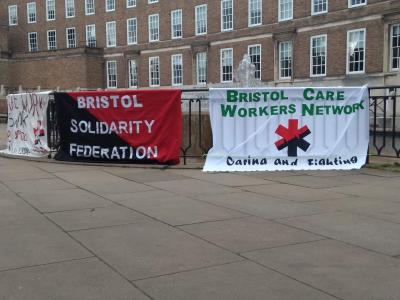
Bristol Solidarity Federation & Bristol Care Workers Network banners
Bristol is great, right? This city was named the “best place to live” in the UK by the Sunday Times in 2017, the best place for under 26s by The Independent in 2019, and Bristol districts like Easton and Old Market regularly win national accolades as the best/trendiest/coolest place in the UK to set up home.
The city exudes a progressive, green and tolerant vibe; 62% of Bristolians voted remain in the Brexit referendum, and all four of Bristol's parliamentary constituencies are held by the labour party, as is the city’s elected mayoral office. Bristol boasts Fairtrade City status and was named
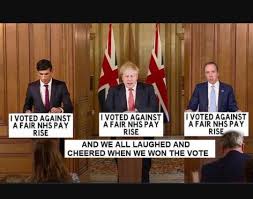
Applause is lauded at NHS workers; ideas for re-compensation; a daily service supplement; an increased hourly rate; even a medal for working during the pandemic. Many of us in the NHS work shifts - day and night - throughout the year. It is not just a virus that killing us, our shift work is too. The World Health Organisation declared in 2007 that shift work is probably carcinogenic (Straif et al 2007 [ 1
"> ]). Studies such as Gu et al (2015 [ 2 ]) have shown us that shift work, especially nights increases our risks of cardio vascular disease, mental health issues, lower immunity, cancer and
Straif, Kurt, Robert Baan, Yann Grosse, Béatrice Secretan, Fatiha El Ghissassi, Véronique Bouvard, Andrea Altieri, Lamia Benbrahim-Tallaa, Vincent Cogliano, and WHO International Agency For Research on Cancer Monograph Working Group. 2007. "Carcinogenicity of Shift-Work, Painting, and Fire-Fighting." Lancet Oncology, the 8 (12): 1065-1066.
Gu, Fangyi, MD, ScD, Jiali Han PhD, Francine Laden ScD, An Pan PhD, Neil E. Caporaso MD, Stampfer, Meir J., MD, DrPH, Kawachi, Ichiro, MD, PhD, et al. 2015. "Total and Cause-Specific Mortality of U.S. Nurses Working Rotating Night Shifts." American Journal of Preventive Medicine 48 (3): 241-252.">
Whatever happened to free market solutions? Since the dark days of Thatcherism, we have been told that the state is inefficient and things should be left to the free market. Yet here we are in the middle of the coronavirus crisis and free market solutions are nowhere to be seen. Instead, it has been the state that has been forced to step in and prevent the economy and society from collapsing amid the chaos of an out of control pandemic.
This is not to say that the free market zealots have disappeared, far from it. Fearful of anything that might smack of state control, the government has thus
Care workers right now are facing a huge challenge. We were overworked, at risk and underpaid before Covid-19 came along. A lot of us are facing massive upheaval in our work and personal lives. Lockdown is stopping us from seeing our friends, family and colleagues, and the demands nowaced on the NHS, care homes and other workplaces have increased and changed rapidly. So now more than ever we are asking, what can we do?
What are we facing?
Some of the issues we are facing are new, and some are old problems exacerbated by the current crisis. The first one we are going to look at is the most common
It is well known by anyone who has ever worked in, or been around the social care system, how much employers in that sector try to exploit their staff and just how badly they treat them. Care workers have long felt they are viewed in low regard by both local authorities and the government, until recently being described by both local and national politicians as being ‘low skilled’. This has started to make headlines in the national press and get into the public consciousness and never has it been more apparent than during the current coronavirus crisis, where employers have shown a complete
Care workers right now are facing a huge challenge. We were overworked, at risk and underpaid before Covid-19 came along. A lot of us are facing massive upheaval in our work and personal lives. Lockdown is stopping us from seeing our friends, family and colleagues, and the demands now placed on the NHS, care homes and other workplaces have increased and changed rapidly. So now more than ever we are asking, what can we do?
What are we facing?
Some of the issues we are facing are new, and some are old problems exacerbated by the current crisis. The first one we are going to look at is the most
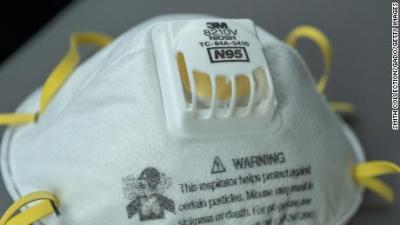
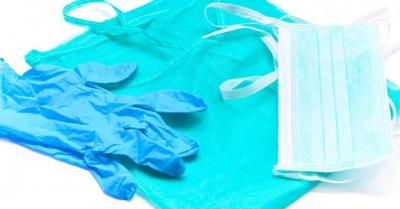
Mask on, seal over the nose to stop glasses misting up so much. Apron on (always easier with gloves on), feels flimsy especially in the wind, doesn’t feel like it will protect much. Visor on or is the patient low risk? How many more times am I going to put this all on?The beginning of shift routine is to check if we have enough Personal Protective Equipment (PPE). This involves checking stores, asking managers, raiding dormant ambulances. As relief staff (not on a fixed shift pattern) you go to different stations. Each station has differing policies; some have personal issue PPE, some are
If you’re unable to work due to illness or are self-isolating due to Corona virus, and your employer doesn’t offer contractual sick pay, you can claim Statutory Sick Pay (SSP) if you usually earn at least £118 per week before tax. For the next 3 months at least, you can claim SSP from the first day of not working. Your employer pays SSP and you should tell them immediately, and at least within 7 days, that you need to claim it. You normally have to provide a GP fit note after 7 consecutive days of illness but at present you only need to provide a note from NHS 111 online
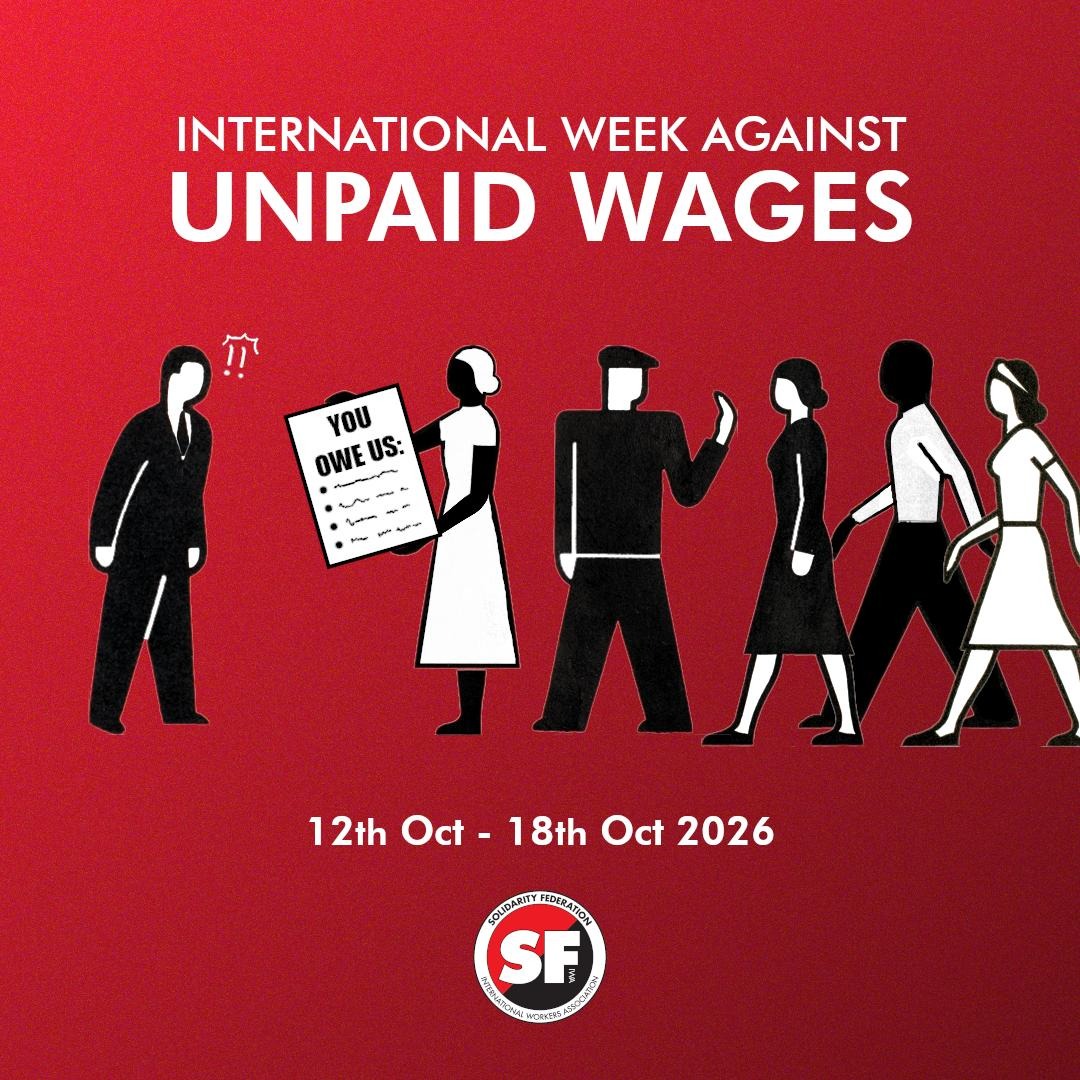 This week is the International Week Against Unpaid Wages.
 Applause is lauded at NHS workers; ideas for re-compensation; a daily service supplement; an increased hourly rate; even a medal for working during the pandemic. Many of us in the NHS work shifts - day and night - throughout the year. It is not just a virus that killing us, our shift work is too. The World Health Organisation declared in 2007 that shift work is probably carcinogenic (Straif et al 2007 [
 Whatever happened to free market solutions? Since the dark days of Thatcherism, we have been told that the state is inefficient and things should be left to the free market. Yet here we are in the middle of the coronavirus crisis and free market solutions are nowhere to be seen. Instead, it has been the state that has been forced to step in and prevent the economy and society from collapsing amid the chaos of an out of control pandemic.
 Care workers right now are facing a huge challenge. We were overworked, at risk and underpaid before Covid-19 came along. A lot of us are facing massive upheaval in our work and personal lives. Lockdown is stopping us from seeing our friends, family and colleagues, and the demands nowaced on the NHS, care homes and other workplaces have increased and changed rapidly. So now more than ever we are asking, what can we do?
 It is well known by anyone who has ever worked in, or been around the social care system, how much employers in that sector try to exploit their staff and just how badly they treat them. Care workers have long felt they are viewed in low regard by both local authorities and the government, until recently being described by both local and national politicians as being ‘low skilled’. This has started to make headlines in the national press and get into the public consciousness and never has it been more apparent than during the current coronavirus crisis, where employers have shown a complete
 Care workers right now are facing a huge challenge. We were overworked, at risk and underpaid before Covid-19 came along. A lot of us are facing massive upheaval in our work and personal lives. Lockdown is stopping us from seeing our friends, family and colleagues, and the demands now placed on the NHS, care homes and other workplaces have increased and changed rapidly. So now more than ever we are asking, what can we do?
 Mask on, seal over the nose to stop glasses misting up so much. Apron on (always easier with gloves on), feels flimsy especially in the wind, doesn’t feel like it will protect much. Visor on or is the patient low risk? How many more times am I going to put this all on?The beginning of shift routine is to check if we have enough Personal Protective Equipment (PPE). This involves checking stores, asking managers, raiding dormant ambulances. As relief staff (not on a fixed shift pattern) you go to different stations. Each station has differing policies; some have personal issue PPE, some are