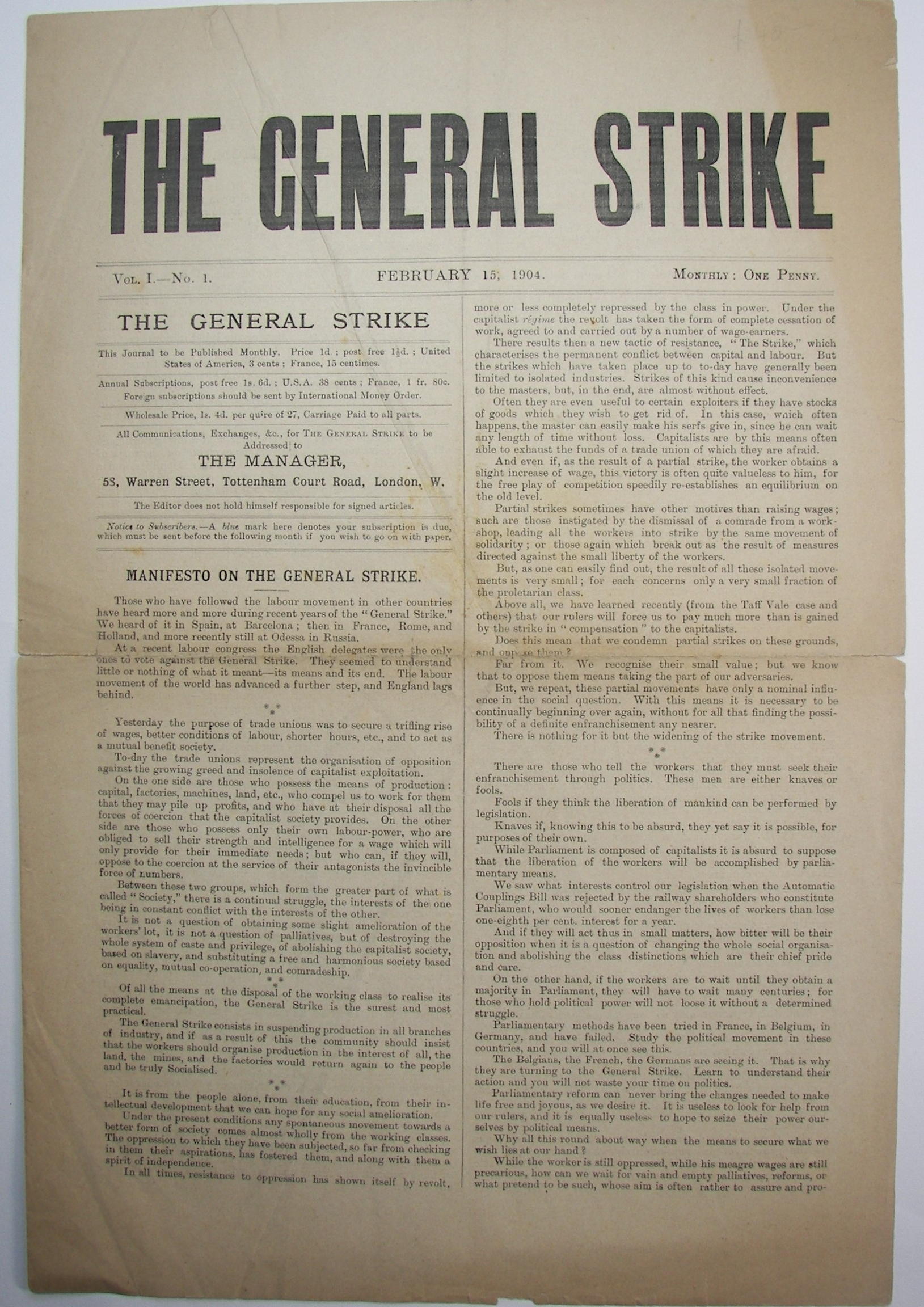
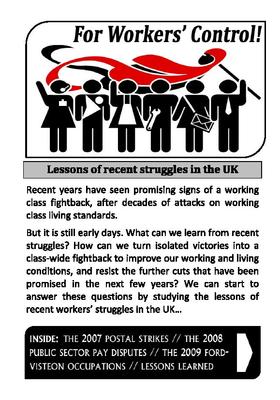
8-page leaflet looking at what we can learn from the 2007 postal strike, the 2008 public sector strike and the 2009 Visteon occupation.
The leaflet was produced for a demo against the Labour Party Conference on Sunday 27th September. It is based on several previously published articles and we try to draw the lessons of recent relevant struggles in the UK.
For Workers’ Control
Lessons of recent struggles in the UK
Recent years have seen promising signs of a working class fightback, after decades of attacks on working class living standards.
But it is still early days. What can we learn from recent
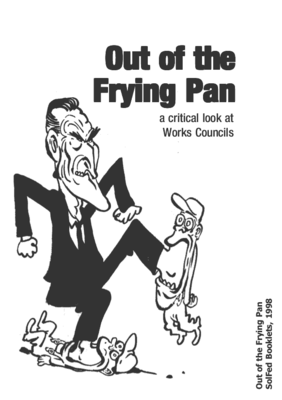
Works Councils are coming to Britain. But what are Works Councils, and what will they mean for working people and trade unions? Are the TUC unions right to welcome the changes in labour relations which Works Councils will bring?
Works Councils, far from empowering people, act as a tool by which management can control and pacify people at work. The truth behind Works Councils is exposed here through the views of workers in France, who have witnessed their failure at first hand.
The message is clear; there is nothing to be gained and much to lose from the introduction of a Works Council system in Britain.
Out of the Frying Pan is a critical analysis of Works Councils and a look ahead at a real future for organising and fighting back in your workplace.
Preface
The British Context - The new realism
Works Councils Basics - Bad for workplace organisation | Good for business | One-way partnership | Self-preservation
Case Study - France - How do CNT members in France view Works Councils? | Why do unions participate in Works Councils? | Does participation bring protection for active union members and ensure more freedom of action? | Does Participation increase our credibility and initiate resistance? | Is involvement in Works Councils possible for purely tactical reasons? | What does the future hold?
A Fundamental Alternative - A different kind of union | How revolutionary unionism works | We want real social change
Who's SolFed? - Getting down the local | Direct Action | Networks | Global Solidarity | Aims of the SolFed | Publications
The Direct Action Movement's 1991 pamphlet on strategy, setting out a vision of networks of militant workers seeking to create explicitly revolutionary workplace and community based groups capable of initiating collective direct action - revolutionary unions. The DAM became Solidarity Federation in 1994.
Throwing down the gauntlet
The phoney war
Class mobilisation
On the offensive
A call to arms
"One must try to increase as much as possible the theoretical content of all our activities, but without the 'dry and shriveled doctrinalism' which could destroy in part the great constructive action which our comrades are carrying forward in the relentless fight between the haves and the have nots. Our people stand for action on the march. It is while going forward that we overtake. Don't hold them back, even to teach them `the most beautiful theories' ..."
“In this series of articles we have outlined the aim and method of the syndicalist revolution.
The aim — the abolition of privilege, private property, class society and the state and the establishment of the common ownership of the means of production.
The method — the taking and running of industry by workers’ syndicates, the abolition of the standing army and other armed forces, police, judiciary, etc., and the creation of workers’ militia and other necessary working class organisations for the administration of society.”
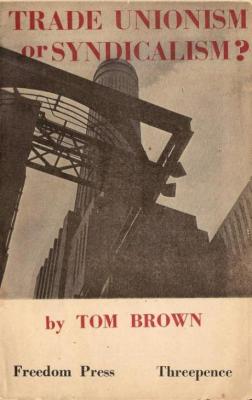
The above is taken from Principles of Syndicalism, one of six essays written by Tom Brown in the 1940s and 1950s, and reprinted here. This collection of his writings is a contribution to the debate on the relevance of syndicalism today.
Contents
About Tom Brown
Trade unionism or Syndicalism? | Craft or Industrial Unionism? | Doss house organising | Coffin clubs | Climbing the social ladder | Trade unions and the state | The lightning strike | The boycott | 'Work to rule' | The social strike | 'Stay-in strikes' | The fascist danger | The framework of a new society | Workers' control versus state control | A lesson from Spain | The revolution of construction
The British general strike 1926 | Storm Clouds | On the First of May | Lions led by rats | Class against class | Revolutionary beginnings | Betrayed | Thirty pieces | Post mortem | We shall rise again
Principles of syndicalism | Not centralism - but federalism | Economic federalism | Abolition of the wages system | The end of the money trick | To each according to his needs | Workers' control of distribution | The Commune | Defending the revolution | First fruits of the revolution
The social general strike | Why 1926 failed | The collapse of leadership | Stay in striker | Taking over | Redundant unionism | Who'll pay the wages? | Distribution | Stay in strikes in Europe | Do we need foremen? | Power to the workers
What's wrong with the unions?| Midwives and gravediggers | The outcasts rise! | The craft unions | Sect or industry? | False industrial unions | District federation | National Federation of Labour | Delegates | The right to strike | The boycott | Good work strike | Stay-in strike | An Italian lesson | Blind-alley unionism | A new society
Nationalisation and the new boss class | Victory over Toryism | In search of a programme | The necessity of definitions | The great disappointment | The decline of king coal | Oil or coal? | Peace and piety | The east wind of economics | They | The new bosses | Old bosses - new powers | Red Fabians | Paternalism | Fraternity | Revolt in Russia | Workers' control in Russia | To turn the tide | Statism | Gain or Loss?
A DAM pamphlet from the 1980's outlining what is wrong with trade unionism, then a mass movement, and the anarcho-syndicalist alternative
The union makes us strong
"The union makes us strong is an axiom most people would agree with, but if we look at the question closely doubts appear.
Consider the trade union movement as a whole, the numbers are there, when Callaghan left office the T.U.C. had a membership of some 13 million out of a workforce of 20 million. This meant that over half the working population were organised. It is in this organisation that the weakness is apparent, the movement
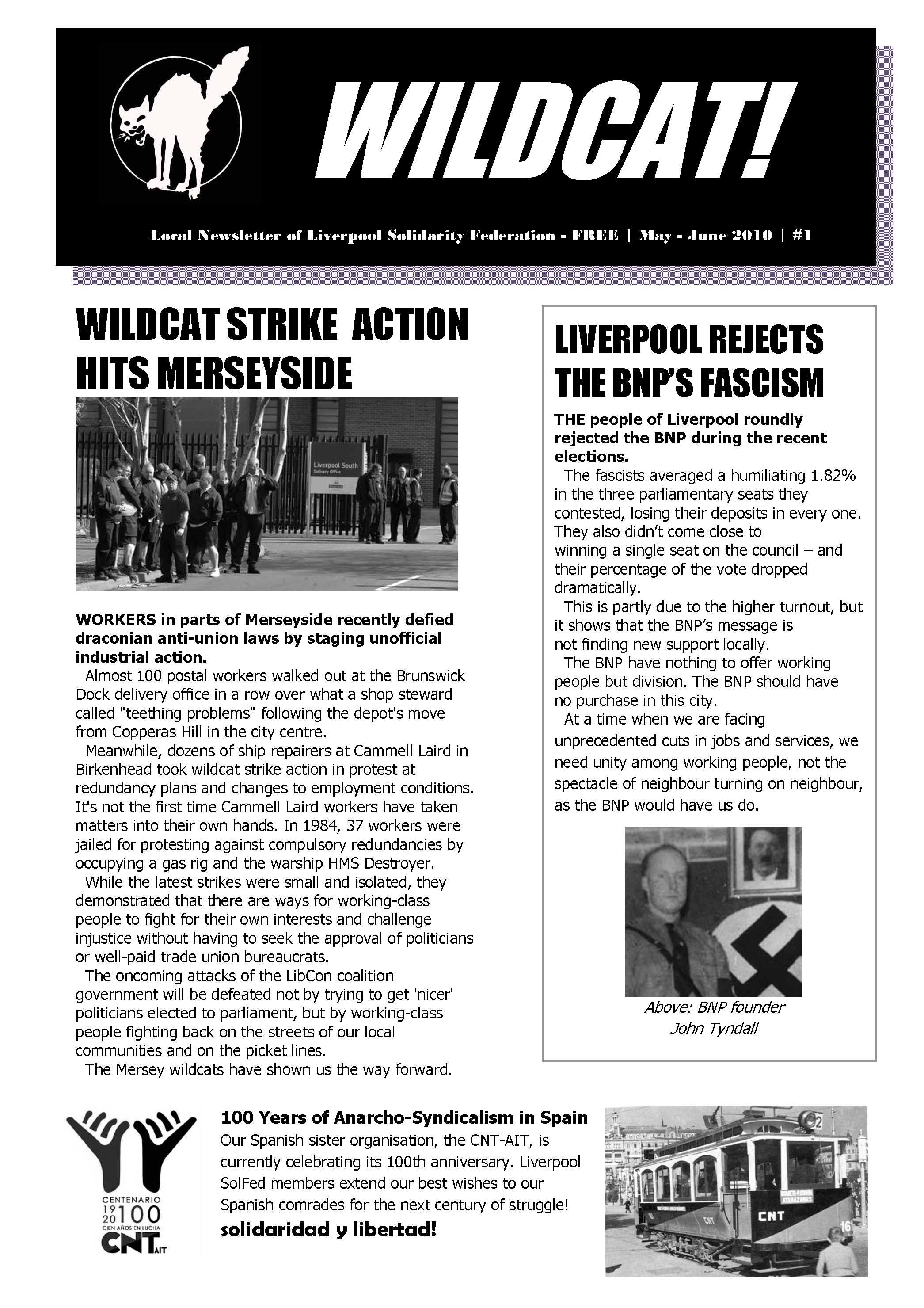 The first issue of Liverpool Solidarity Federation’s free local newsletter, Wildcat!
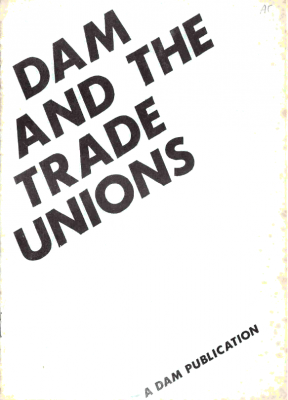 A DAM pamphlet from the 1980's outlining what is wrong with trade unionism, then a mass movement, and the anarcho-syndicalist alternative